
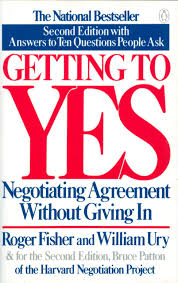
Getting to Yes
The first biz related book I read as a child. I learned early on that negotiating wasn’t just an art of cleverly persuading your counterpart to yield to your will (which I believe many old and young try to do) but instead it taught me the notion around doing your best to find a situation that benefits both sides of the fence. This book is also filled with tactics and lessons that give you a whole new perspective on what is really happening when a buyer and a seller meet and a tool belt too.
The first biz related book I read as a child. I learned early on that negotiating wasn’t just an art of cleverly persuading your counterpart to yield to your will (which I believe many old and young try to do) but instead it taught me the notion around doing your best to find a situation that benefits both sides of the fence. This book is also filled with tactics and lessons that give you a whole new perspective on what is really happening when a buyer and a seller meet and a tool belt too.

The Dip
The first startup book I read almost a decade ago. It is a short book but a frank and honest one too. The dip sets a tone and map for what’s in store when creating a startup. I remember when I ended up facing a dip or two along the way there was comfort in knowing that the rollercoaster ride was just a necessary step in a path towards…?
The first startup book I read almost a decade ago. It is a short book but a frank and honest one too. The dip sets a tone and map for what’s in store when creating a startup. I remember when I ended up facing a dip or two along the way there was comfort in knowing that the rollercoaster ride was just a necessary step in a path towards…?

Five Temptations of a CEO
This book was suggested to me by the (former?) CTO of Zynga. Unlike most business books that are bullet point lessons and biographies this one is written as a fictional story of a man that has the conversation of a lifetime with a stranger on the subway. Often times when making harsh and rash decisions about setting expectations with employees, or when trying to manage my emotions or ego, memories of this book are triggered. It has helped me more than once find my way back to center.
This book was suggested to me by the (former?) CTO of Zynga. Unlike most business books that are bullet point lessons and biographies this one is written as a fictional story of a man that has the conversation of a lifetime with a stranger on the subway. Often times when making harsh and rash decisions about setting expectations with employees, or when trying to manage my emotions or ego, memories of this book are triggered. It has helped me more than once find my way back to center.
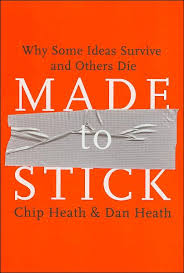
Made to Stick
Fantastic book for those of us that didn’t come from a marketing background (although I am sure it is valuable to those that did too.) Often when I write letters, blogs, taglines or give presentations I use the lessons from this book to get a feel for whether or not it will “stick” with my audience and use some tactics to drive a message home.
Fantastic book for those of us that didn’t come from a marketing background (although I am sure it is valuable to those that did too.) Often when I write letters, blogs, taglines or give presentations I use the lessons from this book to get a feel for whether or not it will “stick” with my audience and use some tactics to drive a message home.

ReWork
By the time I read this book I had already learned many of its concepts through my own trial and error. Nevertheless it made my top 6 list because of how well it articulated those learnings. Reading this book is like sharpening your knives if you know the lessons of a startup already or it is a great set of building blocks to work from if not.
By the time I read this book I had already learned many of its concepts through my own trial and error. Nevertheless it made my top 6 list because of how well it articulated those learnings. Reading this book is like sharpening your knives if you know the lessons of a startup already or it is a great set of building blocks to work from if not.

Stumbling on Happiness

Boy did I love this book. It was given to me by my good friend Daniel and it was probably the fastest book I ever read. Dan Gilbert combines psychology, philosophy, history, and science beautifully to give a candid and thought provoking look at what happiness really means and why is it so different for everyone. I find myself referring to the lessons in this book quite often around relative happiness, how our imagination can be terribly misleading – but being aware is a big help!
Other books of note:
The Fountain Head: A controversial book that seems to be either hated or loved. Which ever side you chose to be on I would be surprised if it was not called powerful. You don’t have to believe in the writers philosophy benefit from a perspective into the power of ideals, confidence, and certainty in oneself.
Thinking fast and slow: A large dry read at times but making it through was worth it. I learned a lot about how great and poor the mind can be all at once. I learned not only to be more cautious with my assumptions but a sense for where that cautions is needed more and why letting go can be a powerful tool as well.
Freakenomics: To see the world through the eyes of an economist is a gift. Thinking in terms of noise reduction, drawing data from samples and parallels and using statistics to prove how powerfully wrong our assumptions can be was thoroughly entertaining the whole way through.
The tipping point: I didn’t fall in love with this book like others but it definitely deserve a read for its historical observations around business that have succeeded and failed and the factors and people that contributed to them.
4 hour work week: I hold the lesson passed down in this book around work/life balance with me. I truly believe that we should be working to make less work and using that reduction as a badge of honor instead of the more classic concept that more hours equal a better output.
Hard things about hard things: A glimpse into the mind and life of a entrepenuer that almost lost it all on more than one occasion and the lessons he learned about running a company are packaged up nicely for us to lern from with far less scars


 Sean Shadmand
