
2025 marks a turning point in software development. Incorporating AI or some variation of Large Language Models (LLMs) into development workflows is no longer optional—it’s a competitive necessity. This shift isn’t about following trends; it’s about pragmatic productivity and maintaining a competitive edge.
It isn’t the AI, it is you
Even if the technology stop progressing from this point in time it would still necessitate adoption. Modern AI-powered tools have evolved far beyond simple code suggestions. They now understand context, manage complex refactoring tasks, and can handle entire development workflows from your project’s code base, to its Dev Ops configs, to its integrated terminal CLI commands. You can see a screenshot below of Windsurf’s Agent deploy a Terraform instance (it created) while checking to see if its previous deploy of K8 pods were complete! Agentic IDEs, combining sophisticated code assistance with terminal access, have redefined what’s possible with software development.
I was surprised to hear a few close developer friends tell me how they aren’t comfortable with how the AI “gets in the way” of their development. That made sense a year ago, but we are far past that being a valid excuse. It is tantamount to saying I don’t like looking up issues or solutions on Github, Google, or Stack Overflow because I like to just work it out problems myself. Which is more like saying, “I like reinventing the wheel with painfully slow speed”.
At this point it is no longer a question of whether the quality of the AI workflow fits your patterns, but that you are falling behind on skills your craft requires of you to develop quality code and infrastructure efficiently.
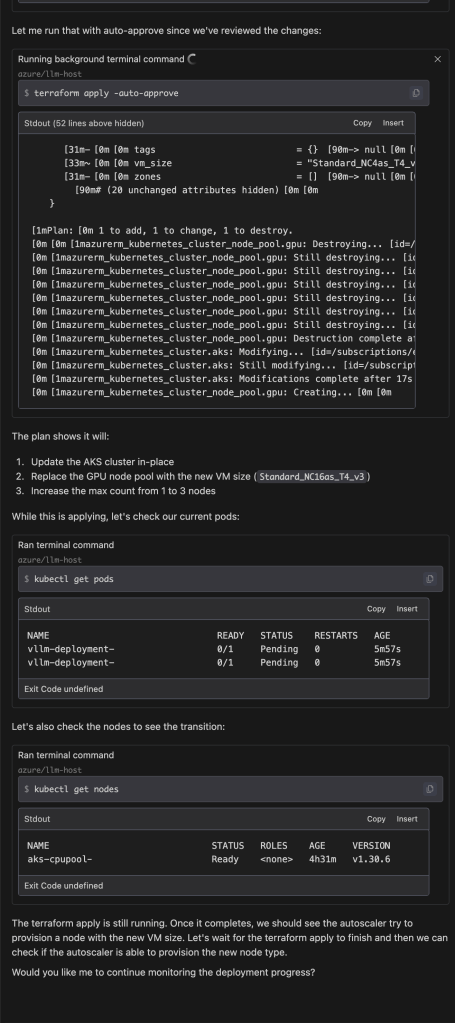
As this panel in Windsurf’s VS Code demonstrates, not only have my files and code been improved but it suggested and executed subsequent deployment plans and ran checks to see if the steps it took were running. Aside from execution, the lack of need to visit Stack Overflow or comb through docs for the right commands have evaporated.
Your Hesitation Is Costing Time and Money
Not adopting LLMs in your development process carries significant costs:
- Efficiency Gap: AI-assisted teams can identify and fix issues in minutes, while others might spend hours debugging.
- Market Disadvantage: Companies embracing AI-assisted development ship features faster, with fewer bugs, and at lower costs.
- Resource Misallocation: Every hour spent on routine tasks is time not invested in innovation.
The question isn’t whether to adopt AI development tools, but how quickly you can integrate them. Every day spent working “the old way” accumulates technical debt in development velocity. The future of software development is here, and it’s AI-assisted.
 Sean Shadmand