Gyms as a service (GAAS): Finally, better gym options as product services

imgres-1Five years ago I walked into my 24 Hour Fitness Gym and filled out a cancellation form.

“Are you sure that’s all I have to do?”, I asked the front desk rep. “Yup, you’re good to go, good luck with your move!”

Six months later I got a call from a collections agency telling me that I had six months of unpaid membership fees needing collection. Needless to say, it was an awful experience. I am sure many customers end up foregoing upwards of $200 or more in that situation all the time – not me. After hours of phone calls and emails, I was relieved of my “obligation,” but vowed never to use 24 Hour Fitness again – what else could I do than that, right?

In a world when Taxi’s treated you like crap but you still rode in them every day, there wasn’t much you could do with companies like this. Except turn around, take it and walk away.

When I moved back to the area I was a bit hesitant to sign up at any gym, given my experience. I stayed true to my vow and avoided 24-hour Fitness (even though it was cheaper) and signed up at Crunch Gym instead. I had options! Or so I thought.

lsThe sales staff was friendly at Crunch and, as expected, paying for the initiation fee and last month’s dues upfront was a piece of cake. I was instantly a member and assured by the sales staff that, “there won’t be any hassles if you decide to cancel – anytime.” Since then, two years of dues that would have gone into 24-Hour Fitness’ pockets went to Crunch Gym; I had no complaints.

Then moving time came again and I went in to cancel my membership.

“Sorry, you can’t cancel your membership *in* the gym. You have to call this number.” The Gym rep handed me a card. It was a bitter tasting sentence to hear while watching sales staff effortlessly input credit card numbers for the Gym’s newest members.

I called the Crunch cancelation number. “We already charged you this month…” (I come to find this was NOT true) “… and we’ll use your deposit to pay for your last month starting in April. Plus a $2 charge for any differences remaining since we’ve increased membership fees.” It was March 2nd and I was now paying until May 1st.

robber_MGBasically, in one sentence, my “easy cancelation” turned into about $120 of dues over two months toward a gym membership I just canceled. Jackie had the same experience except with a higher monthly membership fee. Crunch Gym robbed $270  from our household. Poof, just like that, Crunch now has the money and we do not. There is nothing the service agent can do about it and he gives me an email address so I can contact a manager to “have it explained to me further.” Sorry, there is no explanation that justifies being fleeced. I asked for a write-up from him explaining why I am being charged for a service I am canceling so I can submit it to the BBB with my complaint. He said he couldn’t do that. He thanks me for my call and hangs up on me. Note: The things they can and cannot do at these Gyms seem heavily skewed in their favor. Weird, huh?

Jackie said let it go, but that very sentence gave me a pit in my stomach. How many Gyms use this tactic to make up the hundreds of millions of dollars in revenue they see each year? They know most customers will let it go, so they keep doing it. I told the story to a few friends, and, not surprisingly, they tell me that it has happened to them with Crunch and other gyms as well. Have gyms formed a Mafia? I guess they have the muscle for it…

The problem that occurs when companies become monopolies (like Comcast) or mafias (like Crunch Gym and 24-hour Fitness) is that customers don’t have much choice in the matter. In this case, either take it or don’t work out.

Uber and Lyft finally gave us the tools to allow us to ditch Taxi cabs (poor customer service standards and all.) And Netflix, Google, and Yahoo are finally causing Comcast to AT LEAST start honoring their “maintenance window” as they try to prove their worth before judgment day. (Gosh, I sure can’t wait for the day Comcast cries about how unfair it is that Google is taking their business.)

Well America, good news. The new world is being filled with products that focus on value, access, customer service and quality. They are starting to aim their slingshots at the Goliaths we know as gyms.

You have options! You can ditch your P.O.S (and/or overly priced) gym and actually get more for less in the process! A membership where your patronage goes toward the local gyms, you’re experiences are of higher quality and customer service is a tent pole. Now that the game has changed, your “gym membership” can get you into specialty studios, access to activities like Kayaking and sports, and a truly “cancel anytime” philosophy that ensures people that have to leave do so as happily as when they joined.

Here are a few:
fitmob_color.fw_1) FitMobfitmob.com – For about the same price as Crunch (and way more friendly cancelation policy and service) this company offers a membership to a multitude of different gyms and activities. For example, you get access to a awesome yoga studio, or (like me) you can head down to the shore and go Paddleboarding for the day. All free with the membership.

Currently Serving: San Francisco, San Jose, San Diego, Portland, Philidelphia, Austin, Dallas, Seattle

imgres2) ClassPassclasspass.com – Founded by Payal Kadakia ClassPath offers access to a variety of studios you can register online for free with your ClassPass membership. What is great about this experience is  you don’t get a class thrown together by amateurs working for a corporate gym. Instead, you get to go to the best studios in town that specialize in an activity for whatever you want to do. ClassPath is on to something having just raised $14M in funding and growing exponential into more and more cities month after month.

Currently Serving: NEW YORK LOS ANGELES/ORANGE COUNTY SAN FRANCISCO CHICAGO MIAMI BOSTON WASHINGTON, DC SEATTLE ATLANTA AUSTIN CHARLOTTE COLUMBUS DALLAS/FORT WORTH DENVER HOUSTON MINNEAPOLIS/ST. PAUL PHILADELPHIA PHOENIX PORTLAND SAN DIEGO LAS VEGAS RALEIGH BALTIMORE TAMPA ST. LOUIS ORLANDO NASHVILLE KANSAS CITY LONDON TORONTO VANCOUVER

Sorry Crunch, you had your day and just like the Taxi mafia – your time is limited.

More comments available on the public FB post here: https://m.facebook.com/story.php?story_fbid=10152976618217107&id=704372106

**UPDATES***

March 3rd – Still no charges (or pending charges) on my credit card bill from Crunch. The support rep told me it was already charged and there was nothing he could do about it as a result. Nice tactic – untrue after 2 full business days.

(March 2nd) Crunch asked me to contact a store manager – this is what I sent:
Screen Shot 2015-03-03 at 5.42.53 PM


Update March 4th: If you’ve had a similar experience you can contact Jasmine <Jasmine.Vega@crunch.com>. Below is her email and my reply.

Screen Shot 2015-03-04 at 1.22.34 PM

March 4th

Screen Shot 2015-03-04 at 3.33.42 PM

Built-in Dictation on Yosemite

What I dictated – as is and untouched:

It’s been a while since I had tried using dictation mostly because it’s never worked before I don’t know how long maps habitation on it but I figured I’d give it a shot again this blog is written completely has dictation with no edits made to see how good it aside for my poor dictation skills hopefully the words being written are exactly as I intended blow is [the dictation ended automaically maybe becasue my pause or just to many words – starting over] A link showing you how you can set up dictation on your computer. I just noticed that all the dictation coming before this punctuation so I must have to say the punctuation out loud, which is expected.
http://support.apple.com/en-us/HT5449

What I actually said – uncorrected:

It’s been a while since I have tried using dictation. Mostly because it’s never worked well before. I don’t know how long mac has had it, but I figured I’d give it a shot again. This blog is written completely as a dictation with no edits made to see how good it is. Aside for my poor dictation skills, hopefully, the words being written are exactly as I intended. Below is […] A link showing you how you can set up dictation on your computer. I just noticed that all the dictation coming before this had no punctuation – so, I must have to say the punctuation out loud, which is expected.

http://support.apple.com/en-us/HT5449

Screen Shot 2015-02-23 at 11.28.10 PM

To set up dictation go to your preferences and choose “Dictation and speech.”

HT5449-yosemite-system_preference-dictation-001-en


Turn dictation on and you’re all set. Press Fn key twice to start.

Annnnnnnd end scene…

Overall it’s not too shabby of an implementation considering it used to cost hundreds of dollars to get dictation software on your computer. Also, it helps that the dictation bar has always been set fairly low. To be fair, trying to make up something while dictating is a bit unnatural – so I can see why the feature would stumble through a sentence; I sure did. A nice feature is that dictation works in any website or app on your mac – all you have to do is press the function key twice and start talking 🙂

You can also go the extra mile and set up text commands. This feature is not new, and I have never found myself able to speak my commands more quickly than I could keyboard them – so I will leave that decision up to you. You can read more about voice commands herehttp://www.macworld.com/article/2834532/ok-mac-using-automators-dictation-commands-new-in-yosemite.html

Tokyo Tips & Cliff Notes

You can check out a more detailed description of Tokyo and Kyoto here. For a quickie on Tokyo notes read on.

Prices

  • Most of the time, public transportation was between $2-5 USD one way
  • Ramen was about $5-8
  • Sushi $2-$5 per nigiri
  • You can spend $45 for a single sushi plate easily at a casual place if you aren’t paying attention.
  • Banana $1-3 but then $5-10 other places. here is a story we read as to why.
  • Big Mac $3.14

IMG_7375IMG_7272IMG_7382

Things we noticed

  • Separate slippers were provided to you, after you take off your shoes, for the bathroom at the hotel and some restaurants
  • Shops and restaurants are on each level of building – explore up.
  • Lots of Department stores. Basement always had good food.
  • McDonalds highlighted chicken teriyaki burgers
  • Many Ramen shops used vending machine to dispense ticket to hand to chef at resturant
  • Strong posture in workers/waiters/hostesses. All very helpful.
  • Public transport was awesome. Not nearly as complicated as people described. If you know your final destination you can use displays to get around. If not, staff was helpful.
  • When people highlight Tokyo there is so much over characterization. Much of the city is very typical of any other big city. Strange things were tucked away, like most strange things usually are.
  • People really do wear kimonos out and about.
  • Alleys and main streets all had amazing restaurants – no bad places really.
  • When it comes to numbers – Arabic numbers seem to be used universally over native characters.
  • Major city intersections often all “all way” crossing. Where pedestrians can go diagonal, or across intersections at the same time. First all cars go, then all people go etc.
  • Some fruit is outrageously priced. Fruit is a big gift giving item. Cantaloupe $100. Single Strawberry $5
  • Uniqlo is full of departments stores

IMG_7373

IMG_7261Tips

  • GOOGLE MAPS IS NOT VERY ACCURATE IN TOKYO!
  • Sumo – Buy months in advance.
  • Common Words: Sumimasen (excuse me – use before asking for help ), Arigato (demo or guy may), Konichiwa, Ichi/Ni
  • Google Translate is awesome – use the card feature and just show it after you say hi and or excuse me
  • Japan Rail Pass (JRP) is awesome. If you plan to go between cities (Kyoto/Tokyo) get it. It works in local Tokyo as well. Remember: You NEED to exchange the pass for a ticket when you enter Japan for the first time. Then as a pass you just show between stops.
  • Careful of subway day passes if touring around and not sure where you will end up – many are only for one line
  • Even if there is English in signs, and even when many people “speak” English – taxis do not. Don’t expect it. Get a picture of the destination in native language to show.
  • Even if you’ve tried sushi at home and didn’t like it tries it again here – changed my mind on some items
  • Keep an open mind on what you eat. If people next to you order it at least you know it isn’t a agag 😉
  • Ask your hotel to make reservations for you in advance. Many popular places need it.

2 translation-Translate-iOS2080_05

Things We Did

With so many things to check off I ended up making a Google Spreadsheet list to track what we wanted to do and where. You can copy it and use it yourself, or use it to get an idea of things to do. Remember though, one of the biggest lessons I learned in Tokyo was that I should just stumble into places as much as possible.

Screen Shot 2015-02-23 at 7.07.18 PM

https://docs.google.com/spreadsheets/d/1r1byYIbKqSWx7MzkVAlSjWtbzNEL1Y1A6X4kky0sqPw/edit?usp=sharing

Wolfram Alpha: Product Spotlight

Wolfram-Alpha-iconWolfram Alpha calls itself a “computational knowledge engine” and was spun out of “Mathematica,” a mathematically intensive formula and graphing calculator on steroids.

Although amazingly powerful, Wolfram Alpha is not widely known, though you may already be using it. Its one of the data engines behind Siri – and one of the few Siri systems you can actually count on. It responds on Siri’s behalf for computationally based queries. For example, when you ask Siri “How many inches in 10 meters” she replies with:

IMG_7595

Notice the logo beneath the answer.

You can access Wolfram Alpha directly on the web and get some surprisingly robust answers from it. Just for kicks, while showing Wolfram Alpha to a friend (completely unrehearsed), I asked it, “How many cars are on the road?” ( Purposefully leaving it a bit vague.) Surprisingly, this is what it responded with:

Screen Shot 2015-02-22 at 10.00.18 PM

It helps that Wolfram Alpha is scoped. It focuses on statistical and computational questions. Therefore, it doesn’t search the web for trends and rankings since it’s primarily driven by data and math. So, to get the most out of it I suggest focusing your questions on ones that possess those qualities. It can be, for example, a good place to gather preliminary data for your research. Like this one, “number of families in the united states with an average income above $100,000 per year.

Screen Shot 2015-02-22 at 10.00.33 PM

To be honest, it’s been years since I last played with it; it’s kind of one of those products that its usefulness ebbs and flows. Recently, however, while researching a “social product” idea, I stumbled upon this nifty feature advertising a Facebook Report from Wolfram and decided to give it a go.

Wolfram Alphas Facebook Report

Not only was the data of the report interesting but the speed at which it gathered, computed and graphed it all was a bit stunning. It’s able to give you just about everything about you on Facebook.

Screen Shot 2015-02-22 at 9.57.21 PM

You can view charts of your post history over time, as a ratio between posting images vs. text, most active times of day by media types or a word-cloud of your most often used vocabulary. You can find out what post garnered you the most likes or comments, who’s commented on your posts the most and how often you use the FB app.

Screen Shot 2015-02-22 at 9.57.43 PM

This little graph shows me the ratio of female friends I have to male ones and what their relationships status’ are – broken down into a pie chart. You can see the average age of my friends and where in the world my friends live.

Screen Shot 2015-02-22 at 9.58.11 PM

This graph I don’t really even understand, but it looks hella informative!

Screen Shot 2015-02-22 at 9.58.37 PM

All in all Wolfram Alpha is a fun product to play with and may even help you get some of your research started and difficult questions answered quickly.

Here are some other fun questions to ask it:

Facebook V. Twitter

How far is Saturn (Remember, distances are not static)

First cousins once removed

35,000 Words in Finish

More examples

Tokyo

tokyoTokyo was our favorite stop on our Asian Pacific teaser trip. There are more places to eat and drink there than I’ve seen anywhere else (yes, including NYC.) Restaurants and bars are literally stacked upon one another on each highrise-filled block, and no alley is without a series of ramen, sushi, or skewer joints. To paint a picture for my American comrades: imagine the vastness of LA’s sprawling cities, except that each city is attached to one another by multiple subways and train systems. Add to each city a NY bustle – such is Tokyo.

(Note: You can see a summary of tips and notes on Tokyo here.)

The density and massive nature of Tokyo’s cities are balanced only by the contents within. The majority of restaurants and shops you find are small mom & pop-esque, cozy, and occasionally cramped by local business people throwing back a cold Asahi beer and bite before they head home. When you’re in an establishment you feel very small town, when you walk out it is all big city.

Small place we stumbled into

We ate a ton. One of the most memorable experiences in Tokyo was eating Sushi at the Tsukiji Fish Market. Truth be told, all the sushi in Tokyo we had was AMAZING and fresher than I have ever had before. But the idea that we ate sushi 100 ft from where it was bought and butchered was mind blowing; site, taste, and sound. It is quite possibly the freshest, purest sushi we will ever have in our lives.

IMG_7347Free-Stock-Photo-Tokyo-Japan-Tsukiji-Fish-Market4

In addition to all the individual restaurants and shops, Tokyo was filled with departments stores (about one every few blocks.) The class and quality of goods sold within changed from one to the next, but the setup was fairly cookie cutter: first-floor beauty and jewelry, the few floors above made up the women’s sections, above that men’s, and the two floors below were the supermarkets, restaurants and produce. Imagine if you went to Macys to get fresh fish and dinner. By American standards it seems odd, but the food selection in these malls were great. It was like a Whole Foods (or two) in every basement. There was one restaurant in Tokyu’s basement in Shibuya that was cheap and delicious called Uoriki Kaisen. It was the only place on the entire trip we ate at twice 😉


IMG_7420 IMG_7415

Our trip to Japan was primarily a gastronomical one, we had fresh tempura cooked right in front of us, we had high-class sushi at Kyubey Sushi in Keio Place Hotel (very “Jiro dreams of sushi” style,) I had a delicacy or two I’ll leave untranslated for the faint of heart (shirako,) Kobe Beef cooked on a small personal grill atop a bar, and the list goes on and on. From $12 fruit desserts overlooking the famous Shibuya Crossing (the Japanese seem to love fruit desserts, by the way. Shops were strewn across the cities) to a $5 strawberry (yeah, A single strawberry. Just one.) to Ramen you select from a vending machine. We ate it all!

IMG_7427 sushidai IMG_7382IMG_7262

Our strategy was to sift through all the “best places to eat” lists we could find online and did our best to hit them all. Luckily for us many of them were nearby in Shinjuku or the Neighboring towns Shibuya and Goya where our hotel was. We had to be sure we tried the best. After our tanks began to run low, running from spot to spot, we broke down and started to stumble into any place we saw – and you know what? … Some of our best experiences wasn’t eating the web’s best-of, but it was with our serendipitous finds.

There are so many lively spots n Tokyo you would never know of if you didn’t take a chance on a random street elevator to an unknown floor and open the door.

IMG_7373

I think the need to run off a list when you get to a new city is expected, you have to get a benchmark to know what counts as what counts for “good” or “bad” when you travel. Not only that, but Japan is a bit intimidating to expect to just throw yourself in. Few places are marked in English, and many spots are tucked away on the 2nd-7th+ floors of buildings. There isn’t the ability to “window-shop” your way into all Tokyo has to offer. So, if you have never been to Tokyo before I won’t try to convince you to stumble through the city, but you will realize soon, as I did, and as others told me, the beauty of Tokyo will not come from a list but your ability to take chances in any place you have the guts to stumble into.

Remember, you can see a summary of tips and notes on Tokyo here, or check out my experience in Kyoto here.

Guns Germs and Steel

81n3b6i-SVL

This book has been suggested to me numerous times by friends across many of my circles. So, I had to give it a shot.

The first few chapter were a bit slow (a lengthy,  seemingly repetitive explanation of how small islands grew and lost their kingdoms.) However, once you get past them it picks up quite a bit and you begin to realize why it is on so many people’s “top reads” list.

Guns, Germs, and Steel gives a deep cumulative explanation of how some civilization were able to rise, fall, or never to progress at all. If you’ve ever wondered why native Americans got all the European’s diseases and not the other way around or why some secluded tribes didn’t advance as quickly as the west, you should read this book. If someone you know ever made an ignorant racist comment on why their race is superior and you didn’t exactly  have the data to refute the superficial facts – you should 100% read this book. If you are a history nut, it is insane if you have yet to read this book – so give it a go. Power through the first few chapters and then let it ride 😉

http://www.amazon.com/Guns-Germs-Steel-Fates-S…/…/0393317552

You can see my running read book list on Facebook here https://www.facebook.com/sshadmand/books

Heroku now deployed through Github

heroku-logoI’m a big fan of Heroku setup for pet projects. With it I am able to quickly deploy a project without having to develop on some proprietary  framework or prep a server to host a website. I especially love how easy it is to deploy directly from my local machine through a git push to master, and my ability to run and configure the system through a dashboard or command line toolbelt.

Until now however, I needed to keep two repos to manage my source code. One in Github for sharing, viewing, and tracking; and one in Heroku for deploying. Last week Heroku released a new feature that allows you to connect your Heroku account to Github: https://blog.heroku.com/archives/2015/2/6/heroku_github_integration

You can use this new feature to select which branch Heroku should use to trigger auto-deployments, as well as run pre-checks against your C.I. system tests. In short, I likey 🙂

wanderworld_·_Github___Heroku

Zero to One


I really loved this book. Peter Theil’s blunt and sometimes abrasively honest concepts are very “Purple Cow” and right up my alley. E.g. make big claims from observations and work out why they are wrong or right. Although there are some things I didn’t agree with they are done so in a way that pushes me to reevaluate my reasoning. For the many things I did agree with, it is always nice to have someone better articulate concepts and back you up with some solid experience.  10X yo self.

You can see my running read book list on Facebook here https://www.facebook.com/sshadmand/books

Kyoto

Screen Shot 2015-02-04 at 12.54.19 PM

Getting There

Our plan was to fly into Haneda Airport (about 25 min outside of Tokyo) at 8:30PM, jump right on the Bullet train to Kyoto, stay for two nights and head back to Tokyo for 3 nights. We booked our hotels a month or so in advance and excitedly awaited our trip. A few days before we left home Jackie realized that the JRP “ticket” we got in the mail was more of a voucher then a pass which needed to be exchanged for a real pass in Japan in order to be used. We also realized that all the JR ticket stations close at 7:30PM! That meant we wouldn’t be able to take the bullet train as planned; a difference between a 3-hour ride and an 8 to 12 hour one. This meant our hotels plans were seriously jacked. Yikes!

IMG_7229Tip #1: The JRP is well worth the price if you plan to take the bullet train somewhere. It works on local JR stations as well so all together we came out ahead with costs. To use the pass you must show it to the person working the gate when you enter and leave to get through, but in practice they just glance at it as you walk by and your good to go. When getting a JR pass though make sure you give yourself time well before 7:30PM to exchange the ticket for the pass. There is even an electronic station where you show a teleoperator the pass over a camera and they print a ticket for you remotely. Pretty neat.

Tip #1.1: Fly into Haneda

Tip #1.2: There are two JR stops in “Tokyo.” Shinagawa and Tokyo.

Hotels.com deserves a shout out – we called them up and they took care of our Kyoto stay and helped us grab a nice cheap place in Tokyo next to the train station to head over to Kyoto in the morning. First major problem solved 🙂

Tip #2: Definitely book through a service like Hotels.com to make local reservations. Avoid international calling rates and get a translator for the hotel if there is a problem for free!

IMG_7226The bullet train ride was sweet. Tokyo to Kyoto in under 2 hours – about 140 mph. That’s like going from DC to NYC in roughly the same amount of time. We woke up in Tokyo at 6AM and made the earliest train. The train was so efficiently fast that we really didn’t lose any time due to our landing mix up, PLUS we saved $60 by staying in a cheaper hotel for the night. Win/win. The train system was great. It ran multiple times an hour and there were no major lines, waits, gates etc to board. It was efficient, cozy and quiet. (it really validates how great the Hyperloop could be to the west coast.) We got to see the countryside and grab some views of Mount Fuji on the way.

Lost in Translation

I enjoy learning the local phrases when I travel, and, Much to Jackie’s dismay, I attempt to use them often. Doing in Japan didn’t seem to go over as smoothly for me as it had in other countries in the past. It may have been due to the complex nature of the language/accent or my interpretation of what I read was just plain offensive to hear by locals. Based on the reaction of those I spoke I have convinced myself that there were a few lines (very few lines) I “mastered” by the end of the trip.

Sure, we could hardly understand what anyone was saying back to us. There was a general lack of English speakers in Japan compared to other big cities we’ve visited, but the mannerisms and gestures translated well enough and we always felt taken care of. Not only by staff, but business owners, waiters, and the average passer-bys.

IMG_7474IMG_7475Tip #3 – The Google Translate App comes in handy. On the last day, I used the translation card feature in the app to supplement my attempts to verbalize myself in the local tongue. With Google Translate, after you translate text, you can flip the phone to landscape mode and it will print the translated text clearly, in large print. After I used my awesome “Excuse me, hi” line I smiled and showed the iPhone card. Things went a lot more smoothly from then on out.

Tip #3.1: Sumimasen with a subtle bow is your most valuable asset. It means “excuse me” but more importantly it’s a really easy way to say “hey, I apologize that I am a stupid tourist, but at least I’m trying to use your language, AND I know it is disturbing you – so I’m sorry for that too.”

Enjoying The Town

IMG_7167Our friends suggestions were dead on. Kyoto was a must see. It’s a good place to get that small town, traditional Japanese feel.  We loved it! The quaint, open-air, covered walkways were strewn with restaurants, coffee shops, and apartments. Many of the stores opened directly onto the walkway making it easy to not only “window shop” but literally grab bites of food from the stands as we walked by. We had hamachi sashimi on a stick, fried pork skewers, rice balls, tea ice cream, octopus, eel, quail egg, and more. There were other larger main roadways through Kyoto that felt more modern and “big city”, and although they were only a block or two from the quieter neighborhoods there was a distinct separation from one scene to the next. It was slow paced, peaceful, and felt more like a town than a city.

Staying in a Ryokan

IMG_7211We stayed in a Ryokan to round out the authentic Japanese journey; the complimentary kimonos while we lounged in the room added to the experience. The sleeping arrangements, although considered genuine old-time Japanese, were uncomfortable and stiff.  The room itself was uncomfortable, lacking in furniture other than a very low table, and some floor chairs (where you would have been served dinner and then breakfast in your room, but we opted out of that option.) The hotel workers came into the room while we were out for dinner to set up our “beds” which were two rolled out futons, just the mattress part, small hard pillows, and down comforters.  It was warm and comfortable by all other measures, but uncomfortable to sleep and lounge nonetheless. The experience at the Ryokin was interesting and the staff was super helpful and nice, but the sleeping on floors and a super small room for the price just wasn’t our thing. We wouldn’t do it again, but at the same time we are very glad we did it.

A Wonderful Time

IMG_7170Kyoto was a perfect way to get a peaceful traditional Japanese feel before Tokyo which would surely overwhelm our senses. There we saw many Geishas and temples, and all types of people riding bikes 24-hours a day. Jackie noticed a considerable amount of little old ladies doing so too! It reminded us of North West US e.g. Portland, SF or Seattle. A nice big small city. My favorite part of our entire trip was strolling through outdoor food markets and nibbling on odd new foods as we made our way through the open aired strips.

We did all of Kyoto in about 2 days and one night. Since our visit was in the winter it helped trimmed down the list of things to do as the parks were no longer colorful and we only visited a few nearby shrines. We loved Kyoto but excited to see Tokyo Next!

IMG_7182 IMG_7178 IMG_7151


Hong Kong

Hong Kong is deeply integrated with western culture. Although its foundation began with China, it became more influenced by British colonialism and, as such, has developed an identity all its own.

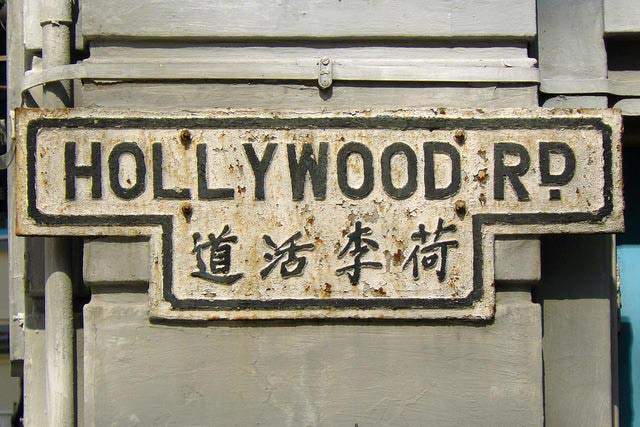
You’ll notice this unique mixture immediately when you arrive. Street signs that line the city are printed in plain English with names like “Queen’s Road” or “Russel Street”. We quickly learned, however, that you can’t count on the English versions of the roads to get around.

Screen Shot 2015-03-09 at 1.44.20 PM

None of the cabs we took spoke a lick of English, nor did they understand the English version of our destination’s cross-streets. Even more complex, as we learned from some locals, is the Chinese version of the streets don’t directly translations to the English ones. In essence, many streets have two distinct names.

Tip #1: Always take a picture of the local Chinese text of the destination you want to go (or write it down) so you can show it to the cab driver. Learning a nearby landmark’s local name won’t hurt either.

Other than that, getting around town was fairly easy with Google Maps and English (remembering, of course, that it is always a good idea to learn a few local phrases out of respect for your host country.)

times-squareThere is a constant sense of old and new while walking through Hong Kong. A trendy bar filled with young business people dressed to the 9s is placed directly next to a tiny old-style market with burlap bags of dried foods displayed on its stoop. You’ll see bamboo scaffolding next to an ancient temple with rising incense smoke flowing into the neon lights of a brand new bar, only a block away from a two story aluminum-plated Apple store. The city is somehow both completely foreign yet comfortable and familiar.

Tip #2: You’ll notice symbols such as “11/F” on some signs. The pattern refers to the floor an establishment is on. In this case the “11th floor.”

ho-lee-fook-4-818x535On our first night, we stumbled through a neighborhood filled with expats. It took a moment for it to register, but rows of restaurants and bars were completely filled with non-Chinese locals. In a way, it was like Hong Kong’s American-town, nicely balancing out our China-town back home.

The concept of culture fusion continues into the world of food. There’s a continuum of tastes ranging from the very pure and authentic Chinese dishes, to its modern interpretations, all the way to an east-meets-west blend. The first restaurant we stopped into was brand new and, sadly, we were drawn to mostly on name alone. It was called “Ho Lee Fook” and it had a 1-hour waiting list. We used the time to visit some local bars and grab a drink before dinner.

Jackie has an amazing sense of finding “good spots” when we travel. She is an instinctual Yelp database. On our kill-time-before-we-eat bar-cruise her spidey-sense drove us into a small bar called the Three Monkeys. No exaggeration, we had the best drinks we’ve ever had in our lives. Perfectly blended and absolutely delicious. At this point we also began to realize that Hong Kong was not cheap by any means – each drink was around $15+ USD.

sum_1617-2373926169-o

We finished up and headed back to Ho Lee Fook. The hostess led us down into the basement; Jay-Z and Jimi Hendrix’s music filled the rooms. Once we sat down and got comfortable we realized the restaurant was filled with Americans and Brits. We stumbled into another ex-pat bunker.

Restaurant_0

Tip #3: When you are visiting other countries and time is limited you can sometimes get a slight feeling that you’re getting cheated out of your adventure when you get surrounded by tons of your own people. But, in this instance, we recognized that these ex-pat areas were very much part of the local culture and we embraced it. It helped that the food was amazing. The final bill came in around $80-$100.

We hit the must-do list.

27712944We took The Peak Tram up the famously steep climb to the top of The Peak Tower. There you get a 360-degree view of the city, 396 meters above sea level. Walking around the small town at the top of the hill finally gave us a sense of the beautifully lush, island-rich landscape that is Hong Kong.

1.1.1.2-Peak_03

Tip #4: Don’t waste your money on The Peak Tower’s 360-Degree View entrance fee. Wrap around to a nearby building’s rooftops and get pretty much the same view for free. Also, sometimes it’s foggy and you can’t see anything up top anyway. Try to go on a clear morning.

We also headed to see the “big buddha” by the way of gondola and got even more breathtaking views of the country.

hk-cablecar

But mostly we ate.

Screen Shot 2015-03-09 at 1.39.42 PMI’m not sure, but I imagine it’s quite rare to visit two of the least expensive Michelin star rated restaurants in the world back to back. We had dim sum at Din Tai Fung, which was good but not mind-blowing – and a bit pretentious. Even more memorable was the savory gravy biscuits we had at Tim Ho Wan on the bottom floor of a mall for about $1 each. They close early so make sure you check the hours before you go. We got there a bit late, but they were nice enough to make a few to go boxes for us take out. We shared one biscuit from the bag as we walked away and they were so good I ran back to the restaurant to get six more.

My biggest food fumble was made by my weakness to marketing propaganda. Everywhere we went we saw a McDonalds promoting “the prosperity burger.” I had to know what it was so I finally gave in and ordered it on our last day. All it was was a McRib with onions. Yuck.

prosperity burger

Finally, I want to give a shout out to the awesome stay we had at Hotel LBP. They staff was friendly, the rooms were super nice and we got it at a great price (possible from a promotion.)