3 iOS Tricks That Are Amazingly Unknown

It sucks not being able to search a web page for a specific word on a webpage in your iPhone and iPad.

I – Find on page

iPhone & iPads

  1. Click on google search box
  2. enter the word you want to search
  3. At the bottom of search results for the web, the search results for whether the word appears on the current web page your on is listed.
  4. Scroll down to reveal the words found on the page

Just iPad

iPad recently added a new search web page fiend to the keyboard when eacrhing on the google input box

Have you used four fingers on your iPad lately?

iPad only.

II – Swipe between app

When having more than one app in your background place four fingers on your screen and swipe to the right or left to alternate betwen apps in your background wthout needing to double click or opening and clssing apps

III – Open app in background with swipe

You can access your background apps without doubleclicking your home button on Ipad.

Simply use four fingers on your screen swiping upwards and you will get the listing of all your background apps.

Hope you have fun rediscovering the fun you can have with your iOS devices!

Let’s have cleaner debates with our neighbors: Not the facts, just the data.

I am not trying to get entrenched in the political back-and-forth going on. I actually do understand all of the he-said she-said going back-and-forth when it comes to peoples opinions. Opinions are each persons right to have, especially when it comes to social philosophy. Additionally, opinions are hard to “verify”; your beleifs are your prerogative.

However, it is amazing to me how non-opinion based information gets thrown AS opinion. It is even more distressing because it is so easy to find many statistic directly from the source, before they are muddied by political agenda, or distributed in off-the-cuff comments and hearsay.

So, I figured I could help…

The following are just the data & graphs of screen-shots taken from real census data (and yes the URL of where I got the data from is also noted next to each graph.) Feel free to browse the data yourself and make your own observations.

Debate the implications all your want – but below are not news reports or debate notes, they are charts taken from the actual data sources. All I ask, and hope to acheive, is that no matter what side your on, just remember not to include non-sensicle bullet points that just aren’t true and instead try to argue around your beliefs. Do not get caught up in baseless, inflated, skewed, or inaccurate depictions of history as it relates to hard cold metrics.

Important notes on data around first day of office dates

The first day in office for elected presidents is in late January following the election results, coming two months before in November.

George W’s First Day Obama’s First Day
 January 20, 2001  January 20, 2009

The stock market
The stock market shows the amount of money distributed in US corporation. The rich, and anyone investing in the rich wins when this graph goes up. Note 2007 and 2008 were shockingly bad, the worst downswing since the mid 80s. The good news everyone is it has only taken four years to get back from our bubble burst of 2001 which took eight.
http://www.google.com/finance?q=INDEXDJX:.DJI (You want this going up)


Unemployment Rate

This one is a often heavy argument point, but the data is all very easy to lookup. When a single percentage is called out it is hard to know its context. Those that scream and point fingers from he top of a mountain often end up implicating everyone – if those at the bottom of the mountain did a little research…. Again 2007 was the beginning of the frenzy. And if you remember there were many sad days and foreclosures making an “america is shutting down” environment. It was the intense swing from just a year before in 2006 that scared people the most. 
http://goo.gl/2O2zl (You want this going down)

  2007-2009 was the sharpest upswing of unemployment we have seen over 30 years.

Debt

Here is another amazing story of how politicians program you to just repeat what they shout, programming you to have their debate. Again, the data is there to have your own debates and ones that aren’ skewed by anyone. Debt sucks, and gus, we have had it growing for a long time. And this rate back-and-forth argument is again a graph away. You can see the linear growth of date below.
http://goo.gl/d9Wvz (You want this going down)


Personal Income

This is one that people don’t talk much about, because we like focusing on the negatives. BUT your incomes have been growing fairly steadily for a long time. We had a short blip of our first downward trajectory in 2008, actually the only one in recorded history of the US, but it corrected itself pretty quickly after 2009.
http://goo.gl/2CaIc (You want this going up)


I also found interesting that the following census data shows a steady increase in revenue and income in the US for decades.

Disposable Income per capita

This is also a great graph to be going up. Like the income graph we saw our first real blip ever in 2008, but for the most part we have consistently been getting a linear growth.
http://goo.gl/QQOlG

Revenue

This one is a bit less cheerful, but t’s the reality. We had some great years as a country with revenue, but unfortunately the money stopped coming in in 2007 and we have all felt this graph at home.
http://goo.gl/DFMK8


Facebook gets into the continuous scroll promo page game

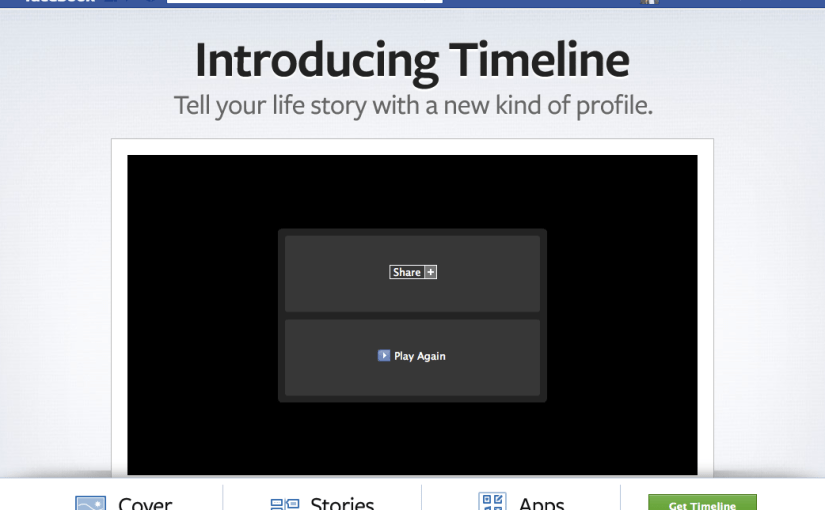
Facebook has embraced the continuous scrolling, animated-esque homepage style. Like I mentioned in my other posts about this style of website (animated scroll sites), the format reduced the closing doors effect that clicking around a site can create. You bring the user into a story and prevents the message from being broken up. The single stream of consciousness keep a user curious to see what comes next. Combine the scroll with the hit-the-bottom-to-load-more-content system the potential for great workflows is there. Im really liking these design patterns, and they keep getting better. I wouldn’t be surprised if this style of website becomes the standard in the next year.

https://www.facebook.com/about/timeline (2011-12-15)

You are introduced to the homepage with a video. A pretty good one at that.

Clicking a button on the bottom quickly scrolls to a new section, so whether you start by scrolling or you are more of a clickster you are taken cre of. And both actions quickly teach you how to interact with ethe site.

As you scroll, the section headers rise to the top and stay there. (much like the other sites I have blogged about, and possibly started form the ios table header design pattern). ALso becoming a standard is the button navigation animates to sync up with where you are scrolled to in the website.

Long Lost Bucket List

I was going through some old Google docs of mine and came across a bucket list a wrote in 2008. Haha, I can even remember writing it. It was after I saw Ted Leonsis speak about what he has learned and accomplished in his life, and how his bucket list helped in decide to do the things he did. In his words [paraphrased]:

“[when the oppertuity came to produce a movie at first it was a hard descision, but looking back at my bucket list, and seeing it on their, reminded me to take the oppertunity I was given before I die]”

It felt much like finding a time capsule, and one that I forgot I even placed. With so much having happened in the last 4 years, and so much happening in the last week, it offered a pretty perspective on things. As I read through the message in a bottle sent to me by my former self, I was excited to be able to cross of a couple items on the list, and dissapointed at the vast majority of things I could not.

I really encourage those out there to mak a bucket list. It offers perspective into you life as yo find yourself focusing on so manythings over the years. It helps bring you back to a core goal, or reminds you of one you may have forgotten.

From a more technological perspective (I can’t help it, I am a technologist after all,) I encourage you to write it in google docs. I was not obly able to easily find this old list, but since Google Docs are live docs I can see the revision history of the document over time. I can imagine how interesting it will be to check out the changes, and additions I make to this list over the next 20 years.

While looking for bucket list-esque pictures for this post on the web I stumbled onto this site (http://bucketlist.org/) that helps people share their bucket list publicly.

Google TV is finally a google TV

Got home tonight and notcied my google tv wasnt responding to my harmonay iphone remote…..after some fiddling around a simple update ended up being all that was required. To my surprise it wasn’t just a minor release, like it usual ends up beeing. My google TV has changed considerably! (along with my iphone remote,) and the my Google TV finally has the Adnroid market, ergot finally a real Google TV! Yay!

I downloaded some apps, checked out the new user interface and workflow. I know have a 50 inch non-touch tablet 🙂

There is also the “allow unkown sources” option in the settings, along with enable debugging, so I guess developing for my TV is now piled onto my list of things to do.


After some googling, I found some info on the update. You can check it out here: http://www.google.com/tv/

Deciding on a new feature: An Insta-Test-market. (AKA: Ghetto Testing)

I love making a decisions tree as efficnet as possible, especial around discussion that steer the business or the product within a business. Or in another words, I HATE “tough decisions.”

Here is another addition to the decision tree to make life easier, it is called “Ghetto Testing” and coined by the founder of Zenga.

How do you figure out if you should go with a feature with minmal disruption to the company or its engineers, and how can you invest in it with the highest posible certainty of success? Ghetto Testing a feature. The concept is there are a wide range of data points you can aquire to guage interest on an idea before the idea is fleshed out. At the “Ghetto” stage, it sint so much a test of the product value or feature set itself, as much of a servey to see if the concept will get clicks or interest by the public. It’s basically an adhoc test market. If you think people will love feature x for instance, create a google adword promoting the vapor-ware concept and run it for 5,10,30 mins.  The resulting page of the ad could technically go to a 404 page, and although that would be a horrible experience it still wouldbe a valid ghetto test.

From there you can invest incrementally into how deep of a gauge you want to testing of the idea i.e. a pretty landing page with feature highlights, a download, or a purchase wall.

http://grattisfaction.com/2010/01/how-zynga-does-customer-development-minimum-viable-product/


“Should I add x to my product line?” litmus test

For small startups it is essential to decide what not to do as much as what you decide *to* do. As new technologies come and go, ideas for change could cripple a companies productivity or ability to reach any single objective (AKA Distractions.)

If your objective is to build an awesome product, and work hard at solving a problem that others may not have been able to solve yet, then here is a “is this a distraction right now, or a need for change?”  litmus test for small startups.

Test:

Do I believe we should *only* do [new idea] and grow the company out from from there?

(i.e. stop focusing on the other thing you had previsouly decided was *the* way to grow the company from.)

If you find yourself getting to a strong yes, then the convo to get into the new idea may be ripe for discussion, and it may be time to focus energy on a new strategy and to pool your resources to build a world class product. I’ll go into what you can do to break the new idea down further from there, to see if it makes sense in your business in other ways, in later blogs.

Side notes as to why this problem may often come about:

For one, the grass is always greener. So you need to be carefull when shifting towards an idea that is not on your mind every hour of every day…There will often be different problems, not less, to overcome when you switch.

Second is brain time. The amount you spend on solving a problem has some (not sure yet what amount yet) relation on the lack of time you have spent thinking about the new thing. All the litte details that are reflex knowladge for you for is lost with a new idea and direction.

Analogous Exmaples in life:

For a simplified abstract example, you spend a few hours packing the night before a trip. Last minute the morning of the flight you realize, “Hey, I can just take the smaller bag! How much smarter of me, I can save much space!” So you do.

At the airport you realize that one of the side reasons you wanted the bigger bag was not just to carry more, but to so your friend could but his shoes in it. Damn! You over looked ne of the many small details that led to the dscisoin to pack the big bag in the first place, but the new idea that came to mind, that you took action on in a shorter amount of time, did not allow you to consider all the many reasons why you made the decisions you did the night before.

A more common example: “Ughhh, I left my wallet in my other pants pocket!” You look better, and it’s a good thing too because now you need to find someone to pay for your dinner :p

Closing

You may not be able to avoid these smaller mishaps, but you definitely have the power to minimize disrupting a company by paying attention to these business distractions vs changing directions type decision points.

Remember: A small comapany needsto solve *a* problem, focus on it, and when they get their fit and a few wins the grow into more spaces. Here is a great article on focus as it pertains to Product Market Fit and MVP:

http://www.svproduct.com/mvp-vs-product-vision/

“…But of course that was just the beginning of the product line and not the end.”


"Should I add x to my product line?" litmus test

For small startups it is essential to decide what not to do as much as what you decide *to* do. As new technologies come and go, ideas for change could cripple a companies productivity or ability to reach any single objective (AKA Distractions.)

If your objective is to build an awesome product, and work hard at solving a problem that others may not have been able to solve yet, then here is a “is this a distraction right now, or a need for change?”  litmus test for small startups.

Test:

Do I believe we should *only* do [new idea] and grow the company out from from there?

(i.e. stop focusing on the other thing you had previsouly decided was *the* way to grow the company from.)

If you find yourself getting to a strong yes, then the convo to get into the new idea may be ripe for discussion, and it may be time to focus energy on a new strategy and to pool your resources to build a world class product. I’ll go into what you can do to break the new idea down further from there, to see if it makes sense in your business in other ways, in later blogs.

Side notes as to why this problem may often come about:

For one, the grass is always greener. So you need to be carefull when shifting towards an idea that is not on your mind every hour of every day…There will often be different problems, not less, to overcome when you switch.

Second is brain time. The amount you spend on solving a problem has some (not sure yet what amount yet) relation on the lack of time you have spent thinking about the new thing. All the litte details that are reflex knowladge for you for is lost with a new idea and direction.

Analogous Exmaples in life:

For a simplified abstract example, you spend a few hours packing the night before a trip. Last minute the morning of the flight you realize, “Hey, I can just take the smaller bag! How much smarter of me, I can save much space!” So you do.

At the airport you realize that one of the side reasons you wanted the bigger bag was not just to carry more, but to so your friend could but his shoes in it. Damn! You over looked ne of the many small details that led to the dscisoin to pack the big bag in the first place, but the new idea that came to mind, that you took action on in a shorter amount of time, did not allow you to consider all the many reasons why you made the decisions you did the night before.

A more common example: “Ughhh, I left my wallet in my other pants pocket!” You look better, and it’s a good thing too because now you need to find someone to pay for your dinner :p

Closing

You may not be able to avoid these smaller mishaps, but you definitely have the power to minimize disrupting a company by paying attention to these business distractions vs changing directions type decision points.

Remember: A small comapany needsto solve *a* problem, focus on it, and when they get their fit and a few wins the grow into more spaces. Here is a great article on focus as it pertains to Product Market Fit and MVP:

http://www.svproduct.com/mvp-vs-product-vision/

“…But of course that was just the beginning of the product line and not the end.”


Smart Car Makes Clever Website

I was oddly propelled to click on an ad today, brought to me by the makers of the Smart Car. It was a pretty, clean, well made site. I scrolled up and down to see if anything would catch my eye, and strangely enough something did.

Some time ago I made a post about the coolness of sites I see that take advantage of telling their story, not through pages navigated to by the standard point-and-click, but by animating the home page based on the amount of scroll a user applys to the site. (You can find the post on cool scrolling animated sites here )

Some people have done a poor job of creating well balanced sitethat not only tells a good story, but does in a animated way that tells the story better than it otherwise could be told. And done smooth enough that the coolness, or story, isn’t hindered by the latency and choppyness of the meium.

Well This smart car ad page did just that. And without futher adu, here are some screeen shots and the link to the smart car ad site (2011-12-4).

It begins with a simple page, that focuses all the users attention to the car, and its size.

As you begin scrolling the colors of the sites changes and the a different smart car is presented.

Notice the menu on the right site, letting you know where you are in the story. The white cricle tells you what part of the story you are currently in, and what is coming up next. Notice the blending from one “page” to the next as you scroll. Notice how you find you self scrolling more and more, and digest a few tid bits of knowladge thatyou would ohter wise not have gained behidn a barier of clicks. Well done. 🙂