
– Sean Shadmand
Author: sshadmand

De Beers in De Valley
 Better late than never. De Beers diamonds is getting in on silicon valley action and investing in the next generation of semiconductors which will be made out of synthetic diamonds.
Read more at PopSci here: http://www.popsci.com/technology/article/2011-10/diamond-industry-invests-lab-created-knockoffs-semiconductors

What startup babies did Yahoo, Google and Facebook give birth to?

Here is an info-graphic my friend turned me onto (click the image to get the full view.)

It shows the exodus from some of the biggest tech companies (facebook, yahoo, google…) that supplied the man power, and brain power, to feul various startups such as: Zoosk, Hunch, Tapjoy, Color, Foursquare, Quara and more.
Want more?
Here is an article outlining the biggest winners and losers involved:
http://blog.topprospect.com/2011/06/the-biggest-talent-losers-and-winners/
The Quintessential Optical Illusions

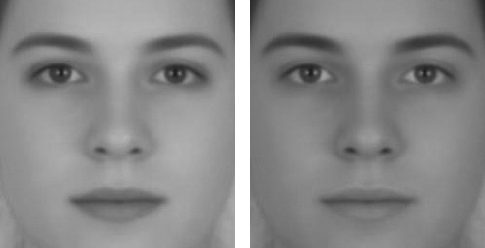
Check out this Quara post (http://goo.gl/YjQYI) for some new and old optical illusions. What caught my eye was the optical illiso on the left I haven’t seen before. Can you tell the difference between the male and female pictured? Well you shouldn’t, they are the exact same image. The illusion here takes advantage of how our perception of gender is based on hues and tones as much as the facial features themselves.
The hardware won’t stop changing
 When the iPhone first came about there were plenty of neh-sayers that rebeled against the native functionality on the phone and how it was destined to be doomed by more standard tech already in place on the web.
The problem when attempting to prophesize the future of new technologies is that many people forget that the technology they are predicting against is not a controlled variable. Not only will the technolgy advance that they forsee, but the technology they are basing their predictions on will change as well. That every changing system means you can never be too sure what the life time of a new product will be and how it will develop. The only good bet is: all parts of technology are ever advancing.
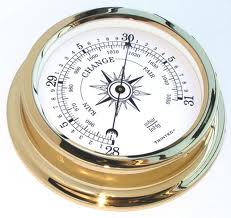
The mobie device epitomizes that fact. A fragmented distribution of lightweight, fairly inexpensive, devices that are constantly in use by its users and is getting completely revamped and bought up every year and by eager customers ready to upgrade. The manufactures will keep pumping more features into the device that go beyond weight, and better screen resolution. And with form factor constraints relativley out the door, compared to their laptop and PC predecessors, native device functionality will always trump what the generic standard products will pump out. Of course RF functionalities ar making their way into our everyday life, and now Andoroids may be getting a barometer: http://gizmodo.com/5851288/why-the-barometer-is-androids-new-trump-card.
As these products evolve native apps will keep going strong.

That is a pretty freakin’ cool sphere!

This is pretty awesome… A real hovering ball that seems to defy gravity and do some other neat tricks too. Yeah, we have seen some cool hovering toys these last few years, but this little doozy goes well past just hovering. Not only does it hover, but it is able to jet of in any direction lickity split, and its gyroscopes (along with its auto pilot mode) give it the ability to stay in hover state no matter how hard you try to push it down. Just when you think you got your bearing with this thing it shows off a few more tricks as it dives to the floor, rolls over better than your dog skip, andtake right back off again. It seems to master land and air, and is made by the Japan’s ministry of defense.

Easter Egg-ish Feature in Google Image Search
 You have probably searched for images on google image search before, but what you probably missed was the drag and drop image search feature. After hovering over an image from the image search results (ex: http://goo.gl/hwiJ0) drag the image over to the search text box. Once the image overlaps the search box, the search box extends allowing you to “drop the image” there.

What seems to happen next is google uses meta data about the image selected to generate a text search that display results of web sites that are related to the picture.
There was a google labs project a while back that gamified the manual tagging of images, mechanical turk style. Maybe this is one of the bi-products of that project.

Has the iPhone camera quality really improved?
Check out the picture below made by Lisa Bettany and featured on Gizmodo that demonstrates the differences in picture quality over the many iPhone generations. From the original, all the way to the 4S. The simple answer to the titles question – you bet you a$$ it has!


Are you seeing things? Instant super-imposed 3d objects on 2d pictures

See that picture to the left. It is a picture taken of a room with a billards table, can you tell what part of the picture is fake? We have all hard of super imposed by now (even the talking goat from Adam Sandler’s comedy cd in the 90s is now aware of the power of superimposing.) What makes this a breakthrough is that fact that the 3d objects (by the way, the balls on the table are the fake objects) were super imposed onto a flat, 2D picture. Even more interesting is that fact that those 3D objects can interact with the 2D objects in the picture, as if they were 3D them selves. Check the demo by Kevin Karsch (below) where you can see what I mean. Basically, you can take picture of a hall with stairs, and later add a 3D virtual ball to the picture, and in seconds watch the 3D ball bounce its way down the stairs case. Pretty B.A.

Prove It! Would you bet your life on your wifi connect-ability?

It’s fine and dandy when you say you can get three nines of service uptime, but would you be willing to have your server control your car’s brake system? Well if you did I woud guarantee you that your servers would find a way to be up more often – one way or another. That is what Computer scientists at Saarland University were thinking when he used their wifi as the communication channel is their bikes. They wanted to demonstrate how certain they were that their wifi can get up to thirteen-nines of accuracy. I really love how they are putting their money where his mouth is. They basically alined their lives and their product’s quality perfectly. Now their success is yours 🙂
Check out more at Alpha Galileo.
 Sean Shadmand