70L Backpack Packing Breakdown. What got in, what got cut and what I wish I had

During our trip around the world we were sure to experience a range of climates. As such, packing the right clothes in the smallest bag possible was a challenge.

Originally I wanted to try “ultra-light backpacking.” That’s where you fill a 35L-45L (or less) backpack with only what you need, expectating to reuse clothes A LOT. There are certain types of clothing that are made for this type of use. For example, there is underwear that claims you can  wear it for 6 weeks without a wash.  Jackie talked me out of it –  I’m glad she did.

I ended up going for a 70L bag (50L main bag with a 20L daypack) that is not carry on approved. I was worried about needing to check a bag in on every flight, due to the extra bag fees airlines may charge and the potential for lost luggage, but we decided we “needed” the all stuff we packed below and would make it work.

Most of the things we got below is from REI and Amazon. If you haven’t tried REI I wrote a bit on how I was skeptical to walk in the door at first but happy I did. They are awesome!

A video run through of the bag items a day before we left

What didn’t end up making the cut

I ditched all the wool sweaters and fleeces (top right of picture) and kept one thick hoodie and one long sleeve base layer. I figured layering undershirts could get me through most temperatures – and it has. I also got rid of the pajamas (bottom left of picture)  since my sweatpants (or gym shorts) could be used for sleeping or working out. I also trimmed down my running clothes completely (bottom left of picture) since I could just use my t-shirts and surf-shirts.

What made the bag

  • Osprey Farpoint 70L Backpack (50L w/ 20L Day Pack)
  • 1 power adapter
    • This was a nice grab from when Radio Shack had a going out of business sale. I am wishing we bought two. It’s not something you can just grab on the go, since every other country’s adapters are made for their plug’s inputs. Note, We didn’t bring a converter and haven’t needed one yet.
  • 2 shorts (cotton, one hybrid, one bathing suit)
    • It was nice having the hybrid so that if the bathing suit was wet I had a back up to swim in, and if the cotton one was dirty I had a back up too. Amazing how few people wear shorts in foreign countries. They can see me as a tourist a mile away in these things but I don’t care, it’s hot as hell in some places!
  • 3 pants (one Jeans, one Lulu hybrid and one sweat pant)
    • The tan Lulu pants are awesome. You feel comfortable hiking in them and you can wear them out since they really do look like khakis. Jeans are great to have to feel a bit more dressed up; I use them often. Sweats are good for working out or sleeping in as pajamas, but haven’t used them too often and thinking about ditching them; we are following warm weather mostly.
  • Noise canceling headphones and batteries
    • The headphone cable came in handy a lot when driving. We used it to hook into aux in our rental car to listen to music on our long drives. They ended up breaking, and took a lot of space, so I ditched them a few weeks ago. They were 4+ years old anyway so  I got some great use out of them. Regular iPhone headphones aren’t cutting it when there is background noise so I will need to find replacements.
  • Chromecast
    • A nice bday gift from a few years back from the Mosqueras. I really love having this on the trip. Although, this only works when you are on a private wifi network, like AirBnB rentals, it is small enough to be worth the space for the second screen on your TV for work, maps or movies.
  • 15″ Macbook pro and charger – duh.
  • Assortment of USB cables for iOS and non-iOS devices
    • Sometimes I wish we got rid of a few. But we have so many devices that charging them (or using them) all at once requires more than you’d expect.
  • Android phone (for travel SIM cards)
    • A crappy phone that we can tether to any device for internet or make local calls or texts from. Our phones aren’t jailbroken.
  • iPhone
    • The plan hadn’t run out yet – so we froze our account for 6 months (the max allowed.) It’s been great for WiFi, movie editing, VoIp, hyperlapse, pictures, music and games.
  • Kindle Paper White
    • A solid going away present from the Odios. We use them every day before we go to bed. They’re great for flights and the beach since they are light, don’t reflect sun and have their own back light.
  • Backup Drive
    • Since internet on this trip has been almost non-existent (or slow as molasses) backing up our video and photos quickly has been crucial.
  • Waterproof camera
    • Jackie’s dad got us this for our trip and it has been a crucial item on our trip. Not only for taking pictures and video underwater while snorkeling, but, just as importantly, it has brought us peace-of-mind when it is raining or when we are walking near water or pools. Since it is durable we take it with us everywhere. If it wasn’t, we may have “kept it safe” more and miss some great shots.
  • “Fast dry” towel
    • Meh. We used this once, barely. Since we are staying in hotels we always have had towels. They aren’t great for laying on the beach so we ended up buying beach towels anyway.
  • Button-up wool short sleeve shirt (Icebreaker)
    • Great buy on Amazon. I got it for $60 and see it everywhere for close to $100. It definitely dries faster than most of my other clothes, but the ability to just put it in the sun and it smells fresh after wearing it has been crucial. Whenever I wash clothes or run out this is my go to. It also looks good enough to consider “going out” clothes. Very versatile.
  • 100% Polyester Tennis Shirt
    • This dries super fast BUT it also smells super bad after wearing it.
  • Tee shirts (two light cotton ones)
    • At this point I wish I had more light shirts. Jackie was right. I thought I would wear the icebreaker everyday but even though it smelled less and dried fast we didn’t always have sun or time to clean it when it got dirty.
  • Loose Surf Shirt
    • This shirt is SPF 50 so it adds extra protection from burns on long days in the sun or at the beach. Plus, if I get to go surfing I’ll have a nice rash guard. It is also one of the faster drying shirts in the collection.
  • Camera stand and iPhone stand
    • These items are light and compact, about the size of a cigarette box (only long nice wide.) I needed it to take the upcoming shot of my engagement, but since then I haven’t really used it. I have pretty good selfie arms.
  • Travel under-clothes satchel
    • I use this all the time when flying. It is a good place to keep your passports handy and safe. In shady cities known for pickpockets I use it instead of a wallet to carry my credit card and cash. I always leave my passport locked up in the hotel. Tip: To get a SIM card in each country you need your passport so bring it along with you for that.
  • Bag lock
    • Cheap and peace of mind. Not only for checking bags but a nice to have in places that don’t have a safe. I lock the bag up and slip it under the bed.
  • Collapsible Sun Glasses (Ray ban)
    • I love these things! Jackie got them for me on my birthday and they have lasted longer than any other pair. I think because they are easy to pack or stow in my pocket.
  • Underwear (A few cotton ones and 1 ExOfficio)
    • Jackie was right. Although the underwear claims to be able to go 6 weeks without a wash I really couldn’t bring myself to wear it for more than two days at a time – max. Maybe it does have anti-microbes that keep it clean, but I didn’t feel great about myself inside knowing I had used underwear on. Not worth the $40 bucks. Sure it dries fast but not THAT fast. I’m just not getting the value for the cost.
  • Vacuum Bag
    • This thing is amazing. I just stash all the fluffier items I need for cooler climates in the vacuum bag and it takes up little space. You just smuch the bag and seal it.  Sort of a light weight travel trunk.
  • 4 Shoes (walking, running/sneakers, sandals and boat)
    • Sounds like a lot of shoes – and it is, but I’ve used them all. Not only based on the environment but it keeps my feet from getting too tired. Changing the form of my shoe has kept my feet fresh for the hundred of 30+ miles I walk a week.
  • Fitbit
    • It sure is nice to see a number when you get home from a full day of walking. Turns the tiredness into a feeling of accomplishment.
  • Goggles
    • Worthless. Getting rid of them. Everywhere we wanted to see underwater we ended up renting snorkel gear (or getting it for free with a tour.)
  • Collapsible Pillow
    • Another non-starter. Jackie seems to use hers a lot, but mine has made it out of my bag once. It is super comfortable and compact – but taking it out and unfolding it only to have to fold it and packing a day or so later just doesn’t seem worth it. I typically have plenty of pillows on the bed of the hotel and on long flights they give you a pillow. I can’t bring myself to get rid of it though because that ONE place that I need it will suck.
  • Collapsable water bottle
    • Saw it on Tynan’s packing blog. Seemed cool when I got it, but, again, everywhere we went had cheap bottled water that was cold. It has sat in my bag all but once in an airport when we tried to use it from the water fountain but the taste brought us back to the bottle. I know it’s not environmentally as friendly but – sorry – I’m getting rid of it. Even if we wanted to save bottles we would just fill up an old used water bottle we bought.
  • Bag weigher
    • It has come in hand a few times when the bags seemed like they would go over. Though, we always have gotten away with a few Ks give or take and can’t carry much more. We would probably be fine without it.
  • Bug spray/Sun block lotions
    • Yeah. Especially in all the bug infested parts of the south pacific and beaches we’ve visited. We have gone through these bottles quickly.
  • Toiletries
    • You know, the usual. Tooth brush, tooth paste, nail clippers etc. brought face wash, shampoo, and shaving cream but have used it infrequently since our hotel’s toiletries are usually good enough for me.
  • Plastic Bags
    • Simple but useful. I like using it to cover my shoes when I put them with my clothes. Call me crazy.
  • Dr. Bronner’s Soap
    • A useful soap that can clean clothes, wash hair or anything else you need. We’ve used it a lot for times we didn’t have a laundry service and needed to wash things in the sink. We haven’t used it for the other uses – yet 😉
  • Granola Bars
    • We always grab a box when we can. It has come in handy so many times when we were stuck between meals in transport or at a hotel.
  • Vaccination card
    • I haven’t needed to show it to anyone yet but it is small enough that I am fine to carry it everywhere I go just in case.

All in the bag weighs about 20Lbs + (4.5Lbs for the laptop.)

Since leaving SF I’ve bought …

  • A Battery powered hair trimmer
    • I thought I would go full beard but A) I found out you can’t snorkel with a bear and B) It is way too itchy and hot. The trimmer I got in Australia is surprisingly good. I love that I can drop a few double AAs into it and it works. No adapter or outlets needed.
  • Underwear
    • Per my realization above of the realistic use of my ExOfficos, I bought another pair and will probably get more as the time passes.
  • A polo shirt
    • Again, Jackie was right. I have quick dry and odor-fighting shirts but throwing on a fresh shirt just feels too good to pass up for so little bag space. I got a fake Lacoste in Istanbul for $5.
  • Beach towels
    • They are a PIA to carry, but the “quick dry” towels suck to lay on and we are visiting A LOT of beaches. They are pricey enough (and hard enough to find) that buy-and-ditch doesn’t feel like a good alternative. Having the vacuum bag has helped decrease the space needed to keep them.
  • Sewing kit
    • I have kept the sewing kits we have found in our hotels. It is useful to have a needle and thread for fixing clothes, or patching equipment.

After a month or so on the road I wish I had …

  • Another (compact) adapter
    • Using the computer and charging devices (camera, phones, backup charger etc) would go a lot faster if we had another adapter. Worth the space for sure. And as I mentioned above, you can’t find a U.S. adapter in other countries  :-/
  • Another vacuum bag
    • I can’t seem to find it anywhere else in the world other than REI in SF. I Wish I got two.
  • A pencil and drawing paper (maybe some water color stuff that Silvio showed me)
  • An Umbrella.
    • That being said I’ve only wanted it twice so far. It would have been nice to have, but just carrying it the other 90% of the time would be annoying; I’m on the fence about it.
  • An ethernet cable
    • Another item I *sometimes* wish I had. There have been only a few times I had an opportunity to plug-in for a faster connection. Small item for a nice ROI – I think.  
  • Ketchup
    • They don’t make it like they do at home (and it is rarely available). So sue me.
  • A few bottle top water filters
    • You can’t find a bottle water filter easily like you can in the US. This would’ve cut down the need for water bottles immensely.
  • A bigger collapsable water bottle
    • Like I said in our itemized list, the one we got is semi useless because of how small it is (only a few gulps worth of water for Jackie and I) and because of a lack of a water filter to fill it safely with.


What he learned by asking his own questions may shock some – but it shouldn’t

I think this is true all around the world. Rarely do powerful individuals represent an entire nation. Sadly, those that are bent on hate, domination or simply wish to see the worst in people get the most attention in our country and others. That’s what fuels the divide – the news and politics hoping to spark a nation’s fears to cause conflict, get ratings or advance an agenda. Don’t be someone’s pawn. Ask your own questions, start your own conversations and meet the people being ruled by the “other side.”

How we turned our 750 sq ft apartment into two 50L backpacks

“Here we go – one month left until move-out day!” With our plane tickets bought, it just got real.

We posted to Facebook, Craigslist and taped signs on the street, “EVERYTHING MUST GO!” If you we’re looking to fill your apartment with more stuff, Sean and Jackie’s house was the place to be.

IMG_7826
Price check on aisle 1

Why were we getting rid of everything? Well, this wasn’t like any other move-out day because it wasn’t really a move at all. We were going “nomad” for a year and for the first time in our moving history we were NOT figuring out how to relocate our stuff into another set of rooms and closets. It sounds like a subtle difference, letting all the things you’ve accumulated over the years go versus “go somewhere” but the feelings were monumentally different.

IMG_7816
our soon to be filled backpacks

Our goal was to take everything we needed (and I emphasize *needed*) and make it all fit into each of our 50 Liter backpacks. So, goodbye couches, tables, blenders, utensils, and plates. Goodbye to our multitude of change-of-clothes options, Jackie’s coveted hairdryer, and, most notably, our current concept of home.

We’ve been planning this for years, well, at least talking about it for that long. You know the conversation, right? “Hey babe, what if we just dropped everything and just – went? Just you and I. Somewhere far away. Wouldn’t that be great?!”

Bowls of too hot, too cold and just right porridge.

The conversation would usually end with either an imaginative tour of all the top places we’d want to see or end with a comment like, “we have too much going on right now to leave.” Just like a modern day Goldie Locks it never feels like the right time to make it happen. The economy is always going too well or too poorly – when is the timing just right?

“Okay”, Jackie said, this time changing the typical end-game phrase, “If we did this what would it look like?” We talked about going to South America and making our way down to Patagonia. Maybe visit family in DC and then start in Europe? We could make the dollar stretch if we went to the South Pacific, right? How long would we go? Three months? Six? Sadly, the more time we gave ourselves to travel the more things we were able to do and thus – out of time again. In the same way our bag size grew and filled, it never felt like there was – enough. We were living Parkinson’s Law.

I won’t bore you with the play-by-play, but trust me in that researching locations, costs, transit systems and weather had us going back and forth between destinations, routes and timings ad nauseam.

But, now with our plane tickets bought there was no longer an ever widening gap between theory and reality. Our first stop is Fiji and we have 30 days to jettison what we didn’t need, pack what we do, and go.

Next up, making it happen economically!

IMG_7883
Jen C. and Jeff came by to lend a hand and take some stuff

IMG_7898
My view from the backseat of Jeff’s wagon after shoving our couch in it to quickly get it to his apartment on our last day in SF


We got engaged in Fiji. A nice start to our adventure ahead.

Unbeknownst to Jackie I had been lugging around an Engagement ring on the trip. On every flight and customs check I feared a botched security check would force me to expose the ring I was carrying. My concern almost drove me to propose before we left – but we were starting in Fiji and I couldn’t pass up the opportunity to do it there. Lucky I made it to the hotel with no security checks. When we arrived at the hotel I hid the box in the back of the safe, covered it with the safe’s matting and other nicknacks Jackie would surely avoid.

It was hard finding the right oppertnity to do it. Not only was there a large box I’d have to conceal in my swim shorts, but we never really planned out any of our days and anything could happen. For example, if we went for a random swim I’d be in a tough situation to leave the ring on the beach or take it into the water. I chose neither. So it sat in that safe for 3 days.

DSCN0199

Luckily the final day before we left was awesome. After an incredible day visiting an uninhabited island and snorkeling with schools of fish we set off to dinner.  Before we ordered I “forgot something” back in the room and went to get the ring. As I walked back I tried to conceal the massive square box bulging out of my pants pocket and did so quite successful to my surprise. We had an awesome meal and I asked Jackie if she wanted to take a picture on the smaller island connected by a bridge. (I had been mentioning I wanted to do this from day one to decrease any suspicion.)


DSCN0065

As we walked across the bridge I once again awkwardly canceled the box bulge and we made our way to a nice spot underneath some lighted palm trees.

IMG_7970

I had bought a stand for our camera that allowed me to velcro it around a tree or pole. I looked around for something to strap it to. The ruse was simple, we were on vacation, it was our last night in Fiji and I wanted to set up everything just right to take a great shot of us. It was taking me a while to setup and Jackie began getting a little fidgety. “What’s taking so long?” she said. I was actually setting the camera up to take video and not a picture, but thought the need to set up the camera to take a video of us standing on the island at night would be hard to explain. “Almost got it” I said. I caught Jackie on the video dancing by herself (to no music whatsoever) as she waited for me to finish. It was a nice addition to the reel. Once I was done I walked up, turned her to me and dropped a knee.

DSCN0225

She said yes 😉

eng_pic2

Like to travel? Yup. There’s a gene for that.

14381860924_p0_v2_s260x420Every time you see a story like this you can’t help but think about Ethan Hawk in Gattaca. Our lives, actions and – self – broken down into a perfectly predictable set of genes we can architect for birth.

Elite Daily recently reported the discovery of a gene identified as DRD4-7R ,dubbed the “wanderlust gene”, that gets us yet another step closer.

You can read more about the findings of the Genetic Basis to a Globetrotting Fanatic here. It explains how the gene is carried by an approximately 20% of the human population and is linked to restlessness and curiosity.

Here’s a fun question, if we ever were able to gain complete control of our genetic make-up would you choose to have the Travel Gene?

wanderlust-large-msg-132647107444


Fly in the Asian Pacific: $160 for 30 days of travel

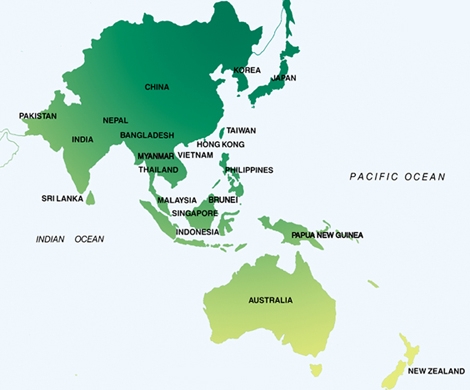
The word on the street Asia_Pacific_Mapis you can fly between Malaysia, Indonesia, Singapore, Thailand, Brunei, Cambodia, the Philippines, Laos, Myanmar, and Vietnam as many as 10 times in 30 days for just $160.

To put it in perspective, a flight from Bangkok to Singapore ranges from $84-$124 one way.

This is not only a cost effective travel deal, but, as you may know, many countries require a proof of “onward travel” to show you’ll be leaving your destination country before you board your plane. This pass would be a great tool to grab some last minute “proofs” when the time comes.

You can read more about the deal on Thrillist here:
http://www.thrillist.com/travel/nation/crazy-cheap-deal-fly-to-10-countries-in-30-days-for-160

Or just bite the bullet and book your travel with AsianAir Pass here:
http://www.airasia.com/ot/en/book-with-us/asean-pass.page

Gyms as a service (GAAS): Finally, better gym options as product services

imgres-1Five years ago I walked into my 24 Hour Fitness Gym and filled out a cancellation form.

“Are you sure that’s all I have to do?”, I asked the front desk rep. “Yup, you’re good to go, good luck with your move!”

Six months later I got a call from a collections agency telling me that I had six months of unpaid membership fees needing collection. Needless to say, it was an awful experience. I am sure many customers end up foregoing upwards of $200 or more in that situation all the time – not me. After hours of phone calls and emails, I was relieved of my “obligation,” but vowed never to use 24 Hour Fitness again – what else could I do than that, right?

In a world when Taxi’s treated you like crap but you still rode in them every day, there wasn’t much you could do with companies like this. Except turn around, take it and walk away.

When I moved back to the area I was a bit hesitant to sign up at any gym, given my experience. I stayed true to my vow and avoided 24-hour Fitness (even though it was cheaper) and signed up at Crunch Gym instead. I had options! Or so I thought.

lsThe sales staff was friendly at Crunch and, as expected, paying for the initiation fee and last month’s dues upfront was a piece of cake. I was instantly a member and assured by the sales staff that, “there won’t be any hassles if you decide to cancel – anytime.” Since then, two years of dues that would have gone into 24-Hour Fitness’ pockets went to Crunch Gym; I had no complaints.

Then moving time came again and I went in to cancel my membership.

“Sorry, you can’t cancel your membership *in* the gym. You have to call this number.” The Gym rep handed me a card. It was a bitter tasting sentence to hear while watching sales staff effortlessly input credit card numbers for the Gym’s newest members.

I called the Crunch cancelation number. “We already charged you this month…” (I come to find this was NOT true) “… and we’ll use your deposit to pay for your last month starting in April. Plus a $2 charge for any differences remaining since we’ve increased membership fees.” It was March 2nd and I was now paying until May 1st.

robber_MGBasically, in one sentence, my “easy cancelation” turned into about $120 of dues over two months toward a gym membership I just canceled. Jackie had the same experience except with a higher monthly membership fee. Crunch Gym robbed $270  from our household. Poof, just like that, Crunch now has the money and we do not. There is nothing the service agent can do about it and he gives me an email address so I can contact a manager to “have it explained to me further.” Sorry, there is no explanation that justifies being fleeced. I asked for a write-up from him explaining why I am being charged for a service I am canceling so I can submit it to the BBB with my complaint. He said he couldn’t do that. He thanks me for my call and hangs up on me. Note: The things they can and cannot do at these Gyms seem heavily skewed in their favor. Weird, huh?

Jackie said let it go, but that very sentence gave me a pit in my stomach. How many Gyms use this tactic to make up the hundreds of millions of dollars in revenue they see each year? They know most customers will let it go, so they keep doing it. I told the story to a few friends, and, not surprisingly, they tell me that it has happened to them with Crunch and other gyms as well. Have gyms formed a Mafia? I guess they have the muscle for it…

The problem that occurs when companies become monopolies (like Comcast) or mafias (like Crunch Gym and 24-hour Fitness) is that customers don’t have much choice in the matter. In this case, either take it or don’t work out.

Uber and Lyft finally gave us the tools to allow us to ditch Taxi cabs (poor customer service standards and all.) And Netflix, Google, and Yahoo are finally causing Comcast to AT LEAST start honoring their “maintenance window” as they try to prove their worth before judgment day. (Gosh, I sure can’t wait for the day Comcast cries about how unfair it is that Google is taking their business.)

Well America, good news. The new world is being filled with products that focus on value, access, customer service and quality. They are starting to aim their slingshots at the Goliaths we know as gyms.

You have options! You can ditch your P.O.S (and/or overly priced) gym and actually get more for less in the process! A membership where your patronage goes toward the local gyms, you’re experiences are of higher quality and customer service is a tent pole. Now that the game has changed, your “gym membership” can get you into specialty studios, access to activities like Kayaking and sports, and a truly “cancel anytime” philosophy that ensures people that have to leave do so as happily as when they joined.

Here are a few:
fitmob_color.fw_1) FitMobfitmob.com – For about the same price as Crunch (and way more friendly cancelation policy and service) this company offers a membership to a multitude of different gyms and activities. For example, you get access to a awesome yoga studio, or (like me) you can head down to the shore and go Paddleboarding for the day. All free with the membership.

Currently Serving: San Francisco, San Jose, San Diego, Portland, Philidelphia, Austin, Dallas, Seattle

imgres2) ClassPassclasspass.com – Founded by Payal Kadakia ClassPath offers access to a variety of studios you can register online for free with your ClassPass membership. What is great about this experience is  you don’t get a class thrown together by amateurs working for a corporate gym. Instead, you get to go to the best studios in town that specialize in an activity for whatever you want to do. ClassPath is on to something having just raised $14M in funding and growing exponential into more and more cities month after month.

Currently Serving: NEW YORK LOS ANGELES/ORANGE COUNTY SAN FRANCISCO CHICAGO MIAMI BOSTON WASHINGTON, DC SEATTLE ATLANTA AUSTIN CHARLOTTE COLUMBUS DALLAS/FORT WORTH DENVER HOUSTON MINNEAPOLIS/ST. PAUL PHILADELPHIA PHOENIX PORTLAND SAN DIEGO LAS VEGAS RALEIGH BALTIMORE TAMPA ST. LOUIS ORLANDO NASHVILLE KANSAS CITY LONDON TORONTO VANCOUVER

Sorry Crunch, you had your day and just like the Taxi mafia – your time is limited.

More comments available on the public FB post here: https://m.facebook.com/story.php?story_fbid=10152976618217107&id=704372106

**UPDATES***

March 3rd – Still no charges (or pending charges) on my credit card bill from Crunch. The support rep told me it was already charged and there was nothing he could do about it as a result. Nice tactic – untrue after 2 full business days.

(March 2nd) Crunch asked me to contact a store manager – this is what I sent:
Screen Shot 2015-03-03 at 5.42.53 PM


Update March 4th: If you’ve had a similar experience you can contact Jasmine <Jasmine.Vega@crunch.com>. Below is her email and my reply.

Screen Shot 2015-03-04 at 1.22.34 PM

March 4th

Screen Shot 2015-03-04 at 3.33.42 PM

Hong Kong

Hong Kong is deeply integrated with western culture. Although its foundation began with China, it became more influenced by British colonialism and, as such, has developed an identity all its own.

You’ll notice this unique mixture immediately when you arrive. Street signs that line the city are printed in plain English with names like “Queen’s Road” or “Russel Street”. We quickly learned, however, that you can’t count on the English versions of the roads to get around.

Screen Shot 2015-03-09 at 1.44.20 PM

None of the cabs we took spoke a lick of English, nor did they understand the English version of our destination’s cross-streets. Even more complex, as we learned from some locals, is the Chinese version of the streets don’t directly translations to the English ones. In essence, many streets have two distinct names.

Tip #1: Always take a picture of the local Chinese text of the destination you want to go (or write it down) so you can show it to the cab driver. Learning a nearby landmark’s local name won’t hurt either.

Other than that, getting around town was fairly easy with Google Maps and English (remembering, of course, that it is always a good idea to learn a few local phrases out of respect for your host country.)

times-squareThere is a constant sense of old and new while walking through Hong Kong. A trendy bar filled with young business people dressed to the 9s is placed directly next to a tiny old-style market with burlap bags of dried foods displayed on its stoop. You’ll see bamboo scaffolding next to an ancient temple with rising incense smoke flowing into the neon lights of a brand new bar, only a block away from a two story aluminum-plated Apple store. The city is somehow both completely foreign yet comfortable and familiar.

Tip #2: You’ll notice symbols such as “11/F” on some signs. The pattern refers to the floor an establishment is on. In this case the “11th floor.”

ho-lee-fook-4-818x535On our first night, we stumbled through a neighborhood filled with expats. It took a moment for it to register, but rows of restaurants and bars were completely filled with non-Chinese locals. In a way, it was like Hong Kong’s American-town, nicely balancing out our China-town back home.

The concept of culture fusion continues into the world of food. There’s a continuum of tastes ranging from the very pure and authentic Chinese dishes, to its modern interpretations, all the way to an east-meets-west blend. The first restaurant we stopped into was brand new and, sadly, we were drawn to mostly on name alone. It was called “Ho Lee Fook” and it had a 1-hour waiting list. We used the time to visit some local bars and grab a drink before dinner.

Jackie has an amazing sense of finding “good spots” when we travel. She is an instinctual Yelp database. On our kill-time-before-we-eat bar-cruise her spidey-sense drove us into a small bar called the Three Monkeys. No exaggeration, we had the best drinks we’ve ever had in our lives. Perfectly blended and absolutely delicious. At this point we also began to realize that Hong Kong was not cheap by any means – each drink was around $15+ USD.

sum_1617-2373926169-o

We finished up and headed back to Ho Lee Fook. The hostess led us down into the basement; Jay-Z and Jimi Hendrix’s music filled the rooms. Once we sat down and got comfortable we realized the restaurant was filled with Americans and Brits. We stumbled into another ex-pat bunker.

Restaurant_0

Tip #3: When you are visiting other countries and time is limited you can sometimes get a slight feeling that you’re getting cheated out of your adventure when you get surrounded by tons of your own people. But, in this instance, we recognized that these ex-pat areas were very much part of the local culture and we embraced it. It helped that the food was amazing. The final bill came in around $80-$100.

We hit the must-do list.

27712944We took The Peak Tram up the famously steep climb to the top of The Peak Tower. There you get a 360-degree view of the city, 396 meters above sea level. Walking around the small town at the top of the hill finally gave us a sense of the beautifully lush, island-rich landscape that is Hong Kong.

1.1.1.2-Peak_03

Tip #4: Don’t waste your money on The Peak Tower’s 360-Degree View entrance fee. Wrap around to a nearby building’s rooftops and get pretty much the same view for free. Also, sometimes it’s foggy and you can’t see anything up top anyway. Try to go on a clear morning.

We also headed to see the “big buddha” by the way of gondola and got even more breathtaking views of the country.

hk-cablecar

But mostly we ate.

Screen Shot 2015-03-09 at 1.39.42 PMI’m not sure, but I imagine it’s quite rare to visit two of the least expensive Michelin star rated restaurants in the world back to back. We had dim sum at Din Tai Fung, which was good but not mind-blowing – and a bit pretentious. Even more memorable was the savory gravy biscuits we had at Tim Ho Wan on the bottom floor of a mall for about $1 each. They close early so make sure you check the hours before you go. We got there a bit late, but they were nice enough to make a few to go boxes for us take out. We shared one biscuit from the bag as we walked away and they were so good I ran back to the restaurant to get six more.

My biggest food fumble was made by my weakness to marketing propaganda. Everywhere we went we saw a McDonalds promoting “the prosperity burger.” I had to know what it was so I finally gave in and ordered it on our last day. All it was was a McRib with onions. Yuck.

prosperity burger

Finally, I want to give a shout out to the awesome stay we had at Hotel LBP. They staff was friendly, the rooms were super nice and we got it at a great price (possible from a promotion.)

Thanks for the invite Emma Watson! I support “we” through He for She

Below is Emma Watson’s “He for She” campaign speech. If you haven’t seen it yet it’s a worthwhile 8 mins of perspective. As she said,

“How can we effect change when only half is invited?” …

“Both men and women should feel free to be sensitive. Both men and women should feel free to be strong.”

She does a great job in helping reset perception, open the door for conversation, validate both sides, and convey a strong message for change. All the components that make for a great ambassador.


As Macklemore said in his popular song “Same Love” that will ring true in spite of the generations of people delusional about any inequality they thinks is “right” or “appropriate” at any particular time – be it race, economics or gender bias – it’s simple:

“It’s human rights for *everybody*, there is no difference!”


Sure, we could say “who are these entertainers think they are?”. But I think it’s more important that we appreciate their choice to use their influence for good, to support those around us for their basic civil rights, and most importantly giving us a moment to ask ourselves,

“maybe it’s time it I spoke out and influenced change to help those around me too.”

Sean Shadmand Presents for NewCo’s Yahoo Content Series


Last year we really enjoyed opening our office up to OpenCo and revealing how we think and work as well as how we see technology transforming the world we live in. We ended with a look at “2023” and what all that may mean over the next decade. This year, after we were asked to present again under the new NewCo brand we took a different approach. In our talk today we hosted a thought experiment, taking a philosophical journey into what is content, how we know the difference between good and bad content, and how we can use that information to create the next set of products (or just appreciate the ones that come out a bit more.)

A talk about content in only one form of t would be sadly ironic. So, if you missed it we recorded and are presenting a few forms of the talk for ya.


I used this snazzy little tool that records voice on my iPhone and syncs the slides as a remote while giving a preso. Check out the tool at  http://penxy.com/ or the final resulting “talking slides” at http://penxy.com/hyw


Slide Notes

(Min 14:00 in Slides Above)

This year for NewCos new track named Yahoo’s content series we’ll take a different approach and start off by asking a more fundamental (seemingly obvious) question.

What is content?
For the most part we know it when we see it. It’s the substance or material we deal with in a speech, images, tweets, or memes. It can look like this [Essay], or content can look like this [Donald Trump tweet].

As we have access to more and more content in our daily lives the question that becomes more and more important to viewers is whether this content is worse or better than the previous one? Many will say the latter is awful, yet we read content like this in droves everyday. Why?
Let’s upgrade the question a bit and ask:

What is good content?

That’s a pretty tough question to answer but an important one too. As more and more innovative products come out we can get caught up in critiquing or dismissing one from the next. One super popular dismissal is the “I don’t care about you eating waffles on Twitter – I hate twitter it’s just noise”. When we take this point of view we can miss out on some amazing developments in our culture not to mention some amazing opportunities that come from that level of access.
Fair warning this discussion is gonna get philosophical. We’ll keep diving deeper into questions like that around content.

I know – we all love a presentations structure that involves action items, best practices or check lists ready to go by the time we leave.

Sometimes though it’s important to step back before you ask, or answer, a deeper question. After all the concept of “good” and “bad” is one of the oldest philosophical conundrums in existence. Furthermore is it even the right question to ask at all? Let’s see what we discover…

So let’s get dirty and start our philosophical journey by restructuring a very – very old question:

If a tree falls in a forest and no one is there to hear it does it make a sound?

We may be quick to answer: “of course it makes a sound. I’ve heard a tree fall and heard its sound – my presence is not required.”
But the question’s more of a thought experiment than anything else. What makes the question interesting isn’t the science of sound but the philosophy behind observation and reality of what sound is without an observer. Thought experiments like that can uncover new questions that may live beneath the surface that are able to more directly answer more monumental questions.

So let’s use our time together to dive into a thought experiment around content and see where we end up

If information is created but is never shared for others to see it is it still content?

I mean if content can stand on its own without the communication aspect…
Would you say then that all the hundreds or thousands of ideas and thoughts locked in our heads are actually hundreds or thousands of pieces of content then? Maybe.
Or maybe content is so inextricably tied to sharing that the two can’t maintain the definition on their own.

Hmmm.. Okay…if that’s the case then what side is more important in determining goodness? How well it’s distributed OR how well it’s formed and presented?
On one hand can we determine how good or bad content is if no one ever sees it? And, on the other hand, how worthwhile is content that everyone sees if it’s not useful or actionable? Content is more than text, sound, or an image in and of itself. In its most basic form it’s a projection of our thoughts that we thrust out into the world. As Maslov would probably put it: it’s a basic human need that makes us social and allows us to self-actualize.
If Descartes was alive today he may devise a whole new Cogito (“I think therefor I am”) to “I Share Therefore I am.”

We always hear there are no good or bad questions. And we are all unique – all our thoughts are important reflections of ourselves (which you may realize after thousands of dollars of therapy.) So why are we so driven to deem content good or bad if it is fundamentally a projection of self? Hmmmm… Interesting but I don’t think we’ve dived deep enough yet to form an answer… Let’s take another dive…
Let’s deconstruct content even further and ask

WHY is content?

(Min 23:00 in Slides Above)

(not a well formed sentence I know but you get the idea.)
Content is a transferring of our minds and being into an everlasting form.

It gives us eternal life and has so for thousands of years. In that regard it is one of the most advanced technologies ever created in the world. Our short finite lives are made infinite!

As the acronym YOLO so eloquently states, “You only live once” – but with the entire world filled with all these projected minds in the form of content we can live many lives vicariously through others.
If those concept are too abstract for your fancy and you’re more of the practical type then let’s frame it this way: Content gets stuff done more quickly. The faster we communicate the faster we can act between us.
I give you information locked in my head – you give your version back to me –
and like DNA all our contributions result in a greater overall result that may have taken ages had we attempted to think through it all on our own.
So with that I present my first thesis: The figuring out how to label content as good or bad comes from entirely the wrong place. The real question should be how do we use THIS content or THAT content? Where can we put each bit of content to allow our thoughts a chance to live in the open so that anyone can get the value from it if they so choose?
Content is simply a medium we use at the moments we have thoughts to overcome our inability to be able to be inside one another’s head.

The real endeavor is to cut out the middleman completely and just exchange thoughts. And until we can do that our goal is to shorten the time it takes to transfer our emotions, ideas, and – our lives – as much as possible. Ultimate efficiency, eternal life, and dare I say maybe even peace will be achieved in that final move. It won’t be about us dealing with good and bad content it will be about us accepting all thoughts as a chance to achieve those ultimate goals.

If you appreciate the reality that a single mind is the ultimate goal then it will give way to clues to foresee what product, or content society will embrace next. I’m not saying we will achieve singularity tomorrow,
nor am I here to rally everyone to start making change so we do something – because it is inevitable whether you like it or not. I am here to help add to a map on how and why content exists so we can navigate what comes our way, or create useful products along the way.

The real problem we are attempting to solve in almost all products created today is: how do we decrease the inefficiency impeding us from what can be called a mind meld. Each new product attempts to close that time-gap from one persons mind and emotion to the next.

Still not convinced that is the ultimate direction?– lets take a break from the abstract and look at our known history for validation…
In the beginning it was the lack of the written word, passing down information through story. It got the job done but it could take a lifetime or more for anyone to have a chance to see ones work or hear ones thoughts in order to make use of them. It was also super lossy – changing with each storyteller and generation. The written word helped us set those words in stone so although interpretation was still at play the base from which we worked was identical to those that could read the original. Unfortunately there was only one original so it still took a while to get it circulating and – you break, you buy.
Then, boom, the creation of the printing press! Anyone with an idea could have a shot of distributing their thoughts in ones lifetime – rich or poor, academically educated or not –– well, as long as you could read or had someone that could read to you. An example of how powerful an easily copied text can be is seen in the 1500s when the Christian world’s perception of their religion was altered because of a German Friar named Martin Luther and the content he shared. Powerful yes,

but it still took 2 YEARS for his thoughts to circulate in his community. Could you imagine waiting 2 years for your questions or ideas to be circulated?

How frustrating for us to imagine?! At that time not only did communication work on a schedule like that but the perception was that not everyone needed to read or share content in the first place because the common folk were too dumb to make use of it. What value could they bring to the table?

We look back then and see a travesty around the freedom of information – but does our generation think all that differently? When we created AppMakr the same objections came up – “not everyone needs an app.”

The prediction was we would maybe make 4 apps a month. In our first day we had requests to make thousands. Against all doubt we knew that it has always been true that the power of distributing content should be given to the people “good” or “bad” – it was our guiding principle. … But I’m jumping ahead …

We’ve seen the drive to democratize content and speed its ability to be distributed for hundreds of years since the printing press.

Getting our thoughts out to the world in years
to weeks, to seconds with radio and TV. But then a problem still remained – instant is great but everyone should have a voice and the access to hear it – not just the privileged – we still wanted more.
And so the Internet was born: Instant transfer of anyone’s thoughts to anyone willing to access it. It was given the perfect term: “getting connected.” And our path to do so continued.

From dial up to Wi-Fi, from PC to laptop, from Laptop to phone. We are decreasing the time it takes for each of our thoughts to get out there.

The iPhone was also thought of as a fad by critiques after its release – for years large corporations wondered how they succeeded. Many missed that its main achievement was to further decrease the time and complexity it takes for us to create, share, and ingest content from anyone saying anything more instantly.

Whether it’s a lifetime to years or 3 seconds to 1 second. If you can decrease the time it takes to get ANYONES mind into the open you are on to something.

Of course we all hear the call to arms that everything is so different now, and bad, and chaotic – we are so much worst and impatient than in the past! I offer a different perspective, things are only different in the tools we use but our yearning and desires are exactly the same: “Hear me!”
Or, may I please have access to what is going out there.
Our heads are no more immersed in that desire today.
Than it has been in generations before us. We are just able to achieve those goals more practically.
Data has always been thrust upon us.

We are simply trying to make it ALL more manageable from one person to the next.

What we’re driving towards is a moment where my thoughts are yours in the same moment. Think of the frustration you’ve ever felt when you just wanted someone to understand what you were trying to convey but left only with words and gestures and maybe a white board. How awfully inefficient it is! Just get in my head for a second so we can move on! The channels we’ve seen are just manifestations of that desire we have. It’s still far away but that IS the direction we’re headed and have been headed since the word “I”.

Anything that shortens that gap for ANYONE to get ANYTHING to ANYONE ELSE is following that trajectory and delivering goodness.

Is it asking too much? Are we really so much more impatient than the past?

Why is a month too long to wait but a minute juuuuust short enough?

What is it compared to?

Cutting the time in half is cutting time in half when you move forward – period. And it will always take twice as long as it does now to those looking back. It’s not time thats a problem – time is relative. 

All content that is caged is bad content because it doesn’t have the chance to allow someone to try and make their mark, live vicariously through shared story, or help them self-actualize. Sure with this digital tool there’s great power, fear and concern in how we will handle it all but it’s not about getting rid of some of it based on it being good or bad. Content is a tool to convey our thoughts – and we have all kinds of them that seem like garbage or gold from one person to the next.
It’s the difference between this
and this. Same tool different purpose
This is a knife
and so is this. And there are tons others out there. More and more a minute with a better edge or handle or metal or balance. They’re the channels we use to express ourselves with one another more quickly.
We connect in less time by decreasing the physical distance between us and our technology.
We connect with less clicks or gestures.
And yes sometimes that stream of consciousness means we trade breadth of connection about something trivial and seemingly painful to read
for accuracy and depth of critical information that is otherwise caged. Never the less, in both instances we are connecting more effectively. Believe me when we do end up truly “connecting” our thoughts it will be scarier and far noisier than today but innovators will be propelled to figure out how to appreciate and allow for that connection to build from – not work on tearing them down. And each passing generation will have a higher bandwidth they can handle than the last.

So. Maybe it’s not about whether the content is good or bad quality, heck maybe it’s not even about how much it gets shared –

maybe it’s always been purely about how many people are connected and how quickly they can achieve that connection.

Content and sharing are the two fundamental ways we are able to do it today – they are the means to the ends. They are our rocks, and knives, and arrows for lack of any other available means. But they themselves is not the goal. So, maybe good content could be defined as ANY-THING that connects ANY-ONE in less time or complexity then what is currently out there.
From stones
to books
to TV still lacking the option to connect or comment
To the websites and blogs where interaction intertwined itself with the content being shared.

Once communication and distribution became instant we shifted our strategy to decrease the time-gap between exchanges by limiting the amount of content exchanged when conveying a thought in the first place.
Those thoughts, emotions and ideas were created and deployed more quickly and frequently with statuses, and 140 letter max tweets – a real stream of consciousness was born. And that consciousness was further fed with the ability to post even if you weren’t by a computer.
So who are we to judge even shorter content still?

The end goal is about getting a feeling, thought and/or emotion to whom ever you want or as many people as you want with the least amount of friction.

So why is Yo so surprising?

Less characters and a quick intuitive interface has created a quicker connection between people. In first principles we aren’t searching for depth in substance – we are searching for a mind meld.
With 2 clicks I can convey “yo I’m thinking of you”, or
YO “I’m in town” – if the message is received and the minds are linked then it is content and it is valuable and it is good.
Yes, there is beauty in the creation process and that shouldn’t be forgotten, but let’s also recognize that the PROCESS was originally created to convey the idea with the tools available at the time. Losing site of one is as destructive as the other. The art comes from the need and some of our needs are satisfied within the art.
Which could be why memes are so powerful. Quick, efficient, creatively assembled, instantly connecting complex an otherwise tough to describe moment of humor or feelings with others through a shared experience we can relate to.
We can have taken the concept of video and trimmed it to its essence in a 5 second clip.

if you are afraid to share because to many people will see it then
a product removes that barrier so your security can be guaranteed with ephemeral storage.
We want to be closer still and our tools are extensions of that. Now we are cutting out the middleman entirely (pun intended) and letting our body do the communicating for us – instantly.

It’s amazing – in the pursuit of closing the time-gap between us we’ve managed to jumped right over our stream of consciousness and found a way to release what our body is saying even before our consciousness realizes it; a whole new level of getting connected.

So I that I think our thought experiment has yielded a conclusion for the question on what is good content:

GOOD CONTENT IS: ANYTHING THAT CONNECTS ANYONE’S THOUGHTS EFFECTIVELY IN LESS TIME OR WITH LESS COMPLEXITY THATN IS CURRENTLY OUT THERE.

So if nothing else keep that in mind when you see the next best thing and wonder why.


Thank you for keeping an open mind.

=============================================

We used the Google On Air tool (basically Google Hangouts but for public live streams that are also automatically uploaded to Youtube when the broadcast ends.) This is my 3rd attempt to use On Air in some live stream capacity and it finally worked well! The trick was setting up a second computer than from my own with more memory. Long story short, here is the presentation using that product:

Video: https://www.youtube.com/watch?v=w_64IZjmIY8&edit=vd

On Air Event Page: https://plus.google.com/events/c1ginlf8oufe9pkl6mcq38tb1mc