Knowing the rules free you from them

Mastery begins when you understand why the rules exist, and when they no longer apply.

There is a moment in learning almost anything when the rules that helped you become competent start getting in your way.

But fighting doesn’t happen inside a doctrine. It happens between two human beings, in circumstances that cannot be entirely anticipated.

In this interview, Bruce Lee discusses how martial arts develop styles, doctrines, and prescribed ways of fighting. Eventually, the doctrine becomes more important than the purpose it was created to serve.

Lee’s philosophy was to move beyond rigid styles and respond naturally to the situation in front of you.

That idea extends far beyond martial arts.

When knowledge becomes a constraint

When we’re inexperienced, rules are incredibly useful. They compress someone else’s experience into something we can follow. A designer learns composition. A musician learns scales. A programmer learns patterns. A manager learns frameworks.

This is how expertise begins.

But there’s a subtle failure mode. We can become so good at following the rules that we forget why they existed in the first place.

A technique is supposed to solve a problem. Eventually, we start treating the technique itself as the solution.

This is particularly obvious in art.

A young girl in a white dress and veil kneels at a church altar, reading from a prayer book. A mature man, possibly her father, stands beside her, while a priest in red vestments prepares a ceremony. The scene is set in a dimly lit church with candles and floral decorations in the background.

Picasso was an accomplished traditional painter before helping pioneer Cubism. Jackson Pollock studied traditional drawing and painting before developing his famous drip technique. Their departures from convention were informed by an understanding of the conventions themselves.

The distinction matters. Breaking a rule because you don’t understand it is quite different from breaking it because you understand its limitations.
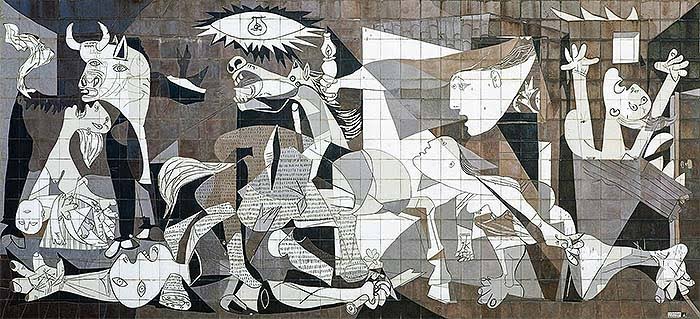
A large mural featuring abstract figures and forms in shades of black, white, and gray, depicting scenes of chaos and suffering.

Great artists aren’t necessarily rejecting what they’ve learned. They’re exercising the freedom that comes from having learned it deeply.

The difference between someone who can reproduce a technique and someone who has mastered a craft is often the judgment to know when the technique no longer applies.

The problem with best practices

You see the opposite in workplaces all the time.

Someone learns a management technique, a product framework, a sales methodology, or an engineering practice. It worked somewhere, so they implement it exactly as they were taught.

Then reality gets involved.

The customer is different. The team has different capabilities. The constraints have changed. Yet instead of adapting the technique, we often blame the people for failing to execute it correctly.

We’ve confused adherence to a process with the purpose of the process.
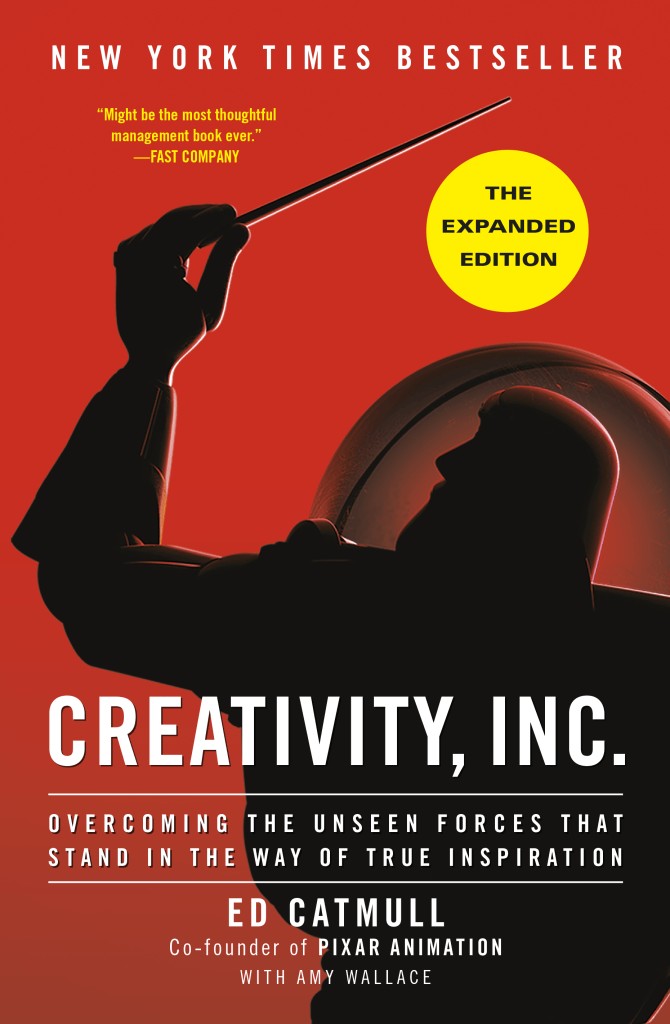
Book cover of 'Creativity, Inc.' featuring a red background with a silhouette holding a pencil. The title and author's name are prominently displayed.

Ed Catmull explores a similar problem in Creativity, Inc., describing how Pixar developed processes to support creativity while recognizing that no process could guarantee a successful film.

The process was there to help people exercise their judgment, not replace it.

That’s a distinction many organizations struggle to maintain. A successful practice becomes a best practice. Best practices become policies. Eventually, people are rewarded for following procedures rather than producing the outcomes those procedures were designed to achieve.

Ironically, the very practices that once helped an organization succeed can become obstacles to its progress.

The freedom of understanding

There’s a philosophical dimension to this as well.

Nietzsche challenged the tendency to inherit established values and conventions without examining their origins or legitimacy. His philosophy encouraged individuals to question received assumptions and develop their own understanding rather than simply accepting what tradition prescribed.

This doesn’t mean that established knowledge is worthless. Quite the opposite. We need accumulated knowledge to avoid rediscovering everything ourselves.

But inherited knowledge is a starting point for judgment, not a substitute for it.

And that may explain why genuine expertise is so difficult to teach.

You can teach someone the mechanics of a craft. You can provide frameworks, examples, and procedures. What is much harder to transfer is the understanding underneath them.

The part that recognizes when circumstances have changed enough that the established approach is no longer appropriate.

This is where experience becomes wisdom.

Experience gives us examples of what has worked. Wisdom gives us the ability to reason about why it worked, and whether it should work again.

Mastery is not obedience

Perhaps the greatest misconception about mastery is that it means knowing all the rules.

In reality, the rules are only approximations of the deeper principles we’re trying to understand. They’re useful because they simplify complex problems, but that simplification inevitably leaves something out.

The beginner needs the rules because they haven’t yet developed the judgment to operate without them. The expert understands that the rules were never the ultimate objective.

This is true whether you’re creating art, building a company, writing software, or practicing martial arts.

The goal of learning is not to become someone who follows every rule perfectly, nor someone who proudly ignores them.

It’s to develop enough understanding that you can respond to the problem itself, rather than merely following the instructions someone else developed for a different problem.

That’s the freedom that comes with mastery. And when you get their true purpose you can finally benefit from the teaching.

Attention Deficit or Boredom Adverse

“Back when I was a kid we had far greater attention spans!” Well, whoopy-doo for you.

Youtube, TV, Commercials, Audio books and Facebook. The list of products that drive us into a pattern of ingesting only short-blips of information goes on and on. Some believe the consequence is a loss in our ability to pay attention to any lengthy (more traditional) format, and in their mind, anything of real value.

I take issue with that belief entirely. I’d rather ask this: Why is there a requirement to be able to pay attention to long-duration formated info in the first place, and what makes that info so much more valuable? Isn’t the goal of listening, reading, or watching information to comprehend it? Where does “length” and “staying still” play into that requirement?


As a kid people thought I had attention problems. I had tons of energy and not enough places to put it all, especially during school hours. Reading one long-ass book (that I had no interest in) for a class (I didn’t care much about) was not very motivating; I perceived writing in much the same way. Needless to say, I didn’t accel in those areas much.

For me, learning was just that — learning. It wasn’t a proof of my ability to sit still and do nothing for a long period of time, or to impress a teacher. Learning was all about answering questions, digging into things that interested me, and unraveling things that confused me. When the internet became “a thing”, I found myself ingesting tons of information daily, and it allowed me to pursue those questions with ease.

Fast forward a couple decades and I’m sitting here auditing an edX class at 2x-speed. I’ve skipped over a few sections that do nothing more than set the audience up for what’s coming (e.g. Boring. I get it. Let’s move on). And you know what? I love it — I love taking classes! As for reading, In this new environment of self-paced, kindle-based, materials I’ve found myself reading more books than I ever had in highschool. Even writing has become interesting to me. I started a blog 7-years ago to become a better writer, and, over 200 posts later, I’d like to think I have improved quite a bit. With all this interest in taking classes, reading, and writing, I have to ask myself: do I have an attention problem, or am I just terribly adverse to boredom (and the old, slow-moving, teaching styles)? Which led me to ask, why the hell would anyone want to be great at being bored in the first place?!

As our technology pushes us into a new format of learning, maybe it is less about “shut up and sit still”, and more about, “here is the world — have at it!”

It’s easy to think the world is getting dumber. We see “views” on YouTube of someone getting hit in the nuts soar into the millions, and people with obnoxious (or useless) things to say use social platforms to say them at scale. It is important to remember that with or without these new mediums people have been dumb for a long time. It is also important to keep in mind that the speed of advancements in technology are increasing exponentially. Those advancements push social media, but they also cut the time it takes to roast a turkey, pop popcorn, and provide classes to people like me that can now learn more efficiently than they ever have before.

I think learning was built on an extremely inefficient foundation because we didn’t have any other way to do it. Now, we are finally trimming the fat. The problem is, our kids are now able to eat lean beef but we are insisting that they still must chew the lard first. Why?

I say, take those little bits of data, re-arrange them, pause them, and fast-forward them as you wish. Let your curiosity for answers be the guide, not a demonstration in formalities.

We aren’t losing the art of education, we are deconstructing it and reassembling it through the gift of technology. The world has started to suit everyone’s individual pace, interest, and schedule. All the lost hours of dramatic pauses, introductions, segues or fluff are gained in the hours we can instead paint, exercise — or better yet — learn something entirely different.

Sure, it may mean that listening to a 1-hour speech at work will be more difficult for a person that is used to this newer, more efficient medium — but who’s fault is that? Why the hell are people talking for an hour anyway?! Is it necessary to achieve their objective? Are we simply committed to a style of interaction in the real world for no other reason than our attachment to tradition? Are we simply not yet ready to embrace a more efficient style of information-sharing that the digital world has built from the ground up? If you are looking for art and style, maybe you should go see a play.

As we move away from requiring our audience to sit down and shut up for an extended periods of time, let’s keep our goals in mind. We are not here to prove to others that we can sit through something that does not excite us, but to find out what does. It is not to prove we can endure boredom, but to break the shackles that required us to be bored in order to learn. It is time that we agreed to fight boredom, and recognize it as an old, outdated, emotion.

My greatest life lessons from Computer Science

I really appreciate  my education in Computer Science. The most valuable mental shift I gained was the understanding that there are no “hard problems.” To recognize that even extremely difficult problems were easily solved once you were able to deconstruct them into smaller more simple ones. Problem-solving is about figuring out how to simplify, dismantle, and rebuild toward solutions. Simplifying is all about getting good and asking the right questions.

For instance, playing the guitar is hard, playing chords with rhythm is easier, playing chords is even easier, playing a note is more easy – and so on and so forth.

Just breakdown what you want to accomplish and get great at each little piece of it. Then, get great at putting each individual piece together and your problem isn’t all that bad.