
– Sean Shadmand
Author: sshadmand
OpenCO 2013 – Why we love SF, how we work, and our world of content in 2023

OpenCo is the city’s answer to the question: “What makes San Francisco – San Francisco?” Instead of trying to explain the nuances to the culture here the founders of OpenCo decided the best way to describe it is by opening the doors to as many offices as possible within and allow people to come in and see for themselves. At OpenCo attendees sign up for a free pass to any of the over 100 SF offices, from theater troops, to restaurants, to tech startups and more. During the event attendees tour around the city walking into offices to check out their space and take part in an interactive presentation about what that company is doing to try to make an impact on the world. It’s not a lecture, nor a sales pitch, nor is it focused on recruiting, but instead it is a presentation that takes a look into what a company is thinking and how they work. Now expanding into NY, London, and Detroit, the OpenCo movement will be an exciting one for those interested in peeking into to the companies that make a city tick.
This year ShareThis was proud to be invited to host the second annual OpenCo event and we were excited to open their doors to their San Francisco office. There Sean Shadmand talked about the difficulties companies in the industry of social/tech are faced with and how they plan on innovating in the years to come. Check out a video of the presentation and slide decks below.
Video on Vimeo
Slides recorded by Penxy

Product Review: The Google Chromecast
I love my Google Chromecast. It’s light weight, cheap, simple to use and is very transportable. I’ve tried many bulky pieces of equipment to enhance my home theater experience such as a Roku, Google TV, and Apple TV. For all the extra features those products could provide, and the extra costs they had to have them, Google Chromecast is the only that has given me exactly what I needed. Sometimes less is more; this is one of those cases.
One thing the other products failed to appreciate is how much of my time is based on my laptop, and how readily available it (or my iphone) is. I don’t need a second computer to run my TV. My laptop has everything I need so making the main media hub makes sense. No additional keyboards or remotes needed.
Chromecast uses your wifi network and its built-in HDMI jack to create a media bridge between your computer and your TV. Once connected you will need to download the Chromecast extension for your chrome browser. Once it place you’ll have the ability connect your browser (and everything on it) to your screen. If you want to play movies then all you need to do is drag your movie file into Chrome and the browser will play it as well. If you want to share your desktop with your screen just use the Beta screen casting option – which is still a bit hit or miss.
I don’t need more and I am happy to pay less. (Chromecast is 66% less than most alternatives in the market today.) If you haven’t taken the leap to get one I suggest you do, or make sure it is on your christmas list 🙂
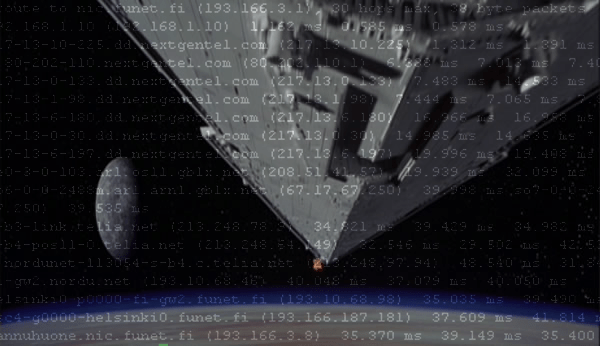
Super Nerdy “traceroute” fun
 Okay, fair warning this is, as my friend Kanad would say, “Nerdy Gigabyting” stuff.
For all you Star Wars fans out there, and even some op engineers that may not like Star Wars check out these hops in your terminal shared with me my friend and co-worker Jason P.
#> traceroute 216.81.59.173
For those of you that are curious about what the hell a traceroute is, it is a way to see the set of network hops taken to get to the destination in question. For instance, when you visit http://www.seanshadmand.com from your computer the request is sent to your local network, then a nearby network and then the next switching and moving between networks until it arrived at the network that holds my website. Just ike taking multiple roads to get to and from work your request must travle through different “intersection” to get to a web page.
Here is an example of doing a traceroute to my DNS http://www.seanshadmand.com
Sean-Shadmands-MacBook-Pro:~ seanshadmand$ traceroute seanshadmand.com
traceroute to seanshadmand.com (54.245.121.115), 64 hops max, 52 byte packets
 1  10.4.11.1 (10.4.11.1)  3.884 ms  1.013 ms  2.993 ms
 2  10.4.1.1 (10.4.1.1)  0.842 ms  0.977 ms  1.194 ms
 3  50-0-241-217.dedicated.static.sonic.net (50.0.241.217)  9.055 ms  8.422 ms  10.212 ms
 4  gig1-28.cr1.colaca01.sonic.net (70.36.228.97)  9.576 ms  6.047 ms  7.426 ms
 5  po3.cr1.lsatca11.sonic.net (75.101.33.166)  8.560 ms  9.594 ms *
 6  * * *
 7  0.xe-6-0-0.gw.equinix-sj.sonic.net (64.142.0.185)  6.043 ms * *
 8  * equinix01-sfo5.amazon.com (206.223.116.177)  13.506 ms *
 9  * 205.251.229.173 (205.251.229.173)  49.171 ms *
10  205.251.232.70 (205.251.232.70)  38.752 ms
    205.251.232.112 (205.251.232.112)  32.057 ms
    205.251.232.68 (205.251.232.68)  34.793 ms
11  205.251.232.141 (205.251.232.141)  29.312 ms  32.983 ms
    205.251.232.159 (205.251.232.159)  41.429 ms
12  205.251.232.165 (205.251.232.165)  34.375 ms  35.858 ms  64.349 ms
13  ec2-50-112-0-241.us-west-2.compute.amazonaws.com (50.112.0.241)  41.451 ms
    ec2-50-112-0-163.us-west-2.compute.amazonaws.com (50.112.0.163)  30.499 ms  28.531 ms
Here you can see the request working its way from our local network to our Sonic.net provider all the way down to the network hosting my site, Amazon.
Okay, so here is what the original traceroute I mentioned above did in 64 hops – the following is a spoiler alert, do not scroll down if you want to try it yourself 🙂
Sean-Shadmands-MacBook-Pro:~ seanshadmand$ traceroute 216.81.59.173
traceroute to 216.81.59.173 (216.81.59.173), 64 hops max, 52 byte packets
 1  10.4.11.1 (10.4.11.1)  1.586 ms  0.751 ms  0.748 ms
 2  10.4.1.1 (10.4.1.1)  0.863 ms  0.922 ms  0.976 ms
 3  50-0-241-217.dedicated.static.sonic.net (50.0.241.217)  9.179 ms  7.557 ms  11.639 ms
 4  gig1-28.cr1.colaca01.sonic.net (70.36.228.97)  9.738 ms  8.369 ms  6.678 ms
 5  po3.cr1.lsatca11.sonic.net (75.101.33.166)  7.323 ms  50.077 ms  7.756 ms
 6  0.xe-5-1-0.gw.pao1.sonic.net (69.12.211.1)  6.980 ms  12.417 ms  6.569 ms
 7  0.xe-6-0-0.gw.equinix-sj.sonic.net (64.142.0.185)  5.534 ms  5.873 ms  5.865 ms
 8  10gigabitethernet2-3.core1.sjc2.he.net (206.223.116.37)  6.746 ms  13.966 ms  12.247 ms
 9  10gigabitethernet14-7.core1.lax2.he.net (184.105.213.5)  26.900 ms  20.975 ms  22.262 ms
10  10gigabitethernet2-3.core1.phx2.he.net (184.105.222.85)  74.895 ms  40.622 ms  29.217 ms
11  10gigabitethernet5-3.core1.dal1.he.net (184.105.222.78)  56.980 ms  55.502 ms  54.686 ms
12  10gigabitethernet5-4.core1.atl1.he.net (184.105.213.114)  75.773 ms  74.998 ms  72.689 ms
13  216.66.0.26 (216.66.0.26)  73.062 ms  74.324 ms  72.802 ms
14  * * *
15  episode.iv (206.214.251.1)  116.403 ms  130.009 ms  112.626 ms
16  a.new.hope (206.214.251.6)  111.127 ms  112.484 ms  109.912 ms
17  it.is.a.period.of.civil.war (206.214.251.9)  109.559 ms * *
18  * rebel.spaceships (206.214.251.14)  112.966 ms *
19  * * striking.from.a.hidden.base (206.214.251.17)  114.395 ms
20  * have.won.their.first.victory (206.214.251.22)  114.337 ms *
21  * * against.the.evil.galactic.empire (206.214.251.25)  136.658 ms
22  during.the.battle (206.214.251.30)  116.953 ms  115.696 ms  112.170 ms
23  rebel.spies.managed (206.214.251.33)  110.094 ms  112.563 ms  114.632 ms
24  to.steal.secret.plans (206.214.251.38)  110.638 ms  109.706 ms  109.454 ms
25  to.the.empires.ultimate.weapon (206.214.251.41)  110.453 ms  114.561 ms  114.792 ms
26  the.death.star (206.214.251.46)  113.295 ms  115.245 ms  115.005 ms
27  an.armored.space.station (206.214.251.49)  163.362 ms  113.893 ms  114.685 ms
28  with.enough.power.to (206.214.251.54)  115.263 ms  111.979 ms  117.865 ms
29  destroy.an.entire.planet (206.214.251.57)  114.727 ms  113.755 ms  126.718 ms
30  pursued.by.the.empires (206.214.251.62)  115.042 ms  116.474 ms  110.436 ms
31  sinister.agents (206.214.251.65)  113.995 ms  115.831 ms  115.973 ms
32  princess.leia.races.home (206.214.251.70)  111.079 ms  131.545 ms  115.804 ms
33  aboard.her.starship (206.214.251.73)  111.702 ms  116.699 ms  113.923 ms
34  * custodian.of.the.stolen.plans (206.214.251.78)  120.468 ms  116.254 ms
35  that.can.save.her (206.214.251.81)  112.573 ms  117.197 ms  123.432 ms
36  people.and.restore (206.214.251.86)  110.282 ms  119.757 ms  114.538 ms
37  * * *
38  0-----i-------i-----0 (206.214.251.94)  134.709 ms * *
39  * 0------------------0 (206.214.251.97)  131.887 ms *
40  * * *
41  0----------------0 (206.214.251.105)  116.773 ms  114.683 ms  111.513 ms
42  0---------------0 (206.214.251.110)  114.764 ms  111.789 ms  114.402 ms
43  0--------------0 (206.214.251.113)  111.076 ms  116.629 ms  111.154 ms
44  0-------------0 (206.214.251.118)  112.852 ms  114.205 ms  111.433 ms
45  0------------0 (206.214.251.121)  115.202 ms  112.044 ms  114.663 ms
46  0-----------0 (206.214.251.126)  201.307 ms  111.747 ms  117.750 ms
47  0----------0 (206.214.251.129)  116.196 ms  111.185 ms  110.688 ms
48  0---------0 (206.214.251.134)  110.780 ms  114.799 ms  113.196 ms
49  0--------0 (206.214.251.137)  113.402 ms  115.738 ms  114.843 ms
50  0-------0 (206.214.251.142)  113.381 ms  111.589 ms  116.851 ms
51  0------0 (206.214.251.145)  116.478 ms  111.657 ms  116.318 ms
52  0-----0 (206.214.251.150)  115.002 ms  115.580 ms  116.904 ms
53  0----0 (206.214.251.153)  138.367 ms  115.620 ms *
54  0---0 (206.214.251.158)  113.654 ms  111.288 ms  111.488 ms
55  0--0 (206.214.251.161)  117.350 ms  118.801 ms  147.315 ms
56  0-0 (206.214.251.166)  114.342 ms  120.037 ms *
57  * * 00 (206.214.251.169)  118.554 ms
58  i (206.214.251.174)  117.896 ms * *
59  * by.ryan.werber (206.214.251.177)  150.234 ms *
60  blizzards.breed.ccie.creativity (206.214.251.182)  115.374 ms * *
61  * please.try.again.tracerote.to.obiwan.scrye.net (206.214.251.185)  120.250 ms  146.107 ms
62  read.more.at.beaglenetworks.net (206.214.251.190)  116.038 ms *  115.467 ms

What a company manifesto means to me and what I would expect it to accomplish
A Manifesto reveals the strengths and values within a company, and does so in a way that decreases the number of complex decision making hurdles for its employees in the day-to-day.
The manifesto will be “the bible” (though only a page) of reasons that lead a team without a need for individual leaders to be present, and can help create the next generation of leaders to form in the same vein.
It relieves people from the stresses and distractions inherent to complex (or seemingly complex) decisions, in the middle of the workday, while fighting in the trenches.
Picture this: A team of army rangers are falling back in the middle of an amazonian battlefield. They realize one of their platoon members went missing while under fire. What do they do? Unorganized soldiers may scatter under this pressure and lose their head. Should the next step be “Every man for themselves!”, or “Let’s hide it out until morning”? Luckily this group of rangers knows that there is one core value that prevails in situations like this: “never leave a soldier behind”. – Boom, decision made. They spend their time devising a plan to find him first and foremost (no matter the hurdles – it will be resolved).
Values help form a strategy. Most importantly, when things go wrong, values help keep the bigger picture moving tactically. Especially when “fires” make decision making difficult. Plans fail, but values do not.

More practically speaking, the battles on a tech company’s floor may be less tragic, but are battles nonetheless. Imagine there is a team developing a widget. It is done so with poor (if any) design, but is backend-ready and functional. A discussion may come up around the pros and cons of deploying something that doesn’t look good but is ready to ship for testing. The debate could rage on, but, with a core manifesto that decision is already made: if the core value says design is key to our tests – then the decision is made to implement a design before deploying. If the core value says release when ready and iterate – again the decision is already made.
Those decisions shape a company and should not change week-to-week, problem-to-problem, or day-by-day from department to department. They shape outcomes and the character of a company through a decision tree that is easy to repeat. Consistent and efficient decision-making is more important than re-assessing the perfect decision for the situation each and every time it comes up. The written word is amazing at facilitating that.
Of course, we all have great thoughts and your company has awesome values already, but having them written down is the difference between an interesting legend shared by some and a religion followed by many.
Documentation, although necessary, does not substitute for a short list of values. Documentation is rarely re-read, and often forgotten; we remember “Go when green” not “Statute 32 Section 5: All those that use public road shall obey stop lights based on the following color …..”
Finally, it is extremely important that your list of values are glossed over. One lazy move away from following your values can easily turn into a utter mess over the years. That does not mean you can’t change your values. If a situation comes up, and your values does not represent how you want to act two things MUST happen: 1) You re-examine your values and change them accordingly or 2) You adjust the situation to fit your values. Period.
As for my suggestions regarding the setting for how a document can be built as a team here are some thoughts.
- Make sure people feel heard (i.e. right down every idea)
- Help filter outlaws that promote restrictions (which end up being things people feel reprimanded for doing) and turn them into the concept that create direction and productivity to help people grow, expand, and focus. It is a document of supportiveness.
- Use it to help give people clarity in situations that need tie breakers, or rules of thumb. For example, “future value does not trump current value” has saved our team from missing out on what we have while over planning for something we do not.
- Be clear on what an item suggested means when it is written (often times one person’s perspective on what “awareness” can be, for instance, is different than another’s) Be descriptive.
- Find a/the person that matches the essence of what a manifesto item describes. They will most likely be the champion of that thought and help keep it alive and well. Find the passion in the people and you will also find the strength in the doc.
I believe once the fundamental concepts are solidified into the manifesto it becomes a spine for current, and as importantly, new employees that come in so they can quickly latch onto and adopt the companies process/thinking as it expands in size.
There will be the debate over the items presented, and debate is good. As such, it may also be a good idea to nail down some keywords that keep the conversation on track to what we believe the manifesto points should adhere to.
The words I propose are:
- positive
- smooth
- friendly
- helpful
- productive
If an item does not instill many of these words, for instance, then the item may be off track.
No matter what happens to you – make good art
Great commencement speech from Neil Gaimen passed on to me by Isaac Mosquera. Lots of poetic insights…Have a looksee
If you don’t know how to do it pretend you are someone that knows how to do it and do it. – Neil Gaiman
https://www.youtube.com/watch?feature=player_embedded&v=ikAb-NYkseI
Amazing Animated Scrolling Sites: A web symphony in design
 I am a big fan of creative and captivating site design. One way of telling your story through your website’s design is by using animates scrolling effects. How they work is the viewer controls the animation and presentation through the amount the scroll wheel has been moved. Every pixel scrolled triggers a movent to some aspect or object on the web page. In many cases the web designer makes a sort of symphony with the multitude of events being moved and morphed on the page. You can see some past blog posts of mine on animated scrolling website designs here.
Here are some more recent orchestrations of stories being told in that fashion below. For this blog I am including video screen captures with the screenshots of the site as some of the sites in my older blog posts have since disapeared and there is no longer a way to see how they animated in the past. Live and learn 😉
(Note: Click the titles of each site to visit their webpage)
Fishy
I really liked the use of paper like textures on the site. It makes it feel like a book or pamphlet has exploded into life. I also really liked how they put a whole slew of characters and objects into motion without making the site feel cluttered or confusing. This site is a super rich scrolling experience.
Ikayzo
Your really gonna like this one. Not only are the graphics smooth, but they capture a great affect and time-period quite elegantly. The concept of having a single machine traverse and change as it scrolls through the deeper pages within it, while also tying it into the story being told is exceptionally well done.
Super Chemical
It was the subtle animations created in the background that really caught my eye on this one. There wasn’t as many objects in motion in the foreground as the others, but the scenery chosen to be animated did a good job supplementing the site instead of going heavy on the scroll animations being the star of the show. It looks like these guys put up a new version of the site quite a bit so check out the video, but makes sure you check out the site as well as they may already have a new one out by the time you read this.
CSSPiffle
A good use of foreground and background in the scrolling animation. Also a great demo of their product offerings, and I like that it is their “pitch deck” (Something given to clients or investors which is usually done in a power point or pdf).
Bagigia
I really give credit to this site. It is a site for a leather bag which could easily have been made into a static site like others in their space. They do a great job display the bag using a 3d rotation, and also do a cute tie in between the scroll and the bag by using a zipper as the scroll progress bar at the bottom of the screen.
You can find more here: http://favbulous.com/post/983/23-stunning-parallax-scroll-websites-you-have-to-know
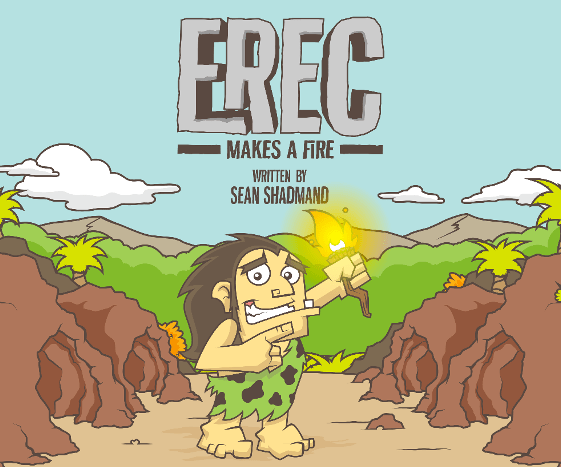
Erec Makes A Fire: A Children’s Book About Entrepreneurism
 Erec Makes a Fire was successfully funded on Kickstarter! Thanks for all your support.
What is the book about?
Erec Makes a Fire is a story of how a group of kids stumble upon a cave covered in ancient writings depicting the story of how a unique young cave boy (Erec) accidentally created his first great invention, fire. The story shows how, even in the simplest of times, one is able to form a business, sell a product, and create a success. The book is written to subtly embed one of the most fundamental parts of business in a child’s mind: leveraging an opportunity when finding demand in your community and providing a supply for it. Even before cash, computers, technology, LLC formation or business entities, business and entrepreneurs thrived through observation and invention, and they still do so today. This story helps teach youngsters, and remind their parents, that entrepreneurism is all around us and to keep an eye out for one’s own personal “fire” opportunity.
Why did I write the book?
As a person who loves the world of entrepreneurism, I also love telling a story about how anyone can turn a will or idea into a business. I have enjoyed telling that story, and giving tips on how to do it best, for a number of years through various mediums such as interviews in print, in person, and on TV. Now that more and more of my close friends are having kids I want to share that passion and story through a form that their kids can benefit from. I noticed there wasn’t much out there in the world of children’s books that took business concepts and simplified them into stories kids could love, as well as learn from. So, what else was I to do as an entrepreneur but to fill that void. Erec Makes a Fire is the first in a hopeful series of books that builds a foundation of business mindedness in our children.

Beliefs that inspired
Two major beliefs of mine contributed greatly to the creation of this story: First, immersion is a great key to early developmental learning, and secondly, kids are extremely capable of learning and understanding complex concepts early on, especially when it is told through story and analogy.
In regards to immersion, I believe that even if a child does not understand a concept introduced to them directly, being surrounded by that concept will help them become more comfortable with the subject matter as they mature. This makes the principles taught far less foreign to them, and therefore more easily consumed when they grow up, as compared to those learning the same concepts for the first time later in life.
I also believe that children can grasp complex concepts, like supply and demand or finance, far earlier in their lives than is generally taught today. I have always been amazed at how kids pick up core concepts so deeply. Yet, adults at times “protect them” from complicated concepts for worry of it going over their heads. Supply and demand can have complexities within – yes, but the basics are – well – basic and building stories around those concepts can most definitely be consumed by children. Look how well they understand other stories we give them, like ones around “how to share”, a concept that I find many adults still struggling to grasp. I remember sitting with adults during dinners as a kid while they talked to one another about their businesses around me. Over time and many family diners a grew more familiar with many of the things they talked about while still being a child. Although I was unable to articulate my perspectives on the subjects at the time I mades notes to remind myself that one day, when I got older, I would remember this: kids get more than you think.

Erec Makes a Fire is a new kind of children’s book that immerses young people in concepts they should be given the chance to understand early in life so that they can have a foundation for understanding it more deeply as they grow up. As such the company under which the book is created is called “Small People. Big Ideas. LLC”
How and When Can I get it?
The first few copies will be made available as gifted items through a fundraising drive on KickStarter. I have my initial proofs and prototypes complete. Based on how much I can raise through KickStarter I am shooting to making it available by the spring of 2015. There will be special gifts given out through KickStarter in addition to the books themselves to make things more interesting, such as: signed copies; custom printed copies; packages including digital, print version and stickers; as well as custom designs where our artist injects a characterization of your child into a character in the book! Books will be made available through softcovers, hardcovers, and ebooks.
About Kick Starter:
KickStarter is a crowd funding platform that allows projects to get funded before they start. It is a great way to start a business or project and works perfectly with the Erec Makes A Fire book as the funds are only released if the book gets enough demand. The simplest way to think of KickStarter is this: think of those PBS drives on TV, the “If you pledge more than $50 you get this free tote bag” type of promotions. For a project like mine my gift will be an early copy of the book and other creative unique offers mentioned above that only funders will be able to receive. You can read more about KickStarter here: http://www.kickstarter.com/help/faq/kickstarter%20basics#Kick

Why Did you Spell “Erec” with an “e” instead of an “i” ?
The names of the book are witten with some historical significance in mind. Homo Erectus and Homo Ergaster are the scientific names for the two homonids believed to be around during the time period fire was discovered. So, the characters names in the book take each half of each of those names: Erec, and his friend Tus are the first two characters introduced. Followed by his first two customers Erg and Aster. Just in case though, we made sure Eric Makes a Fire works too 😉
Slides of Creative Process
|
|
|
|
|
|
|
|
|
|
|
|


Get in to the cheering section and like us at http://www.facebook.com/ErecMakesaFire, and subscribe to email updates as we neat the big release here (http://signup.erecmakesafire.com)!

Google Hangouts Finally Work!
 I have been trying Google Hangouts sporadically for the last … 6 months or so. Using it once a month to handle a group chat or video chat instead of my regular Skype, phone, or webex usage. It improved tremedously each month, but since in the first few months it wouldnt evenload correctlt thta wasnt saying much. By the time it finally started loading correctly for me it was dropping calls left and right and very choppy in the UI.
All that being said, it was a great day in the video conference world today: our team at Socialize used Hangouts for a group call and it worked flawlessly! Hooray, finally a group video chat system that actually works. Of course I am holding back a little bit since most video chat services are hit or miss, but I must admit that the steady growth of improvement on Google Hangouts is nice, and if it keeps up this trajectory it will be the goto for me and my team.
Some cool features that come with GHang:
1 – You can schedule a hangout on your calendar

2 – You can video chat with multiple poeple for free

3 – It comes with the standard “effects” sweet people know and love. We had a good time using the “applause” effect for each persons update, and the “gong” effect when the meeting was over.

4 – You can screen share to the group pretty easily
5 – You can pull in your Google Drive data into the chat. Which is nice for us since we use GDrive a lot. I haven’t tried it yet, but presentations in GDrive should integrate well…
Give Google Hangouts a shot, and let me know if it worked smoothly for you too, or if my glee is premature.

Chrome Tip: Multi-profiles and Offline Docs
You may have already used the Chrome incognito profile, but what you may not know about is the fact that chrome now allows you to create and use multiple profiles on your computer. While incognito us used to specfically ensure that no data is stored or tracked on your system based on the sites and pages you visit, profiles allow you to better manage the various ways those pages are stored either online or off. Here is how to use them.
Incognito Mode:
Incognito mode ( i.e. the mode with the browser icon as a sunglass and hat wearing fellow in this blog’s screen shot ) prevents pages you visit from being tracked, stored in history and clears all cookies from your session once the window is closed, no matter what the site you are visiting has set. There are many reasons why you may want to do this. The cite version: You and your girlfriend use the same computer and you don’t want her to know about the surprise earrings you have been shopping for her online. The not so cute version, well, let’s just say you can avoid getting in trouble like Jim Levenstein does in American Reunion. (BTW, that movie is not worth seeing even if to only get the joke)
To enable incognito mode go to the menu (  ) option in the top right corner of your Chrome browser and select “New Incognito Window” or press Command+Shift+N . Also note: Chrome in your app on your mobile device has the same options and works the same way.
Signing in to Chrome
Chrome can connect to your GMail account, and doing so allows you to do things like sync bookmarks between devices, as well as allow you to edit your Google Drive documents stored on the cloud even while you have no internet connection available. This tool came in handy recently when I came up with some ideas for a document I was working on while at a hotel that didn’t have wifi available. I simply made the changes needed and when internet resumed the doc was synced and merged to my online version of the doc. By signing in to your Google account on chrome a default profile for your computer ( i.e. the mode with the browser icon as a head with no face in this blog’s screen shot ) will be automatically assigned to you and connected to the account you signed in with.
To login to your Google account in Chrome go to the menu ( ) option in the top right corner of your Chrome browser and select “Sign In”. You will then be given the Google login page. Sign in as you would with your GMail account and you are all set.
Enabling Your Chrome Profile to Work on Docs Offline
If you haven’t used your Google Drive already you should really take a second to get to know it. Not only can you store 5GB of files of any type for free in your Google Drive AND use them as a local drive on your computer and phone just like Dropbox, BUT you can use it to create and save documents of various types that you can use to collaborate on simultaneous with other users.
To explain the latter more clearly through example: We use Google Docs at Socialize at all our meetings. During the meeting we create a google doc and throughout the meeting anyone can add, append, change or update the way the notes are taken all at the same time. You can see one another typing as you type and often times most of the meeting will be completed in silence while everyone adds their notes to the doc. Collaboration is saved and shared in a document instantly.
But I digress…
To enable your Google docs to have offline access first go to your Google Drive (http://drive.google.com). On the left hand menu select the “more” drop down to reveal extra options. Finally click “offline docs” and enable. Your drive will sync your docs to your local Chrome profile. Note: If you do not see the “Offline Docs” in the “more” dropdown, and you are using Google App for work, you will need to either enable the feature in your Google App’s Admin portal, or get your sysadmin to do it for you. It is located in the Google Drive sectionof the Admin’s “Settings” tab.
Multiple Chrome Profiles
You are probably just fine getting your Google Drive working on your default Chrome profile to work on offline docs, just as I was for quite some time. The problem is that when I tried to enable offline docs for my personal Google Drive documents, as well as my work docs, the Google Drive system did not allow it. Chrome only allows one offline sync per Chrome profile. To fix this problem you will need to create an additional Chrome Profile on your browser ( i.e. create a mode with a different browser icon like the one with the Ninja in this blog’s screen shot ), and then enable Offline Docs in your Google Drive while in the correct profile.
To add additional profiles to Chrome go to the menu ( ) option in the top right corner of your Chrome browser and select “Settings”. Scroll down to the “Users” section and choose “Add new user.” Once you have added a profile correctly your Users section should look something like this:
Switching Between Profiles
To switch between profile simply click the icon for your current profile in the top right of the browser and choose the profile you wish to use. Once selected, a new browser window will open with that profile enabled.
 Sean Shadmand
