Take the complexity out of planning by using it as the metric

Creating a product is inherently riddled with unknowns and hurdles. As we refine and define processes to streamline the confluence of a team’s efforts, following those processes can be distracting. Process should help streamline work, not create it; it is the ever present balancing act of development and managing a team.

For this post I wanted to share one aspect of that process that tries to measure your team’s output called “Story Points” where the “story” represents the work requested and its set of requirements, and the metric applied to it called a “point”. Since estimating time is almost always inaccurate, processes like Scrum work within that reality by using points instead of time; it embraces the grey of estimation.

Problem is if you try to be too exacting with those points then you have gone full circle, back to the original problem of an inability to be accurate. In our team we developed a loose definition of what each point means so that product owners and developers can communicate with a “rule of thumb” quickly in planning meetings, that way the “hard work” can be focused back on output.

We use fibonacci to list our point values. Why? Well, it’s not a scientific answer but we believe it does a better job enforcing the concept of “fuzzy numbers” into more separated buckets. In our point breakdown, we relate points to complexity, not time, and summarize the amount of unknowns into the point as well. Here is our list of points and their meaning:

1 = Simple text change 
2 = Simple code change
3 = More complex code change

Notes: 1 – 3 are changes that the developer has a strong grasp and awareness on what needs to be changed/created and where it needs to be done. The more complex the number of changes are (i.e. you work between many function vs working within one function) the higher the number, but in all cases it’s a fairly well known problem/solution. Then we have:

5 = Complex code change with a few unknowns
8 = Complex changes with many unknowns

5 and 8 represent complex changes that involve known unknowns. For example, a developer may know what is being requested but that developer may have no idea how to do it. We find that when a 5 point story appears in a project (and definitely when 8 pointers show up) then it’s a red flag that something may not be clear in the requirements, or the story has become too bulky and needs to be broken down into smaller chunks. In rare occasions, something ends up simply being a 5 or 8.

In the world of product development completing smaller chunks of work help you deliver and iterate on your results more quickly. Any time there is an opportunity to catch a bulky implementation its a good thing. With this point system those warnings are built into the pipeline naturally.

Hope that helps add consistency and ease to your development process!
The 6 Books That Shaped How I Think and Work

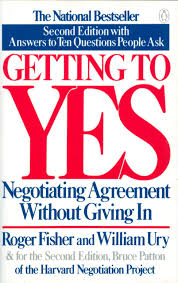
Getting to Yes
The first biz related book I read as a child. I learned early on that negotiating wasn’t just an art of cleverly persuading your counterpart  to yield to your will (which I believe many old and young try to do) but instead it taught me the notion around doing your best to find a situation that benefits both sides of the fence. This book is also filled with tactics and lessons that give you a whole new perspective on what is really happening when a buyer and a seller meet and a tool belt too.
The Dip
The first startup book I read almost a decade ago. It is a short book but a frank and honest one too. The dip sets a tone and map for what’s in store when creating a startup. I remember when I ended up facing a dip or two  along the way there was comfort in knowing that the rollercoaster ride was just a necessary step in a path towards…?
Five Temptations of a CEO
This book was suggested to me by the (former?) CTO of Zynga. Unlike most business books that are bullet point lessons and biographies this one is written as a fictional story of a man that has the conversation of a lifetime with a stranger on the subway. Often times when making harsh and rash decisions about setting expectations with employees, or when trying to manage my emotions or ego, memories of this book are triggered. It has helped me more than once find my way back to center.
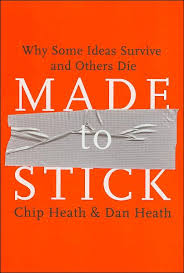
Made to Stick
Fantastic book for those of us that didn’t come from a marketing background (although I am sure it is valuable to those that did too.) Often when I write letters, blogs, taglines or give presentations I use the lessons from this book to get a feel for whether or not it will “stick” with my audience and use some tactics to drive a message home.
ReWork
By the time I read this book  I had already learned many of its concepts through my own trial and error. Nevertheless it made my top 6 list because of how well it articulated those learnings. Reading this book is like sharpening your knives if you know the lessons of a startup already or it is a great set of building blocks to work from if not.

Stumbling on Happiness
Boy did I love this book. It was given to me by my good friend Daniel and it was probably the fastest book I ever read. Dan Gilbert combines psychology, philosophy, history, and science beautifully to give a candid and thought provoking look at what happiness really means and why is it so different for everyone. I find myself referring to the lessons in this book quite often around relative happiness, how our imagination can be terribly misleading – but being aware is a big help!
Other books of note:
The Fountain Head: A controversial book that seems to be either hated or loved. Which ever side you chose to be on I would be surprised if it was not called powerful. You don’t have to believe in the writers philosophy benefit from a perspective into  the power of ideals, confidence, and certainty in oneself.
Thinking fast and slow: A large dry read at times but making it through was worth it. I learned a lot about how great and poor the mind can be all at once. I learned not only to be more cautious with my assumptions  but a sense for where that cautions is needed more and why letting go can be a powerful tool as well.
Freakenomics: To see the world through the eyes of an economist is a gift. Thinking in terms of noise reduction, drawing data from samples and parallels and using statistics to prove how powerfully wrong our assumptions can be was thoroughly entertaining the whole way through.
The tipping point: I didn’t fall in love with this book like others but it definitely deserve a read for its historical observations around business that have succeeded and failed and the factors and people that contributed to them.
 4 hour work week: I hold the lesson passed down in this book around work/life balance with me. I truly believe that we should be working to make less work and using that reduction as a badge of honor instead of the more classic concept that more hours equal a better output.
Hard things about hard things: A glimpse into the mind and life of a entrepenuer that almost lost it all on more than one occasion and the lessons he learned about running a company are packaged up nicely for us to lern from with far  less scars
 

The Wheelbarrow Paradigm

cinderblock render.jpgab85c73f-67c5-46cd-8abe-780cb119c608LargerImagine yourself in this situation: A row of cinder blocks await you on a hill. Next to it is a dismantled wheelbarrow. You are asked to take the 10-20 cinder blocks 20 meters down a path – and you don’t have all day. What do you do? Do you take the time to put the wheelbarrow together or choose the simpler path of just walking the blocks a few steps to the shed as fast as you can.

Often we choose the simpler more direct path to get things done, especially when we need “quick” results. The problem with the way our mind works is that we are usually very poor judges of calculating unknowns.

Daniel Kahneman describes this type of brain activity in his book Thinking Fast and Slow as “What you see is all there is” (WYSIATI) This theory states that when the mind makes decisions, it deals primarily with Known Knowns, phenomena it has already observed. It rarely considers Known Unknowns, phenomena that it knows to be relevant but about which it has no information.

This leaves us with two truths: 1) We are terrible judges of knowing the unknowns and 2) there are always unknowns.Red_Wheelbarrow-thumb-300x232-25029

We do this at work when we try to get done more quickly by cutting corners, in the kitchen when we create a mess when we could have just used the proper bowls, when we show up late to an event due to traffic, or when we write sloppy code without proper testing. Smooth is fast and you work your fastest when you work smoothly.

Going back to the cynderblock situation, your hands may get more tired than you think and a cinder block could slip and break – now you have three problems: a need for a working wheelbarrow, a broom, and an explanation. The lesson here is take the extra time to set yourself up for success and don’t rush things. Create the situations and tools necessary to protect you from the unknowns you are surely missing.

P.S.

A funny thing happened to me while I was writing this blog. I took a break and went down to Fort Mason’s book $1 books sale. How many $1 books do you think you could possibly want? Well, there were tons of carts and baskets at the entrance and I walked right on by thinking I would just browse around. I found 1, 2, 3 books that I liked and before I knew it I was lugging around 5 heavy books on the other side of the huge warehouse. If that wasn’t ironic enough I looked to my left and saw this guy far worse off than I. The Wheelbarrow Paradigm in full effect right in front of my eyes!

photo1


Book Review: Thinking Fast and Slow

ThinkingHow do the implications of how quickly you can add 3+3 and how much time you will take calculate 11*27 have on your daily life? Well – quite a lot says Daniel Kahneman, the writer of Thinking Fast and Slow and the winner of the Nobel Prize for Economics. The fundamental occurrence between the “think fast brain” (which he calls Version 1) and the “thinking slow brain” (called Version 2) dictate how well we are able to make decisions at large. This book helps lay down a more clear understand of how we are able to, or unable to, make decision as they relate to specific topics such as finance, bias, regret, politics, happiness and more.

In it Daniel describes how the Version 1 brain allows us to make quick decisions using heuristics so that we don’t freeze up (like our Version 2 Brain would do) when we are asked a complex questions. Unfortunately although effective often times those heuristics are very wrong and we rarely are able to notice when they are. How can you slow your brain down when it is thinking fast and speed it up when thinking slow? It starts first with an understanding of how they fit together. It helped me understand why I have always created “rules of thumbs” and “red flags” in my life while having a desire and fascination for also creating “repeatable processes” and my love for making “extreme theories” that guide me through my decision making process. Based on the book it is a fairly optimal way of allow yourself to think fast as often as possible with an backup system to slow down and challenge what sounds good with what has been predetermined to be an irrational thought pattern.

This is a great foundational book for understanding how the mind interact with the world around it through a mix of psychology, statistics and probability. It is Freakonomics meets Tipping Point meets Stumbling on Happiness (all of which I greatly enjoyed reading). Where as each of those books are more focused on answering questions for a specific subject matter, Thinking Fast and Slow is a far more robust book that jumps into all the inputs and outputs surrounding life. Think of it as A History or Nearly Everything by Bill Bryson for the human condition.


I’ll leave you with another example of the fast thinking heuristics and the slow deliberate one battling it out:

A man drives a gas guzzler that gets 10 miles per gallon and his more environmentally friendly friend has an economic car that drives at 30 miles per gallon. In an effort to improve their carbon footprint they both upgrade from 10 mpg to 12 mpg and from 30 mpg to 40 mpg. Which upgrade has a greater net effect to the gallons used if they both drive an equal number of miles?

Let your quick mind answer, then grab a calculator and check your hunch. In the example the 10 mpg person improved by 10% where the 30 mpg increased by 33%. The difficulty is in the use of miles per gallon as the metric which does not work well for this comparison.

Now calculate them both before and after the upgrade traveling 3,000 miles.

3000/10=300
3000/12=250
50 less gallons used

3000/30=75
3000/40=50
25 less gallons used

The gas guzzling friend made a greater improvement to the world twice as much than the Eco friendly one.

You can see my running read book list on Facebook here https://www.facebook.com/sshadmand/books

Work. Life. Love. Balance. Stories From Startup Folk

Startup LoveI saw this article posted by a friend on FB by Scott Weiss a VC at Andreessan Horowitz called Success at work, Failure at home. 

To me pulling back the curtains behind a life, relationship or personality allows us to see the truth: that there is no such thing as the “perfect life” to aspire to. Instead we are all simply working hard on the goal of being the best people, friends and mates we can be. So don’t be so hard on yourself, learn a little, and share a lot.

With that in mind his post inspired me to post this learning from my own life as a serial startup/”entrepreneur guy” in a relationship.


Why You Can’t Optimize for Intimacy

The style of conversation that helps drive interaction, trust, and motivation within a business and its employees doesn’t translate completely with a person you have an intimate, loving, sensual, and sentimental obligation to.

Some things do translate well. For instance, the patience and even keeled temperament required to maintain a level of respect and openness is important to both work and home lives. On the other hand the levels of distance and tone you employ can have a stark difference between the two environments.

As an example, working on an emotional issue with a significant other doesn’t work well with checkins, progress updates, and check lists (which can be cold to a person you sleep next to every night.) While on the other hand focusing deeply on emotions doesn’t work well when communicating clear objectives and goals with peers and employees (that you hopefully don’t sleep next to – ever.) Again, there is some overlap, but the differences are monumental.

For me, being a startup guy in a relationship is a constant lesson in understanding those differences; not focusing on “optimizing” for your relationship but simply nurturing it together.

So in short as the title says: do not optimize for intimacy. And I know if you are a startup person you are thinking right now “I disagree, of course I can if I just…” Stop right there. I know you “can” – but don’t. — I know you think you can – but don’t! The other person may be feeling more focused and diligent (yay!) for now, but probably feeling less connected, heard, loved, or nurtured over all. Even worst they may be feeling like they are at work – and not in a “intimate relationship.” (boo!) :-p


Why You Can’t Just Show Up to Innovation Day

I often get the “Hey, how can we innovate as a company?” question with little attention to each individual employee’s drive to innovate in their daily work lives being a major factor in one’s mind. That is the equivalent of asking “Hey, how can I win the super bowl?” without having a team composed of NFL football players.

Innovation is a sport to be practiced not something you can just show up on game day and expect to win. How many NFL football players don’t practice being great football players everyday and expect to win games every weekend?

Like any professional sport: if you don’t innovate in your daily life you won’t innovate anywhere else.  The funny thing is if you tell someone who wants to be the greatest football player in the world to practice everyday and to push themselves to be a better player every time they practice you will get nods of support from just about anyone listening. (After all running the same drill with the same times will keep you playing JV your whole life.) Conversely, if you ask someone within a business that wants to innovate to constantly be thinking and implementing ways to change their best practices, improve their tools set, update their processes, or try new ways to be more efficient at the office you will often get a majority of employees supporting a resistance and responding with rolled eyes followed by something to the effect of “it’s fine just the way it is – and it has been for years. Why change it now?”

How can you expect to innovate a few times a year with a company filled with workers that don’t believe in practicing innovating with the tools they use, the environment they are use to, and the way they interact with one another on a daily basis? How would a superbowl NFL coach react to an athlete that would rather just run his usual drills when asked to try something new? You can’t expect a company of employees resistant to change or improve HOW they work to then all of a sudden change how a company or the world around them works, can you? It all relates – like the seeds in a root of a blossoming flower. (Sorry, probably too dainty an analogy for a football heavy post, huh?)

Furthermore, just like with football it won’t work with one star player or one small group embracing this ideal. Use the best tools, challenge the old ideas, and try out new processes when you get the opportunity. The more the WHOLE company pushes and adopts an ever changing, improving, and growing daily work life the more that company will get a shot at the innovation ring.

Happy Super Bowl Weekend to all those out there wanting to be their best every chance they get!

Life is a plurality

Life – what more can I say that hasn’t already been said. It starts. It ends. It can do so hundreds of times a day for a single person, or only once – as it is realized before one dies.

It begins with a new breath, a new smile, a new love. It can end with a tear, a passing, a sadness – a separation. In all cases, it is a continuous thread of beginnings and ends. It is the realization of a new perspective, one that can re-invigorate us to feel in ways we didn’t think possible. Life can rush through our lungs with a skip of the heart.

Life is so intricately deep and sometimes so shockingly simple; always beautiful. A lesson learned can open up new doorways – or –  it can tie off fears we’ve been holding on to our entire lives for safety. For comfort.

It can be a prison. One we create around ourselves and find convenience in naming it a fortress, an attitude, a conviction. And to be free, or taste freedom, or free oneself. I am free – for now. I see a world I didn’t see before but know it has always been there. Untouched, for better and worst.

I have yet another new life, but far from the last life to be lived. True – it is nothing more than a new story to describe my already present surroundings; it changes nothing, but changes everything so absolutely. No one and no thing has changed but me. My mind. My eyes. But I am still myself – that I am sure of.

Growth is the escape, the new beginning. Not to destroy the singular life that came before it but to continue the thread of lives born within it.

So what has changed? The prison in which I kept myself? Or more importantly what starts a change, a new beginning, a new life? The catalyst lies in the recognition that prisons do not need to be powerful, ugly, large or made of steel, but they can be gentle, subtle, comforting and safe. They can coddle us in answers to questions we’re searching for but may have never needed to. Those prisons are the hardest to escape.

To escape yourself and what makes you comfortable without losing “yourself” in the process, that is the question. Can you allow a life to end so that a new one can begin without a fear of the end or anxiousness for the beginning? That is the moat and bars that prevent escape.

But it is possible. It is progress. It is life, and life is a plurality.

OpenCO 2013 – Why we love SF, how we work, and our world of content in 2023


OpenCo is the city’s answer to the question: “What makes San Francisco – San Francisco?” Instead of trying to explain the nuances to the culture here the founders of OpenCo decided the best way to describe it is by opening the doors to as many offices as possible within and allow people to come in and see for themselves. At OpenCo attendees sign up for a free pass to any of the over 100 SF offices, from theater troops, to restaurants, to tech startups and more. During the event attendees tour around the city walking into offices to check out their space and take part in an interactive presentation about what that company is doing to try to make an impact on the world. It’s not a lecture, nor a sales pitch, nor is it focused on recruiting, but instead it is a presentation that takes a look into what a company is thinking and how they work. Now expanding into NY, London, and Detroit, the OpenCo movement will be an exciting one for those interested in peeking into to the companies that make a city tick.

This year ShareThis was proud to be invited to host the second annual OpenCo event and we were excited to open their doors to their San Francisco office. There Sean Shadmand talked about the difficulties companies in the industry of social/tech are faced with and how they plan on innovating in the years to come. Check out a video of the presentation and slide decks below.

Video on Vimeo

Slides recorded by Penxy

Product Review: The Google Chromecast

I love my Google Chromecast. It’s light weight, cheap, simple to use and is very transportable. I’ve tried many bulky pieces of equipment to enhance my home theater experience such as a Roku, Google TV, and Apple TV. For all the extra features those products could provide, and the extra costs they had to have them, Google Chromecast is the only that has given me exactly what I needed. Sometimes less is more; this is one of those cases.

One thing the other products failed to appreciate is how much of my time is based on my laptop, and how readily available it (or my iphone) is. I don’t need a second computer to run my TV. My laptop has everything I need so making the main media hub makes sense. No additional keyboards or remotes needed.

Chromecast uses your wifi network and its built-in HDMI jack to create a media bridge between your computer and your TV. Once connected you will need to download the Chromecast extension for your chrome browser. Once it place you’ll have the ability connect your browser (and everything on it) to your screen. If you want to play movies then all you need to do is drag your movie file into Chrome and the browser will play it as well. If you want to share your desktop with your screen just use the Beta screen casting option – which is still a bit hit or miss.

I don’t need more and I am happy to pay less. (Chromecast is 66% less than most alternatives in the market today.) If you haven’t taken the leap to get one I suggest you do, or make sure it is on your christmas list 🙂