Below is Emma Watson’s “He for She” campaign speech. If you haven’t seen it yet it’s a worthwhile 8 mins of perspective. As she said,
“How can we effect change when only half is invited?” …
“Both men and women should feel free to be sensitive. Both men and women should feel free to be strong.”
She does a great job in helping reset perception, open the door for conversation, validate both sides, and convey a strong message for change. All the components that make for a great ambassador.
As Macklemore said in his popular song “Same Love” that will ring true in spite of the generations of people delusional about any inequality they thinks is “right” or “appropriate” at any particular time – be it race, economics or gender bias – it’s simple:
“It’s human rights for *everybody*, there is no difference!”
Sure, we could say “who are these entertainers think they are?”. But I think it’s more important that we appreciate their choice to use their influence for good, to support those around us for their basic civil rights, and most importantly giving us a moment to ask ourselves,
“maybe it’s time it I spoke out and influenced change to help those around me too.”
Last year we really enjoyed opening our office up to OpenCo and revealing how we think and work as well as how we see technology transforming the world we live in. We ended with a look at “2023” and what all that may mean over the next decade. This year, after we were asked to present again under the new NewCo brand we took a different approach. In our talk today we hosted a thought experiment, taking a philosophical journey into what is content, how we know the difference between good and bad content, and how we can use that information to create the next set of products (or just appreciate the ones that come out a bit more.)
A talk about content in only one form of t would be sadly ironic. So, if you missed it we recorded and are presenting a few forms of the talk for ya.
I used this snazzy little tool that records voice on my iPhone and syncs the slides as a remote while giving a preso. Check out the tool at http://penxy.com/ or the final resulting “talking slides” at http://penxy.com/hyw
Slide Notes
(Min 14:00 in Slides Above)
This year for NewCos new track named Yahoo’s content series we’ll take a different approach and start off by asking a more fundamental (seemingly obvious) question.
What is content?
For the most part we know it when we see it. It’s the substance or material we deal with in a speech, images, tweets, or memes. It can look like this [Essay], or content can look like this [Donald Trump tweet].
As we have access to more and more content in our daily lives the question that becomes more and more important to viewers is whether this content is worse or better than the previous one? Many will say the latter is awful, yet we read content like this in droves everyday. Why?
Let’s upgrade the question a bit and ask:
What is good content?
That’s a pretty tough question to answer but an important one too. As more and more innovative products come out we can get caught up in critiquing or dismissing one from the next. One super popular dismissal is the “I don’t care about you eating waffles on Twitter – I hate twitter it’s just noise”. When we take this point of view we can miss out on some amazing developments in our culture not to mention some amazing opportunities that come from that level of access.
Fair warning this discussion is gonna get philosophical. We’ll keep diving deeper into questions like that around content.
I know – we all love a presentations structure that involves action items, best practices or check lists ready to go by the time we leave.
Sometimes though it’s important to step back before you ask, or answer, a deeper question. After all the concept of “good” and “bad” is one of the oldest philosophical conundrums in existence. Furthermore is it even the right question to ask at all? Let’s see what we discover…
So let’s get dirty and start our philosophical journey by restructuring a very – very old question:
If a tree falls in a forest and no one is there to hear it does it make a sound?
We may be quick to answer: “of course it makes a sound. I’ve heard a tree fall and heard its sound – my presence is not required.”
But the question’s more of a thought experiment than anything else. What makes the question interesting isn’t the science of sound but the philosophy behind observation and reality of what sound is without an observer. Thought experiments like that can uncover new questions that may live beneath the surface that are able to more directly answer more monumental questions.
So let’s use our time together to dive into a thought experiment around content and see where we end up
If information is created but is never shared for others to see it is it still content?
I mean if content can stand on its own without the communication aspect…
Would you say then that all the hundreds or thousands of ideas and thoughts locked in our heads are actually hundreds or thousands of pieces of content then? Maybe. Or maybe content is so inextricably tied to sharing that the two can’t maintain the definition on their own.
Hmmm.. Okay…if that’s the case then what side is more important in determining goodness? How well it’s distributed OR how well it’s formed and presented?
On one hand can we determine how good or bad content is if no one ever sees it? And, on the other hand, how worthwhile is content that everyone sees if it’s not useful or actionable? Content is more than text, sound, or an image in and of itself. In its most basic form it’s a projection of our thoughts that we thrust out into the world. As Maslov would probably put it: it’s a basic human need that makes us social and allows us to self-actualize.
If Descartes was alive today he may devise a whole new Cogito (“I think therefor I am”) to “I Share Therefore I am.”
We always hear there are no good or bad questions. And we are all unique – all our thoughts are important reflections of ourselves (which you may realize after thousands of dollars of therapy.) So why are we so driven to deem content good or bad if it is fundamentally a projection of self? Hmmmm… Interesting but I don’t think we’ve dived deep enough yet to form an answer… Let’s take another dive…
Let’s deconstruct content even further and ask
WHY is content?
(Min 23:00 in Slides Above)
(not a well formed sentence I know but you get the idea.)
Content is a transferring of our minds and being into an everlasting form.
It gives us eternal life and has so for thousands of years. In that regard it is one of the most advanced technologies ever created in the world. Our short finite lives are made infinite!
As the acronym YOLO so eloquently states, “You only live once” – but with the entire world filled with all these projected minds in the form of content we can live many lives vicariously through others.
If those concept are too abstract for your fancy and you’re more of the practical type then let’s frame it this way: Content gets stuff done more quickly. The faster we communicate the faster we can act between us.
I give you information locked in my head – you give your version back to me –
and like DNA all our contributions result in a greater overall result that may have taken ages had we attempted to think through it all on our own.
So with that I present my first thesis: The figuring out how to label content as good or bad comes from entirely the wrong place. The real question should be how do we use THIS content or THAT content? Where can we put each bit of content to allow our thoughts a chance to live in the open so that anyone can get the value from it if they so choose? Content is simply a medium we use at the moments we have thoughts to overcome our inability to be able to be inside one another’s head.
The real endeavor is to cut out the middleman completely and just exchange thoughts. And until we can do that our goal is to shorten the time it takes to transfer our emotions, ideas, and – our lives – as much as possible. Ultimate efficiency, eternal life, and dare I say maybe even peace will be achieved in that final move. It won’t be about us dealing with good and bad content it will be about us accepting all thoughts as a chance to achieve those ultimate goals.
If you appreciate the reality that a single mind is the ultimate goal then it will give way to clues to foresee what product, or content society will embrace next. I’m not saying we will achieve singularity tomorrow,
nor am I here to rally everyone to start making change so we do something – because it is inevitable whether you like it or not. I am here to help add to a map on how and why content exists so we can navigate what comes our way, or create useful products along the way.
The real problem we are attempting to solve in almost all products created today is: how do we decrease the inefficiency impeding us from what can be called a mind meld. Each new product attempts to close that time-gap from one persons mind and emotion to the next.
Still not convinced that is the ultimate direction?– lets take a break from the abstract and look at our known history for validation…
In the beginning it was the lack of the written word, passing down information through story. It got the job done but it could take a lifetime or more for anyone to have a chance to see ones work or hear ones thoughts in order to make use of them. It was also super lossy – changing with each storyteller and generation. The written word helped us set those words in stone so although interpretation was still at play the base from which we worked was identical to those that could read the original. Unfortunately there was only one original so it still took a while to get it circulating and – you break, you buy.
Then, boom, the creation of the printing press! Anyone with an idea could have a shot of distributing their thoughts in ones lifetime – rich or poor, academically educated or not –– well, as long as you could read or had someone that could read to you. An example of how powerful an easily copied text can be is seen in the 1500s when the Christian world’s perception of their religion was altered because of a German Friar named Martin Luther and the content he shared. Powerful yes,
but it still took 2 YEARS for his thoughts to circulate in his community. Could you imagine waiting 2 years for your questions or ideas to be circulated?
How frustrating for us to imagine?! At that time not only did communication work on a schedule like that but the perception was that not everyone needed to read or share content in the first place because the common folk were too dumb to make use of it. What value could they bring to the table?
We look back then and see a travesty around the freedom of information – but does our generation think all that differently? When we created AppMakr the same objections came up – “not everyone needs an app.”
The prediction was we would maybe make 4 apps a month. In our first day we had requests to make thousands. Against all doubt we knew that it has always been true that the power of distributing content should be given to the people “good” or “bad” – it was our guiding principle. … But I’m jumping ahead …
We’ve seen the drive to democratize content and speed its ability to be distributed for hundreds of years since the printing press.
Getting our thoughts out to the world in years
to weeks, to seconds with radio and TV. But then a problem still remained – instant is great but everyone should have a voice and the access to hear it – not just the privileged – we still wanted more.
And so the Internet was born: Instant transfer of anyone’s thoughts to anyone willing to access it. It was given the perfect term: “getting connected.” And our path to do so continued.
From dial up to Wi-Fi, from PC to laptop, from Laptop to phone. We are decreasing the time it takes for each of our thoughts to get out there.
The iPhone was also thought of as a fad by critiques after its release – for years large corporations wondered how they succeeded. Many missed that its main achievement was to further decrease the time and complexity it takes for us to create, share, and ingest content from anyone saying anything more instantly.
Whether it’s a lifetime to years or 3 seconds to 1 second. If you can decrease the time it takes to get ANYONES mind into the open you are on to something.
Of course we all hear the call to arms that everything is so different now, and bad, and chaotic – we are so much worst and impatient than in the past! I offer a different perspective, things are only different in the tools we use but our yearning and desires are exactly the same: “Hear me!”
Or, may I please have access to what is going out there.
Our heads are no more immersed in that desire today.
Than it has been in generations before us. We are just able to achieve those goals more practically.
Data has always been thrust upon us.
We are simply trying to make it ALL more manageable from one person to the next.
What we’re driving towards is a moment where my thoughts are yours in the same moment. Think of the frustration you’ve ever felt when you just wanted someone to understand what you were trying to convey but left only with words and gestures and maybe a white board. How awfully inefficient it is! Just get in my head for a second so we can move on! The channels we’ve seen are just manifestations of that desire we have. It’s still far away but that IS the direction we’re headed and have been headed since the word “I”.
Anything that shortens that gap for ANYONE to get ANYTHING to ANYONE ELSE is following that trajectory and delivering goodness.
Is it asking too much? Are we really so much more impatient than the past?
Why is a month too long to wait but a minute juuuuust short enough?
What is it compared to?
Cutting the time in half is cutting time in half when you move forward – period. And it will always take twice as long as it does now to those looking back. It’s not time thats a problem – time is relative.
All content that is caged is bad content because it doesn’t have the chance to allow someone to try and make their mark, live vicariously through shared story, or help them self-actualize. Sure with this digital tool there’s great power, fear and concern in how we will handle it all but it’s not about getting rid of some of it based on it being good or bad. Content is a tool to convey our thoughts – and we have all kinds of them that seem like garbage or gold from one person to the next.
It’s the difference between this
and this. Same tool different purpose
This is a knife
and so is this. And there are tons others out there. More and more a minute with a better edge or handle or metal or balance. They’re the channels we use to express ourselves with one another more quickly.
We connect in less time by decreasing the physical distance between us and our technology.
We connect with less clicks or gestures.
And yes sometimes that stream of consciousness means we trade breadth of connection about something trivial and seemingly painful to read
for accuracy and depth of critical information that is otherwise caged. Never the less, in both instances we are connecting more effectively. Believe me when we do end up truly “connecting” our thoughts it will be scarier and far noisier than today but innovators will be propelled to figure out how to appreciate and allow for that connection to build from – not work on tearing them down. And each passing generation will have a higher bandwidth they can handle than the last.
So. Maybe it’s not about whether the content is good or bad quality, heck maybe it’s not even about how much it gets shared –
maybe it’s always been purely about how many people are connected and how quickly they can achieve that connection.
Content and sharing are the two fundamental ways we are able to do it today – they are the means to the ends. They are our rocks, and knives, and arrows for lack of any other available means. But they themselves is not the goal. So, maybe good content could be defined as ANY-THING that connects ANY-ONE in less time or complexity then what is currently out there.
From stones
to books
to TV still lacking the option to connect or comment
To the websites and blogs where interaction intertwined itself with the content being shared.
Once communication and distribution became instant we shifted our strategy to decrease the time-gap between exchanges by limiting the amount of content exchanged when conveying a thought in the first place.
Those thoughts, emotions and ideas were created and deployed more quickly and frequently with statuses, and 140 letter max tweets – a real stream of consciousness was born. And that consciousness was further fed with the ability to post even if you weren’t by a computer.
So who are we to judge even shorter content still?
The end goal is about getting a feeling, thought and/or emotion to whom ever you want or as many people as you want with the least amount of friction.
So why is Yo so surprising?
Less characters and a quick intuitive interface has created a quicker connection between people. In first principles we aren’t searching for depth in substance – we are searching for a mind meld.
With 2 clicks I can convey “yo I’m thinking of you”, or
YO “I’m in town” – if the message is received and the minds are linked then it is content and it is valuable and it is good.
Yes, there is beauty in the creation process and that shouldn’t be forgotten, but let’s also recognize that the PROCESS was originally created to convey the idea with the tools available at the time. Losing site of one is as destructive as the other. The art comes from the need and some of our needs are satisfied within the art.
Which could be why memes are so powerful. Quick, efficient, creatively assembled, instantly connecting complex an otherwise tough to describe moment of humor or feelings with others through a shared experience we can relate to.
We can have taken the concept of video and trimmed it to its essence in a 5 second clip.
if you are afraid to share because to many people will see it then
a product removes that barrier so your security can be guaranteed with ephemeral storage.
We want to be closer still and our tools are extensions of that. Now we are cutting out the middleman entirely (pun intended) and letting our body do the communicating for us – instantly.
It’s amazing – in the pursuit of closing the time-gap between us we’ve managed to jumped right over our stream of consciousness and found a way to release what our body is saying even before our consciousness realizes it; a whole new level of getting connected.
So I that I think our thought experiment has yielded a conclusion for the question on what is good content:
GOOD CONTENT IS: ANYTHING THAT CONNECTS ANYONE’S THOUGHTS EFFECTIVELY IN LESS TIME OR WITH LESS COMPLEXITY THATN IS CURRENTLY OUT THERE.
So if nothing else keep that in mind when you see the next best thing and wonder why.
Thank you for keeping an open mind.
=============================================
We used the Google On Air tool (basically Google Hangouts but for public live streams that are also automatically uploaded to Youtube when the broadcast ends.) This is my 3rd attempt to use On Air in some live stream capacity and it finally worked well! The trick was setting up a second computer than from my own with more memory. Long story short, here is the presentation using that product:
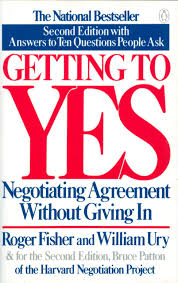
Getting to Yes The first biz related book I read as a child. I learned early on that negotiating wasn’t just an art of cleverly persuading your counterpart to yield to your will (which I believe many old and young try to do) but instead it taught me the notion around doing your best to find a situation that benefits both sides of the fence. This book is also filled with tactics and lessons that give you a whole new perspective on what is really happening when a buyer and a seller meet and a tool belt too.
The Dip The first startup book I read almost a decade ago. It is a short book but a frank and honest one too. The dip sets a tone and map for what’s in store when creating a startup. I remember when I ended up facing a dip or two along the way there was comfort in knowing that the rollercoaster ride was just a necessary step in a path towards…?
Five Temptations of a CEO This book was suggested to me by the (former?) CTO of Zynga. Unlike most business books that are bullet point lessons and biographies this one is written as a fictional story of a man that has the conversation of a lifetime with a stranger on the subway. Often times when making harsh and rash decisions about setting expectations with employees, or when trying to manage my emotions or ego, memories of this book are triggered. It has helped me more than once find my way back to center.
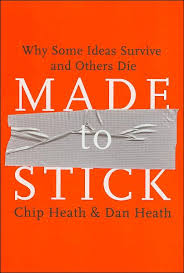
Made to Stick Fantastic book for those of us that didn’t come from a marketing background (although I am sure it is valuable to those that did too.) Often when I write letters, blogs, taglines or give presentations I use the lessons from this book to get a feel for whether or not it will “stick” with my audience and use some tactics to drive a message home.
ReWork By the time I read this book I had already learned many of its concepts through my own trial and error. Nevertheless it made my top 6 list because of how well it articulated those learnings. Reading this book is like sharpening your knives if you know the lessons of a startup already or it is a great set of building blocks to work from if not.
Stumbling on Happiness Boy did I love this book. It was given to me by my good friend Daniel and it was probably the fastest book I ever read. Dan Gilbert combines psychology, philosophy, history, and science beautifully to give a candid and thought provoking look at what happiness really means and why is it so different for everyone. I find myself referring to the lessons in this book quite often around relative happiness, how our imagination can be terribly misleading – but being aware is a big help!
Other books of note:
The Fountain Head: A controversial book that seems to be either hated or loved. Which ever side you chose to be on I would be surprised if it was not called powerful. You don’t have to believe in the writers philosophy benefit from a perspective into the power of ideals, confidence, and certainty in oneself.
Thinking fast and slow: A large dry read at times but making it through was worth it. I learned a lot about how great and poor the mind can be all at once. I learned not only to be more cautious with my assumptions but a sense for where that cautions is needed more and why letting go can be a powerful tool as well.
Freakenomics: To see the world through the eyes of an economist is a gift. Thinking in terms of noise reduction, drawing data from samples and parallels and using statistics to prove how powerfully wrong our assumptions can be was thoroughly entertaining the whole way through.
The tipping point: I didn’t fall in love with this book like others but it definitely deserve a read for its historical observations around business that have succeeded and failed and the factors and people that contributed to them.
4 hour work week: I hold the lesson passed down in this book around work/life balance with me. I truly believe that we should be working to make less work and using that reduction as a badge of honor instead of the more classic concept that more hours equal a better output.
Hard things about hard things: A glimpse into the mind and life of a entrepenuer that almost lost it all on more than one occasion and the lessons he learned about running a company are packaged up nicely for us to lern from with far less scars
How do the implications of how quickly you can add 3+3 and how much time you will take calculate 11*27 have on your daily life? Well – quite a lot says Daniel Kahneman, the writer of Thinking Fast and Slow and the winner of the Nobel Prize for Economics. The fundamental occurrence between the “think fast brain” (which he calls Version 1) and the “thinking slow brain” (called Version 2) dictate how well we are able to make decisions at large. This book helps lay down a more clear understand of how we are able to, or unable to, make decision as they relate to specific topics such as finance, bias, regret, politics, happiness and more.
In it Daniel describes how the Version 1 brain allows us to make quick decisions using heuristics so that we don’t freeze up (like our Version 2 Brain would do) when we are asked a complex questions. Unfortunately although effective often times those heuristics are very wrong and we rarely are able to notice when they are. How can you slow your brain down when it is thinking fast and speed it up when thinking slow? It starts first with an understanding of how they fit together. It helped me understand why I have always created “rules of thumbs” and “red flags” in my life while having a desire and fascination for also creating “repeatable processes” and my love for making “extreme theories” that guide me through my decision making process. Based on the book it is a fairly optimal way of allow yourself to think fast as often as possible with an backup system to slow down and challenge what sounds good with what has been predetermined to be an irrational thought pattern.
This is a great foundational book for understanding how the mind interact with the world around it through a mix of psychology, statistics and probability. It is Freakonomics meets Tipping Point meets Stumbling on Happiness (all of which I greatly enjoyed reading). Where as each of those books are more focused on answering questions for a specific subject matter, Thinking Fast and Slow is a far more robust book that jumps into all the inputs and outputs surrounding life. Think of it as A History or Nearly Everything by Bill Bryson for the human condition.
I’ll leave you with another example of the fast thinking heuristics and the slow deliberate one battling it out:
A man drives a gas guzzler that gets 10 miles per gallon and his more environmentally friendly friend has an economic car that drives at 30 miles per gallon. In an effort to improve their carbon footprint they both upgrade from 10 mpg to 12 mpg and from 30 mpg to 40 mpg. Which upgrade has a greater net effect to the gallons used if they both drive an equal number of miles?
Let your quick mind answer, then grab a calculator and check your hunch. In the example the 10 mpg person improved by 10% where the 30 mpg increased by 33%. The difficulty is in the use of miles per gallon as the metric which does not work well for this comparison.
Now calculate them both before and after the upgrade traveling 3,000 miles.
3000/10=300
3000/12=250
50 less gallons used
3000/30=75
3000/40=50
25 less gallons used
The gas guzzling friend made a greater improvement to the world twice as much than the Eco friendly one.
To me pulling back the curtains behind a life, relationship or personality allows us to see the truth: that there is no such thing as the “perfect life” to aspire to. Instead we are all simply working hard on the goal of being the best people, friends and mates we can be. So don’t be so hard on yourself, learn a little, and share a lot.
With that in mind his post inspired me to post this learning from my own life as a serial startup/”entrepreneur guy” in a relationship.
Why You Can’t Optimize for Intimacy
The style of conversation that helps drive interaction, trust, and motivation within a business and its employees doesn’t translate completely with a person you have an intimate, loving, sensual, and sentimental obligation to.
Some things do translate well. For instance, the patience and even keeled temperament required to maintain a level of respect and openness is important to both work and home lives. On the other hand the levels of distance and tone you employ can have a stark difference between the two environments.
As an example, working on an emotional issue with a significant other doesn’t work well with checkins, progress updates, and check lists (which can be cold to a person you sleep next to every night.) While on the other hand focusing deeply on emotions doesn’t work well when communicating clear objectives and goals with peers and employees (that you hopefully don’t sleep next to – ever.) Again, there is some overlap, but the differences are monumental.
For me, being a startup guy in a relationship is a constant lesson in understanding those differences; not focusing on “optimizing” for your relationship but simply nurturing it together.
So in short as the title says: do not optimize for intimacy. And I know if you are a startup person you are thinking right now “I disagree, of course I can if I just…” Stop right there. I know you “can” – but don’t. — I know you think you can – but don’t! The other person may be feeling more focused and diligent (yay!) for now, but probably feeling less connected, heard, loved, or nurtured over all. Even worst they may be feeling like they are at work – and not in a “intimate relationship.” (boo!) :-p
Okay, fair warning this is, as my friend Kanad would say, “Nerdy Gigabyting” stuff.
For all you Star Wars fans out there, and even some op engineers that may not like Star Wars check out these hops in your terminal shared with me my friend and co-worker Jason P.
#> traceroute 216.81.59.173
For those of you that are curious about what the hell a traceroute is, it is a way to see the set of network hops taken to get to the destination in question. For instance, when you visit http://www.seanshadmand.com from your computer the request is sent to your local network, then a nearby network and then the next switching and moving between networks until it arrived at the network that holds my website. Just ike taking multiple roads to get to and from work your request must travle through different “intersection” to get to a web page.
Sean-Shadmands-MacBook-Pro:~ seanshadmand$ traceroute seanshadmand.com
traceroute to seanshadmand.com (54.245.121.115), 64 hops max, 52 byte packets
 1  10.4.11.1 (10.4.11.1)  3.884 ms  1.013 ms  2.993 ms
 2  10.4.1.1 (10.4.1.1)  0.842 ms  0.977 ms  1.194 ms
 3  50-0-241-217.dedicated.static.sonic.net (50.0.241.217)  9.055 ms  8.422 ms  10.212 ms
 4  gig1-28.cr1.colaca01.sonic.net (70.36.228.97)  9.576 ms  6.047 ms  7.426 ms
 5  po3.cr1.lsatca11.sonic.net (75.101.33.166)  8.560 ms  9.594 ms *
 6  * * *
 7  0.xe-6-0-0.gw.equinix-sj.sonic.net (64.142.0.185)  6.043 ms * *
 8  * equinix01-sfo5.amazon.com (206.223.116.177)  13.506 ms *
 9  * 205.251.229.173 (205.251.229.173)  49.171 ms *
10  205.251.232.70 (205.251.232.70)  38.752 ms
    205.251.232.112 (205.251.232.112)  32.057 ms
    205.251.232.68 (205.251.232.68)  34.793 ms
11  205.251.232.141 (205.251.232.141)  29.312 ms  32.983 ms
    205.251.232.159 (205.251.232.159)  41.429 ms
12  205.251.232.165 (205.251.232.165)  34.375 ms  35.858 ms  64.349 ms
13  ec2-50-112-0-241.us-west-2.compute.amazonaws.com (50.112.0.241)  41.451 ms
    ec2-50-112-0-163.us-west-2.compute.amazonaws.com (50.112.0.163)  30.499 ms  28.531 ms
Here you can see the request working its way from our local network to our Sonic.net provider all the way down to the network hosting my site, Amazon.
Okay, so here is what the original traceroute I mentioned above did in 64 hops – the following is a spoiler alert, do not scroll down if you want to try it yourself 🙂
Sean-Shadmands-MacBook-Pro:~ seanshadmand$ traceroute 216.81.59.173
traceroute to 216.81.59.173 (216.81.59.173), 64 hops max, 52 byte packets
 1  10.4.11.1 (10.4.11.1)  1.586 ms  0.751 ms  0.748 ms
 2  10.4.1.1 (10.4.1.1)  0.863 ms  0.922 ms  0.976 ms
 3  50-0-241-217.dedicated.static.sonic.net (50.0.241.217)  9.179 ms  7.557 ms  11.639 ms
 4  gig1-28.cr1.colaca01.sonic.net (70.36.228.97)  9.738 ms  8.369 ms  6.678 ms
 5  po3.cr1.lsatca11.sonic.net (75.101.33.166)  7.323 ms  50.077 ms  7.756 ms
 6  0.xe-5-1-0.gw.pao1.sonic.net (69.12.211.1)  6.980 ms  12.417 ms  6.569 ms
 7  0.xe-6-0-0.gw.equinix-sj.sonic.net (64.142.0.185)  5.534 ms  5.873 ms  5.865 ms
 8  10gigabitethernet2-3.core1.sjc2.he.net (206.223.116.37)  6.746 ms  13.966 ms  12.247 ms
 9  10gigabitethernet14-7.core1.lax2.he.net (184.105.213.5)  26.900 ms  20.975 ms  22.262 ms
10  10gigabitethernet2-3.core1.phx2.he.net (184.105.222.85)  74.895 ms  40.622 ms  29.217 ms
11  10gigabitethernet5-3.core1.dal1.he.net (184.105.222.78)  56.980 ms  55.502 ms  54.686 ms
12  10gigabitethernet5-4.core1.atl1.he.net (184.105.213.114)  75.773 ms  74.998 ms  72.689 ms
13  216.66.0.26 (216.66.0.26)  73.062 ms  74.324 ms  72.802 ms
14  * * *
15  episode.iv (206.214.251.1)  116.403 ms  130.009 ms  112.626 ms
16  a.new.hope (206.214.251.6)  111.127 ms  112.484 ms  109.912 ms
17  it.is.a.period.of.civil.war (206.214.251.9)  109.559 ms * *
18  * rebel.spaceships (206.214.251.14)  112.966 ms *
19  * * striking.from.a.hidden.base (206.214.251.17)  114.395 ms
20  * have.won.their.first.victory (206.214.251.22)  114.337 ms *
21  * * against.the.evil.galactic.empire (206.214.251.25)  136.658 ms
22  during.the.battle (206.214.251.30)  116.953 ms  115.696 ms  112.170 ms
23  rebel.spies.managed (206.214.251.33)  110.094 ms  112.563 ms  114.632 ms
24  to.steal.secret.plans (206.214.251.38)  110.638 ms  109.706 ms  109.454 ms
25  to.the.empires.ultimate.weapon (206.214.251.41)  110.453 ms  114.561 ms  114.792 ms
26  the.death.star (206.214.251.46)  113.295 ms  115.245 ms  115.005 ms
27  an.armored.space.station (206.214.251.49)  163.362 ms  113.893 ms  114.685 ms
28  with.enough.power.to (206.214.251.54)  115.263 ms  111.979 ms  117.865 ms
29  destroy.an.entire.planet (206.214.251.57)  114.727 ms  113.755 ms  126.718 ms
30  pursued.by.the.empires (206.214.251.62)  115.042 ms  116.474 ms  110.436 ms
31  sinister.agents (206.214.251.65)  113.995 ms  115.831 ms  115.973 ms
32  princess.leia.races.home (206.214.251.70)  111.079 ms  131.545 ms  115.804 ms
33  aboard.her.starship (206.214.251.73)  111.702 ms  116.699 ms  113.923 ms
34  * custodian.of.the.stolen.plans (206.214.251.78)  120.468 ms  116.254 ms
35  that.can.save.her (206.214.251.81)  112.573 ms  117.197 ms  123.432 ms
36  people.and.restore (206.214.251.86)  110.282 ms  119.757 ms  114.538 ms
37  * * *
38  0-----i-------i-----0 (206.214.251.94)  134.709 ms * *
39  * 0------------------0 (206.214.251.97)  131.887 ms *
40  * * *
41  0----------------0 (206.214.251.105)  116.773 ms  114.683 ms  111.513 ms
42  0---------------0 (206.214.251.110)  114.764 ms  111.789 ms  114.402 ms
43  0--------------0 (206.214.251.113)  111.076 ms  116.629 ms  111.154 ms
44  0-------------0 (206.214.251.118)  112.852 ms  114.205 ms  111.433 ms
45  0------------0 (206.214.251.121)  115.202 ms  112.044 ms  114.663 ms
46  0-----------0 (206.214.251.126)  201.307 ms  111.747 ms  117.750 ms
47  0----------0 (206.214.251.129)  116.196 ms  111.185 ms  110.688 ms
48  0---------0 (206.214.251.134)  110.780 ms  114.799 ms  113.196 ms
49  0--------0 (206.214.251.137)  113.402 ms  115.738 ms  114.843 ms
50  0-------0 (206.214.251.142)  113.381 ms  111.589 ms  116.851 ms
51  0------0 (206.214.251.145)  116.478 ms  111.657 ms  116.318 ms
52  0-----0 (206.214.251.150)  115.002 ms  115.580 ms  116.904 ms
53  0----0 (206.214.251.153)  138.367 ms  115.620 ms *
54  0---0 (206.214.251.158)  113.654 ms  111.288 ms  111.488 ms
55  0--0 (206.214.251.161)  117.350 ms  118.801 ms  147.315 ms
56  0-0 (206.214.251.166)  114.342 ms  120.037 ms *
57  * * 00 (206.214.251.169)  118.554 ms
58  i (206.214.251.174)  117.896 ms * *
59  * by.ryan.werber (206.214.251.177)  150.234 ms *
60  blizzards.breed.ccie.creativity (206.214.251.182)  115.374 ms * *
61  * please.try.again.tracerote.to.obiwan.scrye.net (206.214.251.185)  120.250 ms  146.107 ms
62  read.more.at.beaglenetworks.net (206.214.251.190)  116.038 ms *  115.467 ms
A Manifesto reveals the strengths and values within a company, and does so in a way that decreases the number of complex decision making hurdles for its employees in the day-to-day.
The manifesto will be “the bible” (though only a page) of reasons that lead a team without a need for individual leaders to be present, and can help create the next generation of leaders to form in the same vein.
It relieves people from the stresses and distractions inherent to complex (or seemingly complex) decisions, in the middle of the workday, while fighting in the trenches.
Picture this: A team of army rangers are falling back in the middle of an amazonian battlefield. They realize one of their platoon members went missing while under fire. What do they do? Unorganized soldiers may scatter under this pressure and lose their head. Should the next step be “Every man for themselves!”, or “Let’s hide it out until morning”? Luckily this group of rangers knows that there is one core value that prevails in situations like this: “never leave a soldier behind”. – Boom, decision made. They spend their time devising a plan to find him first and foremost (no matter the hurdles – it will be resolved).
Values help form a strategy. Most importantly, when things go wrong, values help keep the bigger picture moving tactically. Especially when “fires” make decision making difficult. Plans fail, but values do not.
More practically speaking, the battles on a tech company’s floor may be less tragic, but are battles nonetheless. Imagine there is a team developing a widget. It is done so with poor (if any) design, but is backend-ready and functional. A discussion may come up around the pros and cons of deploying something that doesn’t look good but is ready to ship for testing. The debate could rage on, but, with a core manifesto that decision is already made: if the core value says design is key to our tests – then the decision is made to implement a design before deploying. If the core value says release when ready and iterate – again the decision is already made.
Those decisions shape a company and should not change week-to-week, problem-to-problem, or day-by-day from department to department. They shape outcomes and the character of a company through a decision tree that is easy to repeat. Consistent and efficient decision-making is more important than re-assessing the perfect decision for the situation each and every time it comes up. The written word is amazing at facilitating that.
Of course, we all have great thoughts and your company has awesome values already, but having them written down is the difference between an interesting legend shared by some and a religion followed by many.
Documentation, although necessary, does not substitute for a short list of values. Documentation is rarely re-read, and often forgotten; we remember “Go when green” not “Statute 32 Section 5: All those that use public road shall obey stop lights based on the following color …..”
Finally, it is extremely important that your list of values are glossed over. One lazy move away from following your values can easily turn into a utter mess over the years. That does not mean you can’t change your values. If a situation comes up, and your values does not represent how you want to act two things MUST happen: 1) You re-examine your values and change them accordingly or 2) You adjust the situation to fit your values. Period.
As for my suggestions regarding the setting for how a document can be built as a team here are some thoughts.
Make sure people feel heard (i.e. right down every idea)
Help filter outlaws that promote restrictions (which end up being things people feel reprimanded for doing) and turn them into the concept that create direction and productivity to help people grow, expand, and focus. It is a document of supportiveness.
Use it to help give people clarity in situations that need tie breakers, or rules of thumb. For example, “future value does not trump current value” has saved our team from missing out on what we have while over planning for something we do not.
Be clear on what an item suggested means when it is written (often times one person’s perspective on what “awareness” can be, for instance, is different than another’s) Be descriptive.
Find a/the person that matches the essence of what a manifesto item describes. They will most likely be the champion of that thought and help keep it alive and well. Find the passion in the people and you will also find the strength in the doc.
I believe once the fundamental concepts are solidified into the manifesto it becomes a spine for current, and as importantly, new employees that come in so they can quickly latch onto and adopt the companies process/thinking as it expands in size.
There will be the debate over the items presented, and debate is good. As such, it may also be a good idea to nail down some keywords that keep the conversation on track to what we believe the manifesto points should adhere to.
The words I propose are:
positive
smooth
friendly
helpful
productive
If an item does not instill many of these words, for instance, then the item may be off track.
I am a big fan of creative and captivating site design. One way of telling your story through your website’s design is by using animates scrolling effects. How they work is the viewer controls the animation and presentation through the amount the scroll wheel has been moved. Every pixel scrolled triggers a movent to some aspect or object on the web page. In many cases the web designer makes a sort of symphony with the multitude of events being moved and morphed on the page. You can see some past blog posts of mine on animated scrolling website designs here.
Here are some more recent orchestrations of stories being told in that fashion below. For this blog I am including video screen captures with the screenshots of the site as some of the sites in my older blog posts have since disapeared and there is no longer a way to see how they animated in the past. Live and learn 😉
(Note: Click the titles of each site to visit their webpage)
I really liked the use of paper like textures on the site. It makes it feel like a book or pamphlet has exploded into life. I also really liked how they put a whole slew of characters and objects into motion without making the site feel cluttered or confusing. This site is a super rich scrolling experience.
Your really gonna like this one. Not only are the graphics smooth, but they capture a great affect and time-period quite elegantly. The concept of having a single machine traverse and change as it scrolls through the deeper pages within it, while also tying it into the story being told is exceptionally well done.
It was the subtle animations created in the background that really caught my eye on this one. There wasn’t as many objects in motion in the foreground as the others, but the scenery chosen to be animated did a good job supplementing the site instead of going heavy on the scroll animations being the star of the show. It looks like these guys put up a new version of the site quite a bit so check out the video, but makes sure you check out the site as well as they may already have a new one out by the time you read this.
A good use of foreground and background in the scrolling animation. Also a great demo of their product offerings, and I like that it is their “pitch deck” (Something given to clients or investors which is usually done in a power point or pdf).
I really give credit to this site. It is a site for a leather bag which could easily have been made into a static site like others in their space. They do a great job display the bag using a 3d rotation, and also do a cute tie in between the scroll and the bag by using a zipper as the scroll progress bar at the bottom of the screen.
You can find more here: http://favbulous.com/post/983/23-stunning-parallax-scroll-websites-you-have-to-know
Erec Makes a Fire is a story of how a group of kids stumble upon a cave covered in ancient writings depicting the story of how a unique young cave boy (Erec) accidentally created his first great invention, fire. The story shows how, even in the simplest of times, one is able to form a business, sell a product, and create a success. The book is written to subtly embed one of the most fundamental parts of business in a child’s mind: leveraging an opportunity when finding demand in your community and providing a supply for it. Even before cash, computers, technology, LLC formation or business entities, business and entrepreneurs thrived through observation and invention, and they still do so today. This story helps teach youngsters, and remind their parents, that entrepreneurism is all around us and to keep an eye out for one’s own personal “fire” opportunity.
Why did I write the book?
As a person who loves the world of entrepreneurism, I also love telling a story about how anyone can turn a will or idea into a business. I have enjoyed telling that story, and giving tips on how to do it best, for a number of years through various mediums such as interviews in print, in person, and on TV. Now that more and more of my close friends are having kids I want to share that passion and story through a form that their kids can benefit from. I noticed there wasn’t much out there in the world of children’s books that took business concepts and simplified them into stories kids could love, as well as learn from. So, what else was I to do as an entrepreneur but to fill that void. Erec Makes a Fire is the first in a hopeful series of books that builds a foundation of business mindedness in our children.
Beliefs that inspired
Two major beliefs of mine contributed greatly to the creation of this story: First, immersion is a great key to early developmental learning, and secondly, kids are extremely capable of learning and understanding complex concepts early on, especially when it is told through story and analogy.
In regards to immersion, I believe that even if a child does not understand a concept introduced to them directly, being surrounded by that concept will help them become more comfortable with the subject matter as they mature. This makes the principles taught far less foreign to them, and therefore more easily consumed when they grow up, as compared to those learning the same concepts for the first time later in life.
I also believe that children can grasp complex concepts, like supply and demand or finance, far earlier in their lives than is generally taught today. I have always been amazed at how kids pick up core concepts so deeply. Yet, adults at times “protect them” from complicated concepts for worry of it going over their heads. Supply and demand can have complexities within – yes, but the basics are – well – basic and building stories around those concepts can most definitely be consumed by children. Look how well they understand other stories we give them, like ones around “how to share”, a concept that I find many adults still struggling to grasp. I remember sitting with adults during dinners as a kid while they talked to one another about their businesses around me. Over time and many family diners a grew more familiar with many of the things they talked about while still being a child. Although I was unable to articulate my perspectives on the subjects at the time I mades notes to remind myself that one day, when I got older, I would remember this: kids get more than you think.
Sticker Collection Available Through KickStarter
Erec Makes a Fire is a new kind of children’s book that immerses young people in concepts they should be given the chance to understand early in life so that they can have a foundation for understanding it more deeply as they grow up. As such the company under which the book is created is called “Small People. Big Ideas. LLC”
How and When Can I get it?
The first few copies will be made available as gifted items through a fundraising drive on KickStarter. I have my initial proofs and prototypes complete. Based on how much I can raise through KickStarter I am shooting to making it available by the spring of 2015. There will be special gifts given out through KickStarter in addition to the books themselves to make things more interesting, such as: signed copies; custom printed copies; packages including digital, print version and stickers; as well as custom designs where our artist injects a characterization of your child into a character in the book! Books will be made available through softcovers, hardcovers, and ebooks.
About Kick Starter:
KickStarter is a crowd funding platform that allows projects to get funded before they start. It is a great way to start a business or project and works perfectly with the Erec Makes A Fire book as the funds are only released if the book gets enough demand. The simplest way to think of KickStarter is this: think of those PBS drives on TV, the “If you pledge more than $50 you get this free tote bag” type of promotions. For a project like mine my gift will be an early copy of the book and other creative unique offers mentioned above that only funders will be able to receive. You can read more about KickStarter here: http://www.kickstarter.com/help/faq/kickstarter%20basics#Kick
Erg: Erec’s first customer as a Sticker
Why Did you Spell “Erec” with an “e” instead of an “i” ?
The names of the book are witten with some historical significance in mind. Homo Erectus and Homo Ergaster are the scientific names for the two homonids believed to be around during the time period fire was discovered. So, the characters names in the book take each half of each of those names: Erec, and his friend Tus are the first two characters introduced. Followed by his first two customers Erg and Aster. Just in case though, we made sure Eric Makes a Fire works too 😉