Deciding on a new feature: An Insta-Test-market. (AKA: Ghetto Testing)

I love making a decisions tree as efficnet as possible, especial around discussion that steer the business or the product within a business. Or in another words, I HATE “tough decisions.”

Here is another addition to the decision tree to make life easier, it is called “Ghetto Testing” and coined by the founder of Zenga.

How do you figure out if you should go with a feature with minmal disruption to the company or its engineers, and how can you invest in it with the highest posible certainty of success? Ghetto Testing a feature. The concept is there are a wide range of data points you can aquire to guage interest on an idea before the idea is fleshed out. At the “Ghetto” stage, it sint so much a test of the product value or feature set itself, as much of a servey to see if the concept will get clicks or interest by the public. It’s basically an adhoc test market. If you think people will love feature x for instance, create a google adword promoting the vapor-ware concept and run it for 5,10,30 mins.  The resulting page of the ad could technically go to a 404 page, and although that would be a horrible experience it still wouldbe a valid ghetto test.

From there you can invest incrementally into how deep of a gauge you want to testing of the idea i.e. a pretty landing page with feature highlights, a download, or a purchase wall.

http://grattisfaction.com/2010/01/how-zynga-does-customer-development-minimum-viable-product/


"Should I add x to my product line?" litmus test

For small startups it is essential to decide what not to do as much as what you decide *to* do. As new technologies come and go, ideas for change could cripple a companies productivity or ability to reach any single objective (AKA Distractions.)

If your objective is to build an awesome product, and work hard at solving a problem that others may not have been able to solve yet, then here is a “is this a distraction right now, or a need for change?”  litmus test for small startups.

Test:

Do I believe we should *only* do [new idea] and grow the company out from from there?

(i.e. stop focusing on the other thing you had previsouly decided was *the* way to grow the company from.)

If you find yourself getting to a strong yes, then the convo to get into the new idea may be ripe for discussion, and it may be time to focus energy on a new strategy and to pool your resources to build a world class product. I’ll go into what you can do to break the new idea down further from there, to see if it makes sense in your business in other ways, in later blogs.

Side notes as to why this problem may often come about:

For one, the grass is always greener. So you need to be carefull when shifting towards an idea that is not on your mind every hour of every day…There will often be different problems, not less, to overcome when you switch.

Second is brain time. The amount you spend on solving a problem has some (not sure yet what amount yet) relation on the lack of time you have spent thinking about the new thing. All the litte details that are reflex knowladge for you for is lost with a new idea and direction.

Analogous Exmaples in life:

For a simplified abstract example, you spend a few hours packing the night before a trip. Last minute the morning of the flight you realize, “Hey, I can just take the smaller bag! How much smarter of me, I can save much space!” So you do.

At the airport you realize that one of the side reasons you wanted the bigger bag was not just to carry more, but to so your friend could but his shoes in it. Damn! You over looked ne of the many small details that led to the dscisoin to pack the big bag in the first place, but the new idea that came to mind, that you took action on in a shorter amount of time, did not allow you to consider all the many reasons why you made the decisions you did the night before.

A more common example: “Ughhh, I left my wallet in my other pants pocket!” You look better, and it’s a good thing too because now you need to find someone to pay for your dinner :p

Closing

You may not be able to avoid these smaller mishaps, but you definitely have the power to minimize disrupting a company by paying attention to these business distractions vs changing directions type decision points.

Remember: A small comapany needsto solve *a* problem, focus on it, and when they get their fit and a few wins the grow into more spaces. Here is a great article on focus as it pertains to Product Market Fit and MVP:

http://www.svproduct.com/mvp-vs-product-vision/

“…But of course that was just the beginning of the product line and not the end.”


“Should I add x to my product line?” litmus test

For small startups it is essential to decide what not to do as much as what you decide *to* do. As new technologies come and go, ideas for change could cripple a companies productivity or ability to reach any single objective (AKA Distractions.)

If your objective is to build an awesome product, and work hard at solving a problem that others may not have been able to solve yet, then here is a “is this a distraction right now, or a need for change?”  litmus test for small startups.

Test:

Do I believe we should *only* do [new idea] and grow the company out from from there?

(i.e. stop focusing on the other thing you had previsouly decided was *the* way to grow the company from.)

If you find yourself getting to a strong yes, then the convo to get into the new idea may be ripe for discussion, and it may be time to focus energy on a new strategy and to pool your resources to build a world class product. I’ll go into what you can do to break the new idea down further from there, to see if it makes sense in your business in other ways, in later blogs.

Side notes as to why this problem may often come about:

For one, the grass is always greener. So you need to be carefull when shifting towards an idea that is not on your mind every hour of every day…There will often be different problems, not less, to overcome when you switch.

Second is brain time. The amount you spend on solving a problem has some (not sure yet what amount yet) relation on the lack of time you have spent thinking about the new thing. All the litte details that are reflex knowladge for you for is lost with a new idea and direction.

Analogous Exmaples in life:

For a simplified abstract example, you spend a few hours packing the night before a trip. Last minute the morning of the flight you realize, “Hey, I can just take the smaller bag! How much smarter of me, I can save much space!” So you do.

At the airport you realize that one of the side reasons you wanted the bigger bag was not just to carry more, but to so your friend could but his shoes in it. Damn! You over looked ne of the many small details that led to the dscisoin to pack the big bag in the first place, but the new idea that came to mind, that you took action on in a shorter amount of time, did not allow you to consider all the many reasons why you made the decisions you did the night before.

A more common example: “Ughhh, I left my wallet in my other pants pocket!” You look better, and it’s a good thing too because now you need to find someone to pay for your dinner :p

Closing

You may not be able to avoid these smaller mishaps, but you definitely have the power to minimize disrupting a company by paying attention to these business distractions vs changing directions type decision points.

Remember: A small comapany needsto solve *a* problem, focus on it, and when they get their fit and a few wins the grow into more spaces. Here is a great article on focus as it pertains to Product Market Fit and MVP:

http://www.svproduct.com/mvp-vs-product-vision/

“…But of course that was just the beginning of the product line and not the end.”


Smart Car Makes Clever Website

I was oddly propelled to click on an ad today, brought to me by the makers of the Smart Car. It was a pretty, clean, well made site. I scrolled up and down to see if anything would catch my eye, and strangely enough something did.

Some time ago I made a post about the coolness of sites I see that take advantage of telling their story, not through pages navigated to by the standard point-and-click, but by animating the home page based on the amount of scroll a user applys to the site. (You can find the post on cool scrolling animated sites here )

Some people have done a poor job of creating well balanced sitethat not only tells a good story, but does in a animated way that tells the story better than it otherwise could be told. And done smooth enough that the coolness, or story, isn’t hindered by the latency and choppyness of the meium.

Well This smart car ad page did just that. And without futher adu, here are some screeen shots and the link to the smart car ad site (2011-12-4).

It begins with a simple page, that focuses all the users attention to the car, and its size.

As you begin scrolling the colors of the sites changes and the a different smart car is presented.

Notice the menu on the right site, letting you know where you are in the story. The white cricle tells you what part of the story you are currently in, and what is coming up next. Notice the blending from one “page” to the next as you scroll. Notice how you find you self scrolling more and more, and digest a few tid bits of knowladge thatyou would ohter wise not have gained behidn a barier of clicks. Well done. 🙂


The hardware won’t stop changing

When the iPhone first came about there were plenty of neh-sayers that rebeled against the native functionality on the phone and how it was destined to be doomed by more standard tech already in place on the web.

The problem when attempting to prophesize the future of new technologies is that many people forget that the technology they are predicting against is not a controlled variable. Not only will the technolgy advance that they forsee, but the technology they are basing their predictions on will change as well. That every changing system means you can never be too sure what the life time of a new product will be and how it will develop. The only good bet is: all parts of technology are ever advancing.

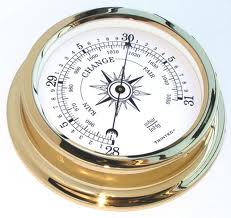
The mobie device epitomizes that fact. A fragmented distribution of lightweight, fairly inexpensive, devices that are constantly in use by its users and is getting completely revamped and bought up every year and by eager customers ready to upgrade. The manufactures will keep pumping more features into the device that go beyond  weight, and better screen resolution. And with form factor constraints relativley out the door, compared to their laptop and PC predecessors, native device functionality will always trump what the generic standard products will pump out. Of course RF functionalities ar making their way into our everyday life, and now Andoroids may be getting a barometer: http://gizmodo.com/5851288/why-the-barometer-is-androids-new-trump-card.

As these products evolve native apps will keep going strong.

That is a pretty freakin’ cool sphere!

This is pretty awesome… A real hovering ball that seems to defy gravity and do some other neat tricks too. Yeah, we have seen some cool hovering toys these last few years, but this little doozy goes well past just hovering. Not only does it hover, but it is able to jet  of in any direction lickity split, and its gyroscopes (along with its auto pilot mode) give it the ability to stay in hover state no matter how hard you try to push it down. Just when you think you got your bearing with this thing it shows off a few more tricks as it dives to the floor, rolls over better than your dog skip, andtake right back off again. It seems to master land and air, and is made by the Japan’s ministry of defense.

Easter Egg-ish Feature in Google Image Search

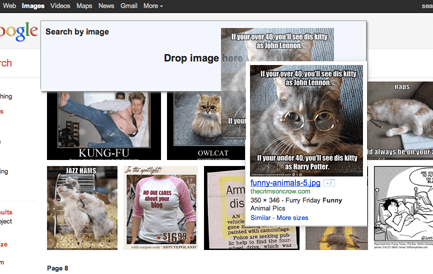
You have probably searched for images on google image search before, but what you probably missed was the drag and drop image search feature. After hovering over an image from the image search results (ex: http://goo.gl/hwiJ0) drag the image over to the search text box. Once the image overlaps the search box, the search box extends allowing you to “drop the image” there.

What seems to happen next is google uses meta data about the image selected to generate a text search that display results of web sites that are related to the picture.

There was a google labs project a while back that gamified the manual tagging of images, mechanical turk style. Maybe this is one of the bi-products of that project.

Are you seeing things? Instant super-imposed 3d objects on 2d pictures

See that picture to the left. It is a picture taken of a room with a billards table, can you tell what part of the picture is fake? We have all hard of super imposed by now (even the talking goat from Adam Sandler’s comedy cd in the 90s is now aware of the power of superimposing.) What makes this a breakthrough is that fact that the 3d objects (by the way, the balls on the table are the fake objects) were super imposed onto a flat, 2D picture. Even more interesting is that fact that those 3D objects can interact with the 2D objects in the picture, as if they were 3D them selves. Check the demo by Kevin Karsch (below) where you can see what I mean. Basically, you can take picture of a hall with stairs, and later add a 3D virtual ball to the picture, and in seconds watch the 3D ball bounce its way down the stairs case. Pretty B.A.